There are always a handful of questions that come up before booking a trek like this one: is it difficult enough to need special preparation?, when is the best time to go?, what are the teahouses actually like?, and how much of the food on the trail is actually good?
Well, this section addresses all of that directly, so you have a clear and honest picture before you book this 11-day Langtang Trek with Tamang Heritage Trail included.
How Do We Organize This Trip?
Before we get into the trek guide, it is worth knowing who you are trekking with and how this trip is being organized.
Langtang Valley is a subsidiary run by Altitude Himalaya Pvt. Ltd., a Kathmandu-based trekking company that has been organizing treks and tours across Nepal since 2013!
We created this website specifically to give Langtang the focused attention it deserves as one of Nepal's finest and most underrated trekking destinations.
Our team at Altitude Himalaya is young but experienced and, most importantly, very passionate about every trekking destination in Nepal. In fact, we have trekked these trails ourselves and bring to you first-hand knowledge in every itinerary we design and publish!
And here’s how we have been organizing every trek in the Langtang region:
- First of all, we are a government-licensed and registered trekking operator under the Nepal Tourism Board and Trekkers' Agencies Association of Nepal (TAAN). This means we shall be organizing your trip in a completely legal way. One can check Altitude Himalaya’s company profile on the TAAN website too!
- We do include generalist licensed trekking guides but those who know the route really well! They have walked the trails multiple times and understand what each guest wants, can predict weather patterns, and make decisions instantly.
- We remain transparent about our prices. So, what you're seeing in the package is what you'll need to pay. We have clearly listed the inclusions and exclusions, and even if you have any confusion, we're happy to clarify anything before you book!
- We promise to be quick at responding and are always ready to customize your itinerary when needed. In fact, we even handle permit logistics, pre-book your accommodations, and manage all transport arrangements on a private basis (you won't have to look into any of this).
- And if you want to extend your trip, add another trek, or explore any other place in Nepal after your Langtang adventure, our team at Altitude Himalaya is always ready to help!
Difficulty Level of Langtang Tamang Heritage Trek
We have rated this 11-day combination of the Tamang Heritage Trail and the Langtang Valley Trek in the “Moderate” difficulty level. Allow us to explain why this is.
The Tamang Heritage Trail section (Days 1 to 4) is genuinely easy in terms of daily distance and altitude gain. No day exceeds 13 km, and the highest point you reach in those four days is Nagthali Ghyang at 3,165 m.
What makes this Langtang trip moderate rather than easy is the total no. of consecutive trekking days (i.e. 9), two high-altitude summit hikes in the final half, and a total route distance of roughly 100 km.
The most demanding days are:
- Day 7: The 15 km push from Langtang Village to Kyanjin Gompa followed by the Kyanjin Ri evening hike
- Day 8: Tsergo Ri hike that takes you to almost 5,000 meters, starting at 3 to 4 AM.
The rest of the itinerary gives your body enough room to adjust and recover progressively.
For trekkers with basic cardiovascular fitness and no significant joint problems, this is a manageable 11-day trip if you do not rush any of the two hard days!
Also, even first-time trekkers can complete this trek without additional efforts. The daily distances are manageable, the acclimatization is gradual, and having two nights in Kyanjin Gompa is enough for rest and exploration.
For beginners, we even give you the option to not summit Tsergo Ri at all and only stick with Kynajin Ri (or no Kyanjin Ri, only Tsergo Ri).
If on Days 7 and 8 you are not feeling well or the conditions are difficult, skipping the summit or turning back at a lower point is always the right call. Good news is that our guide will always be at your support, no matter what decision you make!
Best Time for This Langtang Tamang Heritage Trek
The best time for the Langtang trip depends on what you prioritize.
For mountain views, high-altitude hike conditions, and reliable weather across both the Tamang Heritage Trail and Langtang Valley sections, the same two windows (Spring and Autumn) for Himalayan trekking in Nepal apply here too:
- Autumn, from mid-September through mid-November, gives you clear skies, settled weather, and the Langtang, Jugal, and Ganesh Himal ranges visible in sharp detail from Nagthali Ghyang, Langtang Village, and the two Kyanjin summit hikes. October is the peak window. For the Tamang Heritage Trail specifically, autumn timing also coincides with the post-monsoon period when the Tatopani hot springs are most active, which is worth noting if that is a factor in your decision.
- Spring from March to Mid-June brings rhododendron blooms in the forested lower sections between Gatlang and Lama Hotel, and the cultural highlights of the Tamang villages are livelier in this period because Sonam Lhosar (Tamang New Year, celebrated in mid-January) and Gyalpo Lhosar (mid-February) have recently passed, and the community rhythm remains in full swing.
- Winter, from late Late-December to February, is the least recommended for this itinerary, not because of the Tamang Heritage Trail section (which remains manageable), but because Tsergo Ri in January requires serious cold-weather preparation, and the Kyanjin Ri evening hike in sub-zero wind conditions is a different proposition entirely. It is doable with proper gear and support from a reliable trekking agency (like Altitude Himalaya), but it significantly raises the difficulty of the those days.
- Monsoon from Late-June to Mid-September brings leeches on the lower forest trail between Briddhim and Lama Hotel and landslide risk on the Kathmandu to Gatlang drive. The Tamang Heritage Trail sections are more sheltered than the open Langtang Valley trail, but the Tsergo Ri hike in heavy cloud conditions removes the main reason for doing it.
If your timing is flexible, October or the last week of March through April are both strong choices! But if you’d like to go at a time when there are fewer crowds, we can help arrange this trip at any time of the year (after checking the route and weather conditions).
Accommodations Included in This Package
Like mentioned in the itinerary above, your overnight stops on this journey are going to be in: Gatlang (Day 1), Tatopani (Day 2), Thuman (Day 3), Briddhim (Day 4), Lama Hotel (Day 5 and 9), Langtang Village (Day 6), Kyanjin Gompa (Days 7 and 8), and Syaphru Bensi (Day 10).
Let's look at what to realistically expect at each of the destinations you're meant to spend the night:
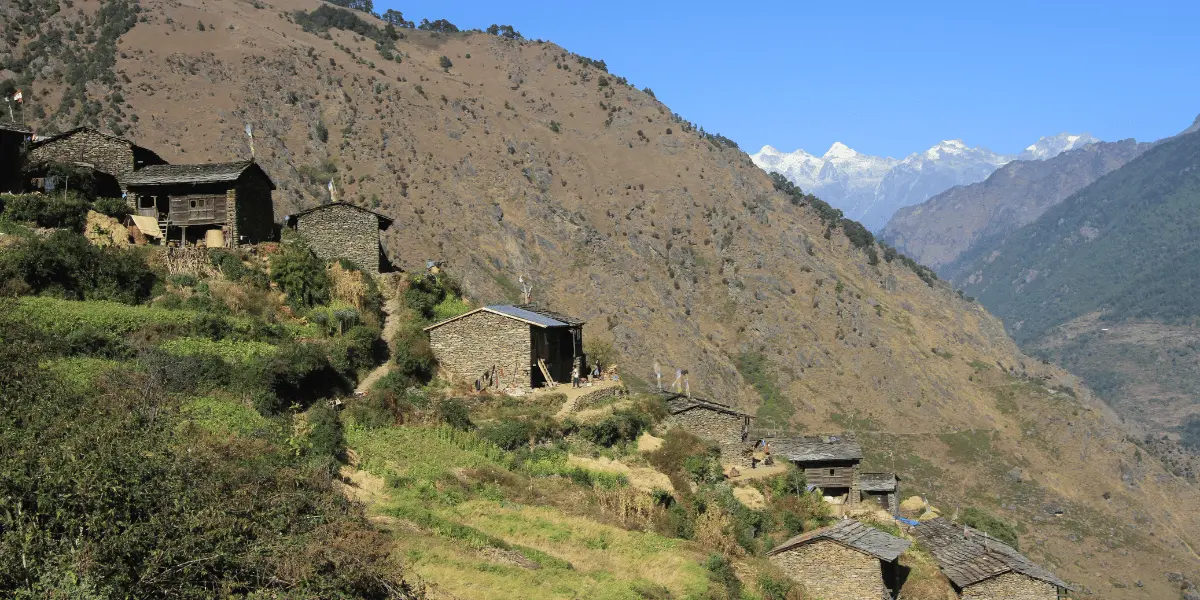
- Gatlang: This place comes with a homestay accommodation in a traditional Tamang house, which means shared rooms with basic furniture (table, cloth hanger, etc.), and squat toilets on a sharing basis. Hot showers are not reliably available in all homestays and depend on the individual household. Electricity is generally available through microhydro and solar, though power cuts happen. The dining area is the family's kitchen, and meals include fresh local produce. The homestay experience here is the point: you are not paying for teahouse-standard comfort, you are paying for a different kind of trekking night.
- Tatopani: Similar homestay conditions to Gatlang. Some homestays have basic solar-heated water for washing, but do not expect consistent hot showers. WiFi is available in most homestays, though reliability depends on the weather. The hot springs nearby are a natural outdoor experience rather than a developed bathing facility.
- Thuman: Homestay accommodation in a restricted area village that sees fewer visitors than Gatlang or Briddhim. Facilities here are the most basic of the Tamang Heritage Trail section: shared rooms, squat toilets, bucket hot water (at extra charge), and limited charging options. The cultural experience in Thuman compensates for what the accommodation lacks. Your guide from Altitude Himalaya stays in the same accommodation and manages any practical issues throughout.
- Briddhim: The most developed overnight stop of the Tamang Heritage Trail section. Briddhim has been studied specifically as a community homestay tourism site, and the local families here have more experience hosting international trekkers. Some homestays offer private room options in peak season. Shared toilets are still standard, but hot water availability is better here than in the three previous stops.
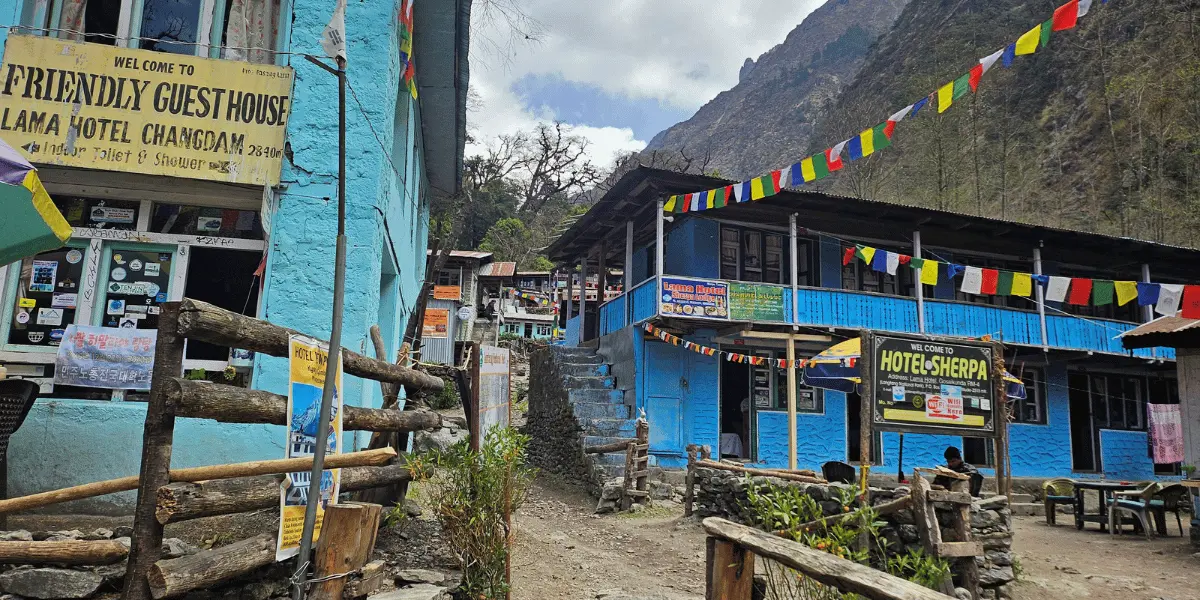
- Lama Hotel: Accommodation here is mostly in teahouses (no proper lodges like Langtang and Kyanjin). Also, there are just about 7-8 teahouses, so instead of pre-booking, the hosts rely more on a “first-come, first-served” policy. WiFi here is less reliable than at other stops, but WiFi cards are available for purchase (which you can get before the trek starts). Note that rooms are basic and hot showers come at a small extra charge.
- Kyanjin Gompa: The best of all locations, with proper bedding, an accessible mobile network, WiFi available, device charging in rooms, and in some even shared toilets! Hot showers are also available, depending on the lodge (some offer them for free). And the cozy, warm dining rooms here are where the best memories you’ll have!
- Syaphru Bensi: The most comfortable overnight stop on the entire trail. The location comes with proper lodges with private room options, free hot showers, stable WiFi, and a significantly wider food menu than anywhere higher up. The full afternoon and evening that were included on Day 10 give you genuine rest, and the town has enough to explore if you want to walk around as well.
Regarding mobile network coverage: an NTC SIM card (compared to Ncell) is the most reliable option along the entire Langtang trail. Its signal holds in most major stops, though it drops in gorge sections like Lama Hotel.
Also, the mobile network is heavily weather-dependent. So, do not rely on data connectivity.
Meals and Local Foods/Drinks to Try
Food on the Langtang trek is not just for fuel but rather a part of the experience!
And this package includes three meals a day throughout the trek, and knowing what to order and when makes a genuine difference to how your body holds up on the trail.
Meals Included in this 11-day Package
Our Langtang package covers breakfast, lunch, and dinner for the entire duration of the trek. Meals are served at the teahouses where you stay or stop along the route.
- Breakfast options you will find: porridge, muesli, omelette, Tibetan bread with jam or vegetable curry, chapati, pancakes, and toast. Most teahouses and homestays begin serving from 6:00 AM to 7:30 AM. Order your breakfast the night before so there are no delays on early-start mornings.
- Lunch and dinner options: Dal bhat (steamed rice with lentil soup, vegetables, and pickle), fried rice, noodle soup or thukpa, chowmein, momo, and a range of local soups, including garlic soup and potato soup. Some lower teahouses (in the Langtang Valley trail) also list pasta, pizza, and spaghetti, though for energy and digestion on the trail, DAL BHAT remains the best and most reliable choice. In fact, Tamang Heritage parts only come with these local options.
- Packed Lunch for Tsergo Ri: There are no teahouses along the Tsergo Ri route, so your Day 8 lunch is a packed meal prepared by the teahouse staff the evening before. They wrap it in aluminium foil to keep it as warm as possible, and your guide carries it along with trail snacks. Make sure to mention any dietary preferences the night before Day 8 so the kitchen can prepare accordingly.
Local Foods and Drinks Worth Trying
Beyond the standard menu, the Langtang trail has a few things you should specifically seek out:
- Garlic Soup: Order this whenever you are feeling the altitude or starting to feel a headache coming on. Garlic contains allicin, a compound that supports blood circulation and oxygen delivery, which makes it a genuinely useful high-altitude remedy beyond just being a warm, savory soup.
- Sea Buckthorn Juice: You will start seeing boards advertising this around the Ghoda Tabela area. The juice is pressed from the sea buckthorn berry, a Himalayan superfruit rich in vitamins C, A, K, and E. Locals drink it to boost immunity and combat altitude effects. The taste is sharp and citrusy, and after a long uphill stretch, it is exactly what your body wants! Also, this juice is known to aid digestion and contains anti-inflammatory properties that can seriously help with muscle recovery.
- Tibetan Bread: This is staple breakfast in the Himalayas, made of fried flour dough. It’s chewy and rich in carbohydrates, and you should pair the bread with vegetable curry or jam.
- Yak Cheese (from Kyanjin Gompa): Made at the Organic Yak Cheese Production Centre, this is one of the most unique food experiences along the route. Try it fresh or in a sandwich at one of the Kyanjin teahouses.
- Churpi: This is the hard, dried cheese that comes in two forms: a softer fresh version and an extremely hard, dried version that can be chewed slowly over hours like a snack on the trail. You will find it sold in small pieces at teahouses as well as the Yak Cheese Production Centre. Definitely try one, as it is very much part of not just Langtang but a proper Nepali experience too!
Permits Required for This Trip
This itinerary requires two main permits, one of which is a restricted area permit, which makes this package different from other standard Langtang Valley Treks:
- Langtang National Park Entry Permit (LNPEP): Required for all trekkers entering the national park. The current cost is NPR 3,000 for foreign nationals and NPR 1,500 for SAARC nationals. This is checked at the army checkpoint in Dhunche on the drive in and again at the Ghoda Tabela checkpoint on the trail. Your guide handles this at Dhunche!
- Restricted Area Permit (RAP) for Thuman: Thuman falls within Gosaikunda Rural Municipality Ward 1, which the Department of Immigration has designated as a restricted area. A Restricted Area Permit is required before you enter this section of the trail.
Honest disclosure: Restricted area permit checking along the Tamang Heritage Trail is not as strictly enforced as at the major Manaslu or Mustang checkpoints, and some agencies skip this step. We do not! The Department of Immigration regulations are clear, and this permit is included in your Altitude Himalaya package. Don’t worry; all you need to do is submit the documents (and your insurance copy) to us, and we will handle it on your behalf, including the time during the trial, as your guide will carry it so you don’t have to take the hassle.
The TIMS (Trekkers' Information Management System) card, previously required for the Langtang route, is not widely used right now and is also not being actively enforced at most Langtang trail checkpoints as of 2026. So, we won’t be including it for the time being, but in case the legal requirements change, we will handle TIMS as well as every other permit required for Langtang accordingly!
Cost of 11-Day Langtang Tamang Heritage Trek Package
The total cost of this 11-day Langtang Valley Trek package covers all the core components required for the trekking days. Understanding where your cost is going helps you see the value clearly.
You’re basically paying for:
- Professional guide fee, their accommodation and meals for the duration of the trip.
- Your accommodation along the trail at pre-arranged teahouses in Gatlang, Tatopani, Thuman, Briddhim, Lama Hotel, Langtang Village, Kyanjin Gompa, Lama Hotel, and Syaphru Bensi.
- Your meals from the first lunch on Day 1 through the last lunch on Day 11 (breakfast in Kathmandu on Day 1 isn’t included).
- Your Langtang National Park permit and RAP.
- All land transportation between Kathmandu and Syaphru Bensi in a private vehicle.
- Any standard emergency arrangements your guide may need to coordinate along the route.
What is typically not included is your personal spending along the trail (such as extra snacks, hot showers, additional beverages, or souvenirs), your international flights, your Nepal visa, travel insurance, and any personal tipping for the guide, porter, and driver at the end of the trip.
Why this cost from Altitude Himalaya is worth it:
- You are trekking with a full operation team that has first-hand experience on this specific trail. This is not a booking platform that subcontracts the actual guiding.
- All logistics, permits, and teahouse bookings are handled in advance, so you arrive and walk without the administrative friction.
- Our guides carry basic first aid and are trained in altitude sickness recognition, giving you a real safety layer on a route that reaches 4,985 m.
- Pre-arranged accommodations in peak season so you don’t have to search for a room after 6-to-7-hour hiking day.
- You get direct support from our Kathmandu team throughout the trip for any changes, weather delays, or adjustments needed.
Preparation Tips For You
For an 11-day moderate trek that reaches a maximum elevation of 4,985 m, your trek preparation does not need to be intense, but it does need to be good. A few specific areas are worth focusing on before you arrive, and we shall help you out in this section.
When to Book Your Flight?
Book your flight as soon as your trek dates are confirmed, but give yourself enough time to make the decision clearly.
For the peak seasons of March to May and October to November, flight prices to Kathmandu tend to rise considerably as the season approaches, and popular departure dates fill up faster than most people expect.
A good rule of thumb is to book at least:
- 6 to 8 weeks in advance for peak season travel
- 3 to 4 weeks in advance for off-peak months.
Do not book so far in advance that a sudden schedule change becomes costly, but do not leave it so late that you end up paying significantly more or flying on an inconvenient itinerary.
Popular carriers flying into Tribhuvan International Airport (TIA) in Kathmandu include Qatar Airways, Turkish Airlines, Emirates, Singapore Airlines, and Air India. Be sure to compare prices across a few options before committing!
Getting Travel Insurance
Travel insurance is not just recommended for this trip; it is compulsory. The reason is the restricted area permit for Thuman.
Under Nepal's Department of Immigration rules, obtaining a Restricted Area Permit requires proof of travel insurance. So without a valid policy, the permit cannot be issued, and without the permit, you cannot legally enter Thuman.
Beyond the permit requirement, the insurance matters practically. Tsergo Ri, at 4,985 m, is well above the altitude where AMS and helicopter evacuation become realistic considerations.
The Tamang Heritage Trail section is lower, but road accidents on the Kathmandu to Gatlang drive, injuries on the trail, and sudden illness in a remote area without medical facilities are all real risks that a basic travel policy covers.
So, make sure your policy specifically covers high-altitude trekking above 5,000 m, emergency helicopter evacuation, trip interruption, and accidents.
Note that even guide and porter insurance is required, but that part will be handled by our Altitude Himalaya team as part of this package, so you only need to arrange your own personal policy.
Budgeting Beyond the Package Cost
Your package cost covers the core expenses of the trek, but there is a set of personal expenses you need to budget for separately. And being underprepared on cash in the mountains can become a genuine inconvenience!
Here are some essential tips:
- Keep around USD 50 to 100 in NPR cash (that’s approximately NPR 7,000 to 15,000), as you might need it to spend on extra beverages, hot showers, snacks between meals, WiFi cards at Lama Hotel, or any small items you might like to pick up along the way. Prices increase as you gain altitude in Langtang, so keep that in mind.
- There are a few ATMs in Syaphru Bensi and only one in Kyanjin Gompa, and neither is reliable enough to depend on. Card payments are not accepted at teahouses anywhere on the route. Exchange your currency in Kathmandu before you leave, either at the airport on arrival or at a money exchange counter.
- On tipping: a combined tip of at least 10% of your total package cost, distributed among your guide, porter and driver, is the standard across all trekking destinations in Nepal!
What to Do When You Are in Kathmandu?
Arriving in Kathmandu the day before Day 1 begins is strongly advisable. It gives you a proper rest after your flight, time to sort last-minute gear, and a chance to connect with our team before the trek starts:
- Buying and renting gear: Thamel is the best place in Kathmandu to find trekking equipment. You can buy everything you need here! For items you will only use on this one trek, renting is a practical option (like trekking poles). That said, if the price difference between buying and renting is small, buying a decent-quality product is still the better value.
- Last-minute supplies: Stock up on trail snacks in Kathmandu before you leave. Protein bars, nuts, dark chocolate, electrolyte sachets, and instant coffee are all significantly cheaper here than on the trail. Also pick up any prescription medication you need, as pharmacies in Kathmandu are easily accessible.
- Exploring Kathmandu: If you have a full day in Kathmandu before the trek, do not spend it entirely in your hotel room. A walk through Boudhanath, a visit to Pashupatinath, or even just wandering the streets of Thamel gives you an early introduction to Nepali culture and shakes off the stiffness from a long flight. Or perhaps check our 1-day touring packages: 4 UNESCO World Heritage Sites Tour and 7 UNESCO World Heritage Sites Tour.
Following Responsible Tourism Policy
Langtang National Park is one of the 13 national parks of Nepal, and the communities inside it are small, ecologically sensitive, and culturally distinct. How you move through this region matters, and we ask all our trekkers to follow our responsible tourism policy. A few things to keep in mind specifically for this route:
- Carry out all waste that you bring in. Most teahouses have dustbins, but in the upper sections, waste management is limited.
- Avoid using single-use plastics.
- Buy from local producers where you can. The yak cheese at Kyanjin Gompa, hand-knitted gloves and woolen items sold in teahouses, and locally brewed snacks all support the families who live and work along the trail.
- The upper sections of the Langtang Valley are considered non-violent zones in the region's Tibetan Buddhist tradition. Even if meat is occasionally available, choosing vegetarian options above Syaphru Bensi shows respect for the beliefs of the communities you are passing through.
- The Tamang Heritage Trail was developed specifically as a community-based tourism initiative to channel trekking revenue directly to village families. That intention is undercut when trekkers cut corners on homestay stays, skip the local teahouses, or avoid buying from village shops. So, kindly buy Gatlang's hand-knitted items, eat at your arranged homestay rather than bringing all your own food, and also tip the homestay family. These are all practical ways to support the communities the trail was designed for!
- In Thuman particularly, the Tibetan Buddhist cultural traditions include specific practices around sacred sites, water sources, and monasteries. So, strictly follow your guide's lead on where to walk, where not to photograph, and how to behave around religious structures. Kindly do not enter monasteries uninvited and do remove footwear before entering any religious space.
Altitude Sickness: Risks and Prevention
This 11-Day Langtang Tamang Heritage Trek stays below 5,000 m, which means the altitude risk is low. But altitude sickness does not have a fixed threshold, and some people feel its effects as low as 3,000 m.
So, dismissing the risk because the altitude seems manageable is the most common mistake trekkers make!
The early symptoms of Acute Mountain Sickness (AMS) are: persistent headache, nausea, dizziness, difficulty sleeping, and unusual fatigue. If you notice any of these,
- Slow down immediately. Do not push through hoping it will pass.
- Inform your guide, rest, drink water, and observe whether the symptoms improve or worsen over the next hour.
But as we know, prevention is better than cure. And here are the best tips for that:
- Pace yourself properly. Do not rush the ascent, especially on Day 7 and Day 8.
- Drink at least 3 to 4 litres of water per day.
- Avoid alcohol entirely during the trek.
- Garlic soup and sea buckthorn juice (that we mentioned earlier) are both available on the trail, and they genuinely support acclimatization.
- While acetazolamide (Diamox) is a great precautionary medication, please consult your physician before use. Don’t consume it like a normal medicine.
Good news: When trekking with our team, we have a guide who is trained to recognize AMS symptoms and will monitor your condition throughout the trek.
If symptoms escalate, his/her immediate response will be to help you descend to a lower elevation immediately!
Keep Buffer Days in Your Schedule
Weather on the Tamang Heritage Trail is generally more settled than in the high Langtang Valley, but the Kathmandu to Gatlang road is prone to landslides and delays, particularly after rain in the monsoon or early post-monsoon period.
So, a one-day weather or road delay at the start of this trek can happen that can affect the trekking days that follow. For that reason, we suggest planning at least one buffer day beyond your 11-day schedule.
Two is definitely better if you are travelling in peak seasons when the Dhunche road sees high traffic from the popular Langtang Valley and Gosaikunda Lake Trek.
Of course, the experienced guide we assign to you will manage these adjustments, but 1-2 buffer days is what gives him/her room to do so without disrupting the Tsergo Ri summit window on Day 8!
Packing Essentials: Clothing and Equipment List
The packing approach for this 11-day Langtang Tamang Heritage Trek is pretty much straightforward: just carry what you need for the conditions you will actually face!
The trail goes from subtropical lower sections at around 1,500 m to an alpine valley at nearly 4,985 m, so layering is essential. Let us help you out with the complete packing list for your Langtang trek:
For your jeep or vehicle drive:
- Comfortable clothing for a 6 to 7-hour bumpy road journey
- Light jacket (the mountain road gets cool even in warmer months)
- Motion sickness tablets if you are sensitive to winding roads
- Light snacks for the drive (optional)
For trekking in lower regions (Syaphru Bensi to Lama Hotel):
- Moisture-wicking trekking shirts (around 4)
- Lightweight trekking pants
- Hiking shorts (optional, for warmer days)
- Comfortable trekking boots that are already broken in
- Trekking socks (6 to 8 pairs, wool recommended)
- Sun hat and sunglasses
For trekking in higher regions (Lama Hotel to Kyanjin Gompa and beyond):
- Fleece or merino mid-layer jacket
- Insulated down jacket (essential above 3,500 m)
- Hardshell or windbreaker outer layer
- Warm trekking pants or thermal leggings
- Gloves (light for daytime, insulated for morning and evening)
- Beanie or warm hat
- Gaiters (optional, useful in snow or wet trail conditions, can be rented)
For overnight stays:
- Thermals or base layer for sleeping
- Camp sandals or flip-flops for inside the teahouse
Must-have trekking essentials:
- Trekking poles (a pair; essential for the Kyanjin Ri and Tsergo Ri ascent along with the descent)
- Daypack (20 to 30 L for the days when the main bag stays at the lodge)
- Headlamp with extra batteries
- Rain poncho or packable rain jacket
Personal care and toiletries:
- Sunscreen (SPF 50 minimum; alpine UV is intense)
- Lip balm with SPF
- Hand sanitizer and wet wipes
- Dry shampoo (optional)
- Small personal towel
- Tissues (dry and wet)
- Blister plasters and basic first aid kit (with essential medicines)
- Altitude medication (consult your doctor before the trip; Diamox/acetazolamide is commonly used)
- Knee compression sleeves, if you have any existing joint sensitivity
Gadgets and electronics:
- Camera with extra memory cards and lens cloth
- Universal travel adapter (Nepal uses 230V, 50 Hz)
- Power bank (essential for the higher stops where charging may be limited)
- Earphones or earbuds and a downloaded playlist or podcast for the drives
Optional and recommended extras:
- Water purification tablets (reduces reliance on bottled water at higher stops, where prices rise significantly)
- Electrolyte sachets (optional, drink at least one per day from Thangshyap upward)
- Trail snacks from Kathmandu, such as protein bars, nuts, dark chocolate, and granola bars (significantly cheaper to buy in Kathmandu than on the trail)
Customizations Available For This 11-Day Trip
Honestly, there are multiple ways you can tweak this trip. See if anything from here suits you:
- The 11-day Langtang Tamang Heritage Trek format as described includes the restricted area stop at Thuman, which requires the RAP permit and makes travel insurance compulsory. But if Thuman is not a priority for you, we can adjust the itinerary to bypass the restricted area, taking an alternative route that skips Ward 1 of Gosaikunda Rural Municipality. This reduces the permit cost (USD 20 per person per week), but you still complete the Tamang Heritage Trail through Gatlang, Tatopani, and Briddhim.
- If you want to include Kathmandu arrival, departure, and a day of UNESCO World Heritage sightseeing, the same 11-day content can be restructured as a 14-day package. This is the more relaxed option for first-time Nepal visitors.
- The standard itinerary drives directly to Gatlang from Kathmandu. But if you prefer to start walking from Syaphru Bensi itself, following the traditional Tamang Heritage Trail on foot from the beginning, your guide can arrange this as a half-day hike addition. It adds roughly 5 to 6 hours of extra hiking.
- For shortening any section, local jeeps between certain Tamang Heritage Trail villages can reduce walking time on specific days if you are behind schedule.
But if you want something different within the Langtang National Park, definitely check out these other packages available from our team:
Beyond these packages, we can also customize the itinerary based on your requirements within Langtang region. These may include separate or combined trips focused on Helambu, Panch Pokhari-Thangkpal, or even Jugal Himal areas.
And for citizens of the USA, the UK, and Australia, we have our separate teams in these countries. Be sure to contact our team at Tours From USA, Tours From UK, or Tours From Australia to learn more.
Thanks for sticking with this package until the end! We hope to serve you in Nepal very soon. And to learn more about Langtang Valley, be sure to go through our regularly updated blogs here.




 2238 M
 Homestay