From beginners to experts, Langtang National Park has trekking trails that suit everyone. Each trail requires multiple days for completion, and although the trails take you through some of the most rugged terrains in Nepal, by the end of the journey, you will be left with a sense of achievement that you will feel to your core.
If you are going to Nepal for the famous trekking experience but do not know which trail to choose, then let me assure you that Langtang National Park will not leave you disappointed.
But before we begin, I have to admit that even the trails that are beginner-friendly will feel rigorous when met with harsh weather conditions. And as you go higher, the climb will drain you every now and then.
Nevertheless, it is a small price that one must pay to see the purest form of nature and culture. In this blog, we have introduced different trails inside the Langtang National Park, elaborating on their difficulty levels so that you can pick one that is suitable for you.
Difficulty Level Overview
Here is a quick overview for you to get a general idea of how difficult the trails are in the Langtang Region.
|
Trails
|
Difficulty Grade
|
Highest Elevation
|
Beginner Friendly?
|
|
Langtang Valley Trek
|
Easy to Moderate
|
4,985 m
|
Yes
|
|
Tamang Heritage Trail
|
Easy
|
3,165 m
|
Yes
|
|
Gosainkunda Trek
|
Easy to Moderate
|
4,380 m
|
Yes
|
|
Panch Pokhari Trek
|
Easy to Moderate
|
4,300 m
|
Yes
|
|
Helambu Circuit Trek
|
Easy
|
3,772 m (Ama Yangri)
|
Yes
|
|
Jugal Himal Trek
|
Moderate to Difficult
|
4,700 m
|
Yes
|
|
Yala Peak Summit
|
Moderate to Difficult
|
5,732 m
|
No
|
|
Ganja La Chuli/Naya Kanga
|
Difficult
|
5,863 m
|
No
|
Table 1: Quick overview of difficulty levels of different trails that fall inside Langtang National Park.
As you can see, each trail is beginner-friendly when covered individually. But if you are someone looking for more adventure and a tougher climb, you can combine the trails into a single trek.
For instance, if you combine Langtang Valley Trek with Gosainkunda Trek, then the difficulty grade will certainly be difficult. This is because the itinerary will be lengthier and more physically demanding.
Factors That Determine Difficulty in Langtang Region
If I have to be honest, even the trails that are claimed as beginner-friendly can feel difficult at times. There are various factors behind this, both personal and environmental, that have been covered in this section.
Trail and Terrain Conditions
One of the main reasons why trekking in the Langtang Region is adventurous yet dangerous is because of its fragile terrain.
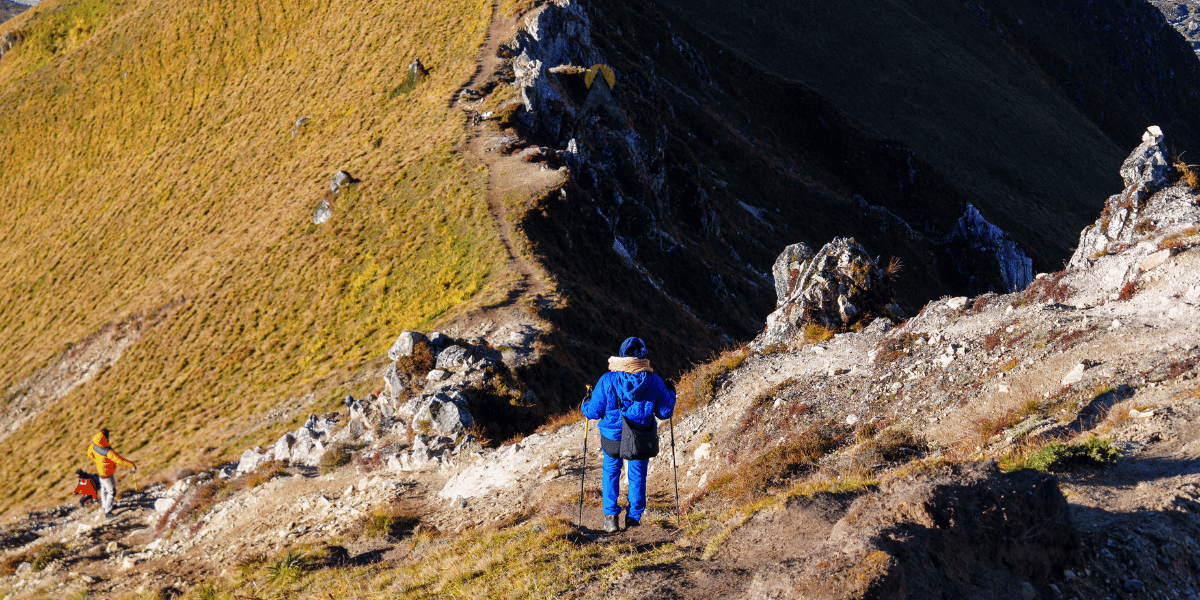
In fact, Langtang is a zone that is prone to earthquakes, and the consequences of the 2015 earthquake in Langtang Village and Helambu region are some of the most devastating examples.
Apart from that, many regions see landslides, a common occurrence in the mountains. These natural disasters keep changing the trail conditions, and every now and then, the locals have to reroute and amend the trails.
Newer trails are often more rocky and the constant ascent and descent in such conditions require more balance. This can make movement slower, affecting the pace and energy levels of individuals.
Season and Weather Conditions
Spring and autumn are the best seasons for trekking, and this is not just for Langtang Region but almost all the trekking destinations of Nepal. Apart from being graced with the clearest skies and perfect views, the temperature is also ideal for strenuous activities like trekking.
Additionally, trekking in these seasons also saves you from harsh weather conditions like heavy rainfall, snowfall, and blizzards. However, be prepared to be met with snowfall in early spring and rainfall around early autumn.
On the other hand, monsoon and winter are known as the off-season of trekking.
That’s because in the monsoon season, the water level in the river rises at an alarming rate, road conditions remain poor, leeches swarm the trail, and frequently occurring landslides make it quite risky. However, if you’re planning to go to Panch Pokhari or Gosaikunda (and other sacred trails), monsoon season can still be a good time!
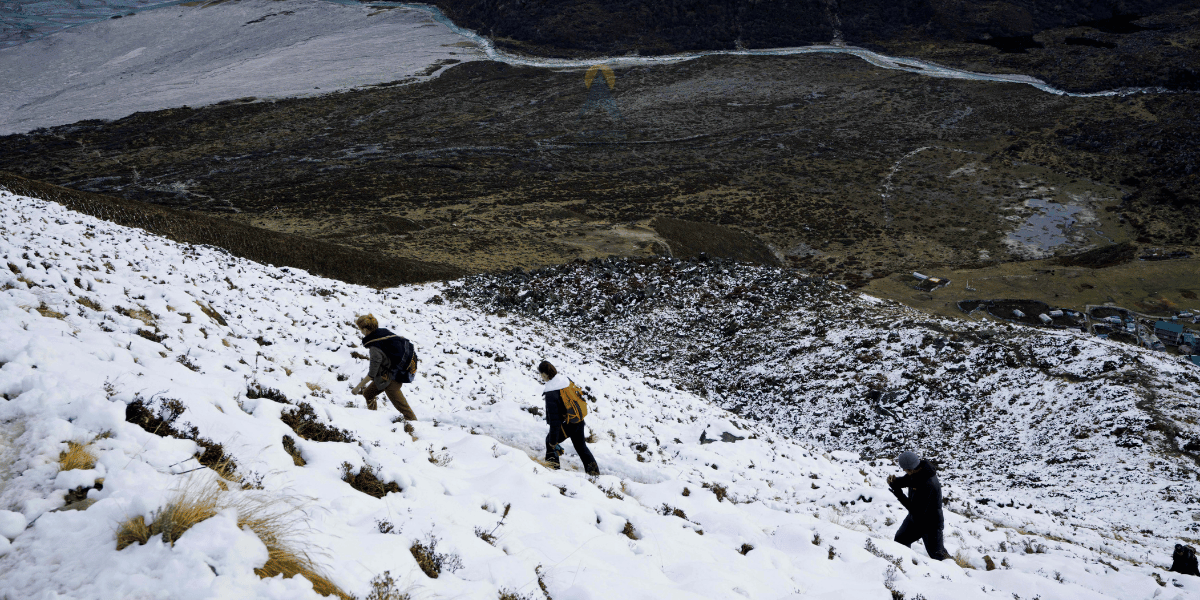
Likewise, during winter, the temperature drops below -10॰C in places like Langtang Village, Gosainkunda, and Kyanjin Gompa. With snow and ice covering the trails in higher-altitude regions, the trails turn slippery, increasing the chances of accidents and injuries.
While heavy snowfall can result in trail closures, the freezing temperatures can cause hypothermia. And what’s even worse is that with limited daylight hours, you might not be able to move according to your itinerary.
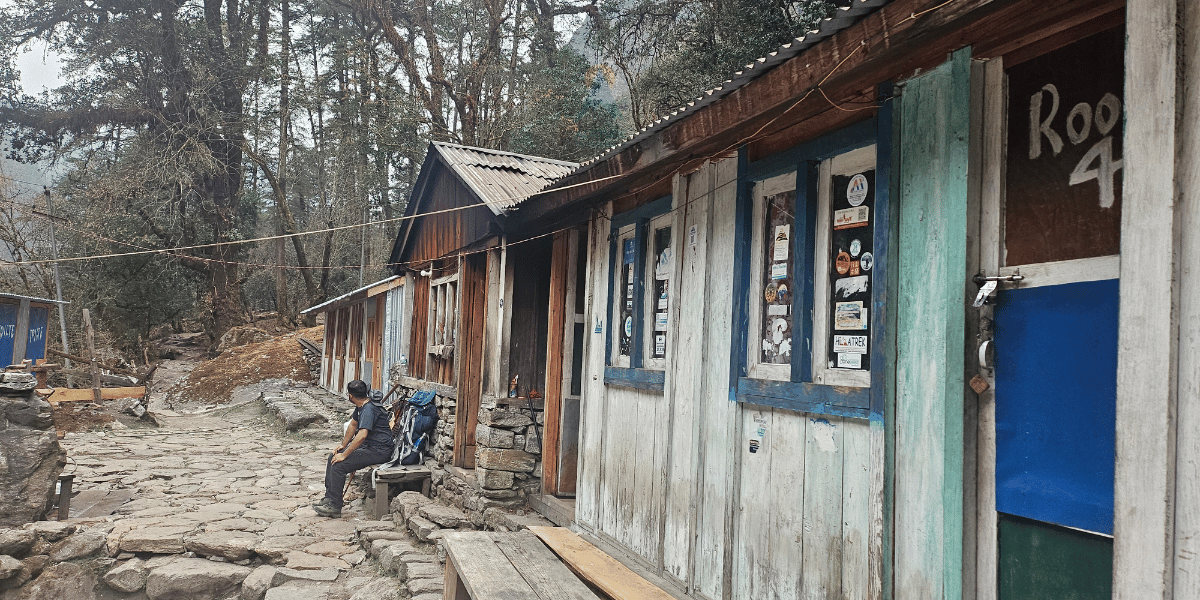
Also, majority of the locals relocate to warmer places during winter and may shut down their teahouses and homestays. This leads to limited availability of food and accommodations.
Personal Fitness
As I mentioned before, apart from environmental conditions, trekking difficulty is also determined by personal factors. One of the major personal factors is your personal fitness.
Everyone’s level of stamina, muscle recovery, and strength is different. So if a trek is easy for one person, it could be extremely tiring for another. Similarly, flexibility and balance are a must for rocky and loose terrains.
If physical performance is one thing, then mental performance is another. So ask yourself, how strong is your willpower? Are you mentally and physically resilient enough to complete the trek?
Many people neglect the importance of physical checkups before going on short treks. However, when a trek lasts for multiple days, you need to assess your physical health. Check your muscular and cardiovascular endurance. This is more important if you have pre-existing medical conditions.
So if you want to prepare for this Langtang trek, start at least a month ahead. You don’t have to perform heavy weightlifting. Start with short walks and runs.
Focus on building your strength and endurance. Cardio is one of the best options if you want to build your lung endurance. But remember, working out alone is not enough if you don't follow a proper diet.
And lastly, after you enter the trail, do not compare yourself with other trekkers if you are a beginner. It could be easier for others because of their past experiences. Keep a positive mindset and focus on the destination and your purpose.
Altitude Sickness
If there is one thing about altitude sickness, then it’s this: your fitness will not save you. In fact, many gym goers who pay no heed to altitude rush the ascent, which only makes them more prone to altitude sickness.

In high-altitude regions where oxygen levels are low, your body prioritizes the functioning of your vital organs. And while these activities sustain your body’s functioning, you need to give your body enough time to adapt to the decreasing oxygen levels.
Once you get closer to or cross the altitude of 3,000 m, you will start noticing the effects of low oxygen levels. Your physical performance will not be the same as usual. You might also notice effects like breathlessness, disturbed sleep, dehydration, and loss of appetite.
Although these effects are manageable and one can push through, do not dismiss them, and make sure to look out for other symptoms of altitude sickness. If you sense headache, dizziness, insomnia, and nausea, then you should retreat to a lower altitude or get immediate help.
In conclusion, even if the ascent is steady, high-altitude in Langtang treks can make the overall experience more difficult. So climb gradually, eat healthy, and drink plenty of fluids!
Packing Style
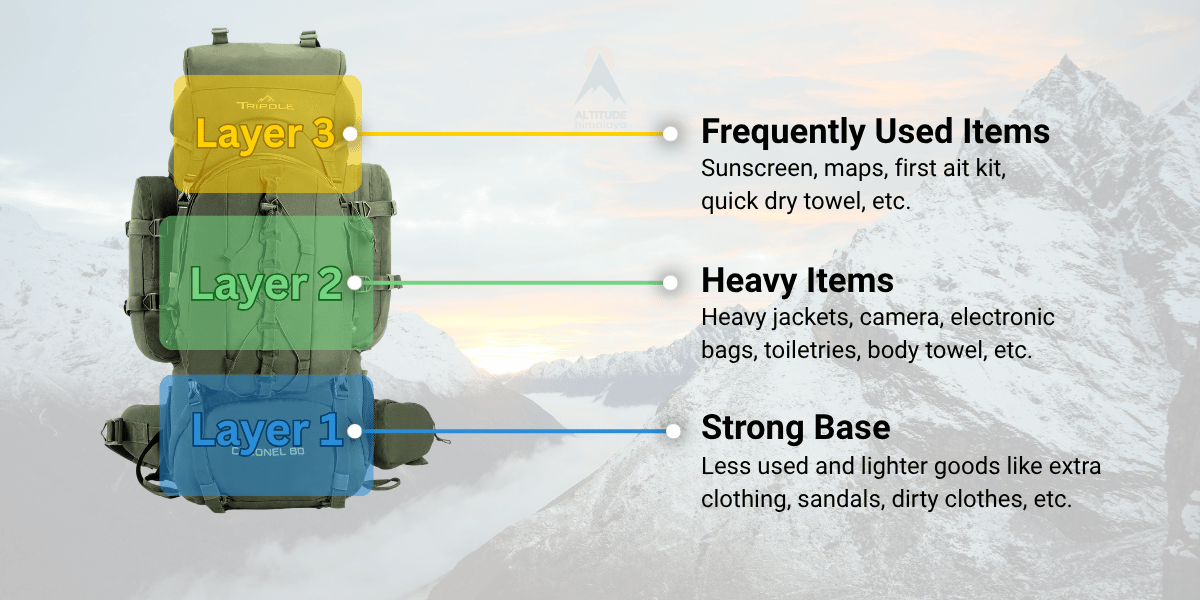
While packing for your trek, the rules are different. It’s not as simple as packing for a vacation where you chill by the pool. Assuming you have a proper trekking bag, here are the three main rules you need to remember while you pack for your trek:
- Rule 1: Don’t pack more than 15% to 20% of your body’s weight. If you overpack, you will be the one facing the consequences. And even if you plan on hiring a porter, I hope you stick to ethical practices and humane treatment.
- Rule 2: Understand the layering methods while packing. Light and compressible items go in the base of the bag. Heavier items go in the middle section. This is the physics of packing through which you maintain the gravity of your bag close to your body, providing you with support and balance. And the items that you need for quick access go on the top of your bag. Make sure to keep your water bottles in the side pockets of the bag because you will need to access them multiple times.
- Rule 3: Only pack the things that you need. Nothing more, nothing less. Although they have trekking bags with built-in back support, if you do not pack your bag properly, the weight will strain your shoulders. Furthermore, if you lose balance while walking, the weight will pull you back, increasing the chances of serious injuries.
If you won’t follow these 3 golden rules, then it might be difficult for you to carry the bag through the trek.
Trekking Style
How do you like to trek? Are you someone who likes to dwell in nature in your own company? Or is trekking a sidequest that you and your friends go for together? Or are you trekking to a whole new place and would want an expert to learn more about the people and the landscape?
For your trek in the Langtang National Park, you have three options: solo trekking, guided trekking, and group trekking. The cost of these treks varies accordingly. While the choice is up to you, let’s see how each style can determine the difficulty of the trek.
Solo Trekking
If you are an experienced trekker, then solo trekking will not feel like a challenge to you. You will be able to move at your own pace and at your own comfort.
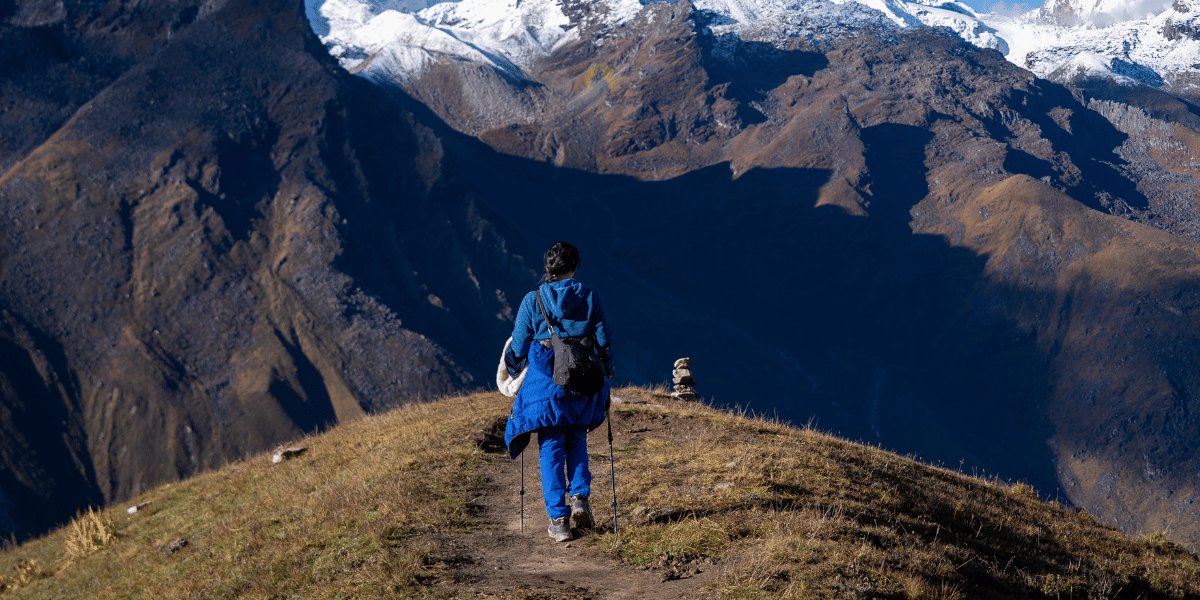
But if you are a beginner or if your trek in Langtang is your first trek, then solo trekking might not be for you. Because firstly, you won’t have anyone to motivate you when you are exhausted. And additionally, you might also have difficulties navigating the path.
But regardless of your status as a beginner or an experienced trekker, please be reminded that you need to be responsible for everything. From creating your itinerary according to your ease to taking care of your baggage, you need to prepare for every possible issue that might arise on the way.
Lastly, just be sure that the trail of your choice allows Free Individual Trekkers (FITS). There are trails in Langtang where you can trek alone, but there are some where FITS are completely prohibited due to their restricted area status.
Guided Trekking
Guided trekking is one of the best styles of trekking if you are exploring a new trail, whether alone or in a group. This style of trekking typically comes with a proper trekking crew.
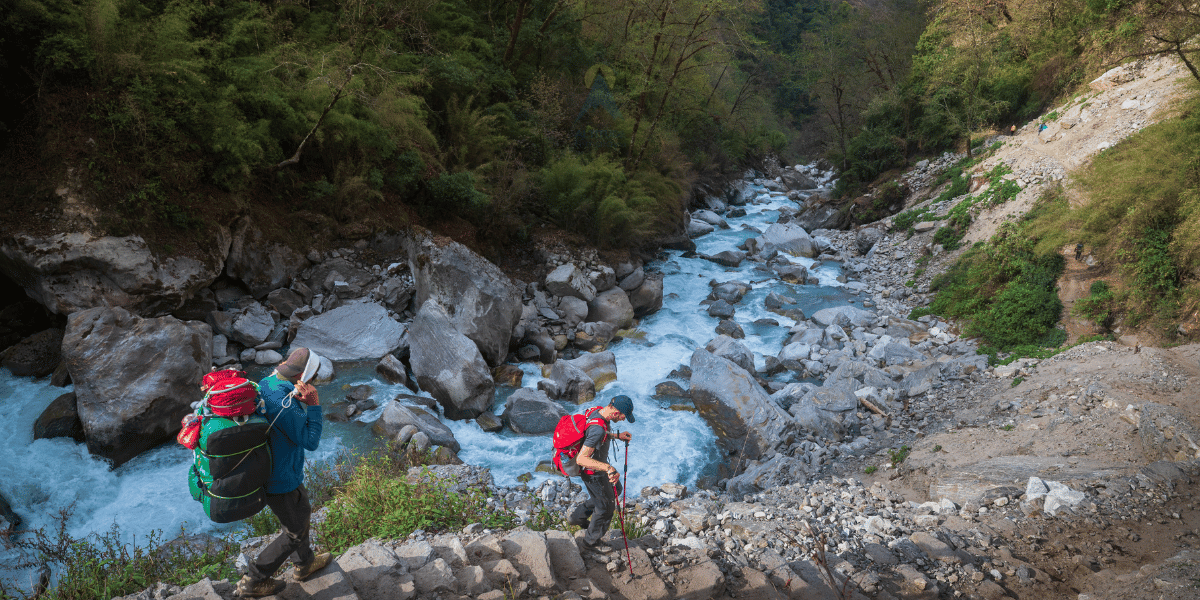
Apart from a licensed guide to help you navigate and give you lesser-known information about the places and people, you can also decide if you want a porter to help with the logistics.
Having a guide also means having accommodations and meals sorted for you. They usually have personal connections with lodges and teahouses, so they can ensure that you get the best services.
Lastly, they are educated about AMS symptoms and the fragile landscapes, helping you avoid medical emergencies and accidents while trekking.
Group Trekking
Group trekking can be one of the most fun experiences in the remote areas of Langtang where recreation is mostly limited to nature. If you already have a group of friends you want to trek with, then trekking can certainly help you bond better.
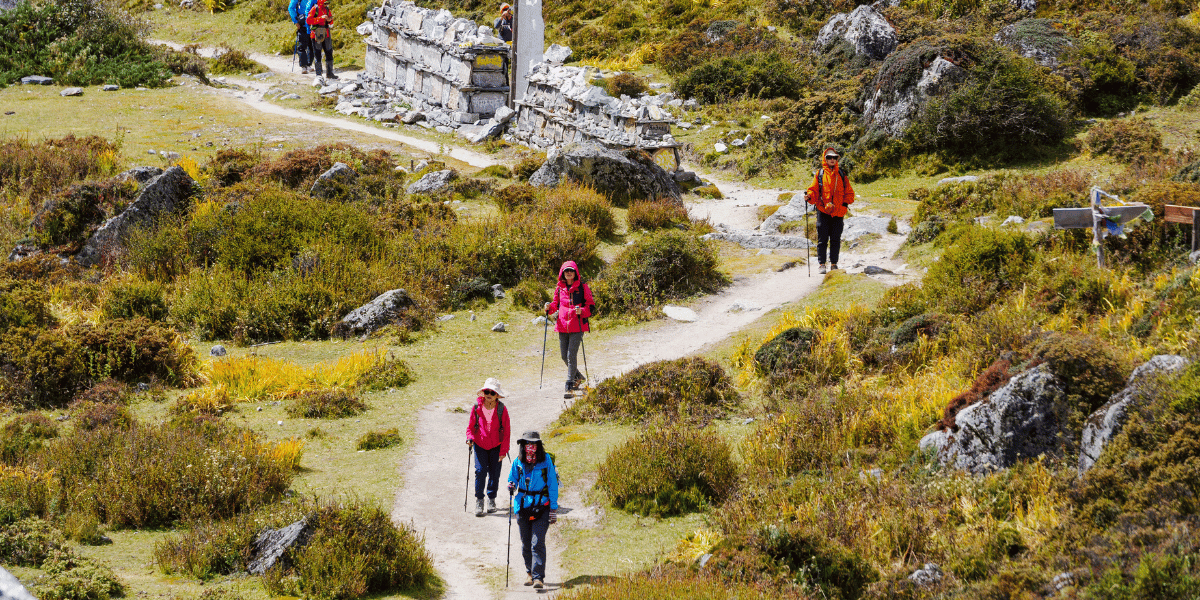
And if you don’t, you can always join one of the groups created by the agency. This gives you the chance to meet people from different parts of the world and learn about different cultures and experiences.
As for the difficulty, trekking with a group can help build motivation when fatigue kicks in. Your group members can be your constant source of encouragement. They can also provide you with physical support if you fall ill or get injured.
However, you might have to compromise at times because everyone has different habits and preferences. But adjusting is one of the biggest lessons of trekking, isn’t it?
And be prepared to be flexible as you have to fit in with the group schedule. If you are an experienced trekker, be patient with the beginner members’ pace.
Now that you know how each style determines the difficulty of the trek, make sure to pick a style and trail that is suitable for you.
Emergency and Rescue Challenges
In the remote areas of Langtang National Park, isolated from transportation and roadway connections, the idea of a hospital is like fiction. Once you reach regions disconnected from roadways, you will only find basic health posts.
But that does not mean that health posts are present in every settlement. Each health post is located miles apart from one another. This explains the emphasis on carrying your personal first-aid kit.
This is not about the steep climb. It is more about the increased level of risk. You need to be mentally aware and prepared to face the risks that are associated with the adventure.
As you reach more isolated areas, you need to be more alert about the trail and the chances of accidents. I know the pressure and the need to be extremely self-reliant can be stressful, so this is a major factor that you need to consider before you sign up for the trek.
There are many regions where cell networks are unavailable, which makes communication either slow or nonexistent. So if you are somewhere where porters, mules, and horses are unavailable, or away from health posts and transport facilities, your only chance of rescue is via helicopter.
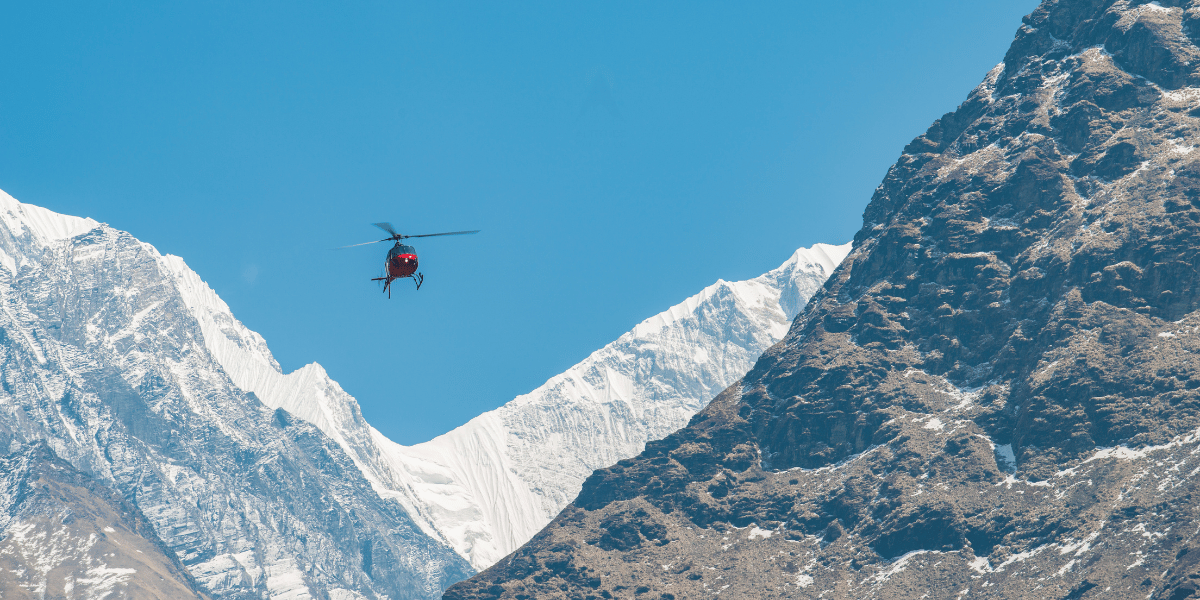
While we hope that there won’t be any need for such services, make sure you have your trekking permits and travel insurance in case any emergencies arise.
Route-by-Route Technical Difficulty Breakdown
Let’s get more practical! In this section, we will examine different trails of the Langtang National Park and provide you with details on the toughest climbs of each trail.
Langtang Valley Trek
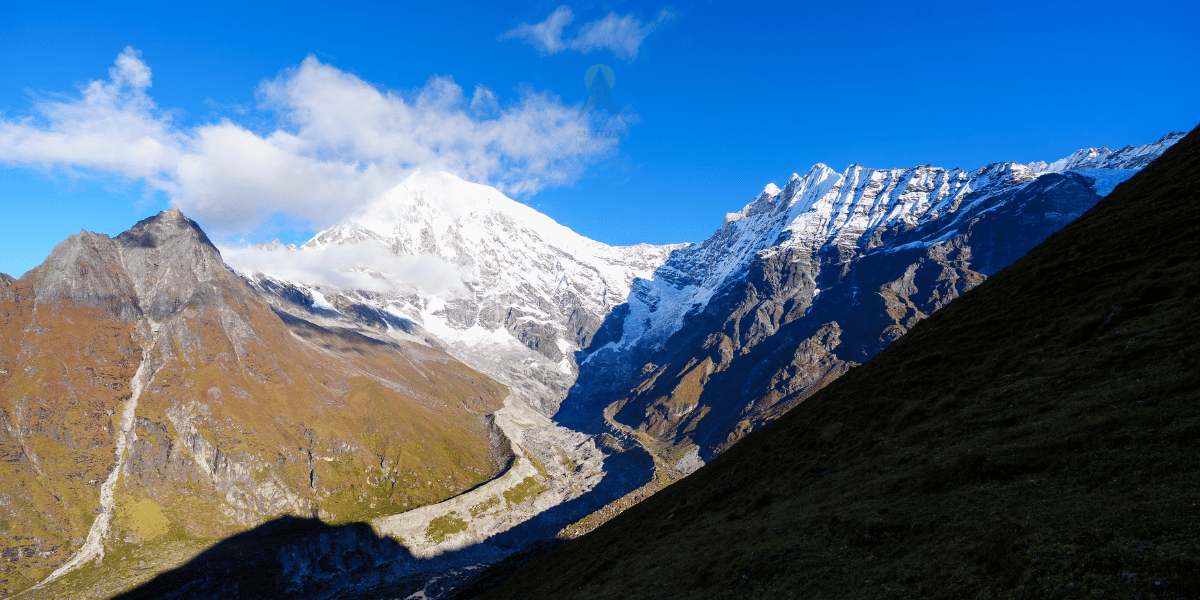
If you are doing the popular Langtang Valley Trek that typically lasts for 5 to 7 days, then these are the places that you need to look out for in terms of difficulty:
Langtang Gumba to Langtang Village
The remains of the catastrophic 2015 earthquake can be witnessed as one reaches closer to Langtang Village. While the trail is not too difficult, it most certainly gets narrower.
And since many people reach Langtang Village by late afternoon, if you are walking that way in the dark, you need to be extra careful. The terrain is loose with sharp rocks and requires you to maintain proper balance as the Langtang River flows right below the trail.
Kyanjin Ri
After reaching Kyanjin Gompa, many trekkers choose to go on a side trek to Kyanjin Ri (4,700 m). There is also a lower viewpoint, known as Lower Kyanjin Ri, located at an altitude of 4,400 m.
Although the ascent is quite moderate, the climb right before the Lower Kyanjin Ri is notably difficult. The trail is the steepest there, and you might feel as though you are walking up a wall rather than a hill.
Tserko Ri
Trekkers are strongly advised to start this trek early in the morning as the wind gets harsh by afternoon.
When you start the trek from Kyanjin Gompa, the walk feels pretty laid back. In fact, you have to make a small descent before you start walking uphill again.
The climb gets tougher as you cross the altitude of 4,000 m. After this point, the trek keeps getting difficult all the way to 4,200 m, also known as the lower viewpoint of Tserko Ri amongst the locals.
However, the steady path won’t last long. As you make your way higher, the trail gets more vertical and remains the same all the way to the top of Tserko Ri. And if the ascent is this steep, you can only imagine how inclined the descent will be.
We went there in early March while it was still snowing. So if you are doing this trek around that time or in winter, then make sure to carry crampons and leg gaiters for your own safety and convenience. Because the melting snow made the descent extremely slippery.
Gosaikunda Trek
Gosaikunda Lake (4,380 m) is one of the holiest lakes in Nepal. But it is evident that sacred places are often difficult to arrive at. It takes about 2 to 4 days to make it there and as we all know, treks that last for multiple days come with tough climbs every now and then.
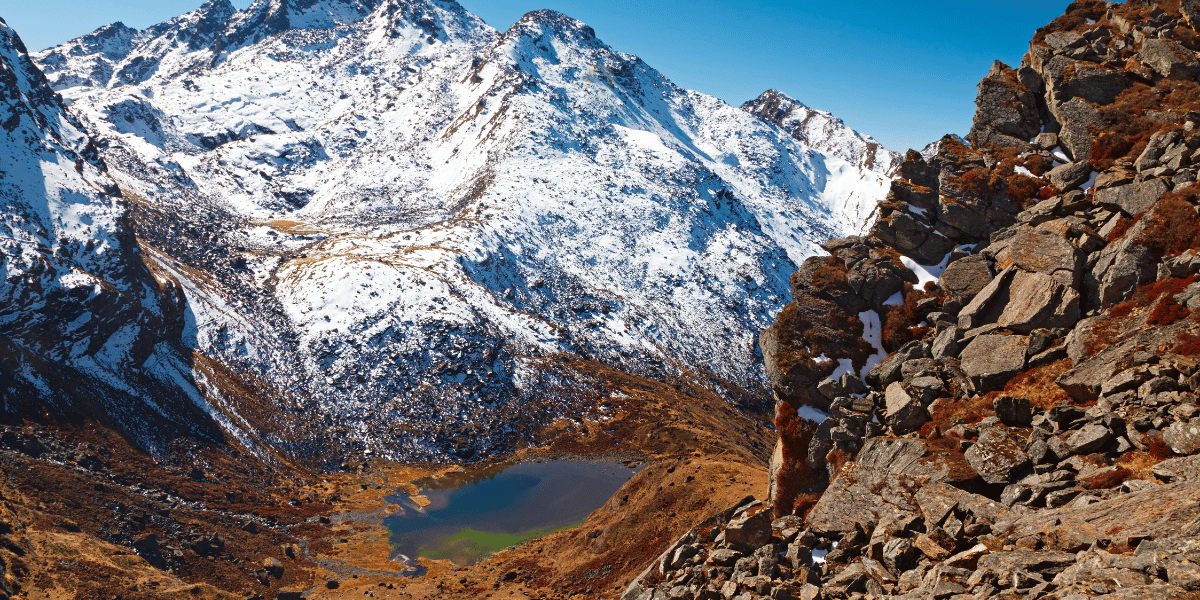
In the case of the Gosaikunda Trek, the tough climb starts around Lauribina (3,910 m). While it’s obvious that all treks require walking inclined uphill trails, one of the reasons why the walk gets difficult around Lauribina is also because of the high altitude.
The rocky path is the cherry on top, which demands pace maintenance from trekkers as many experience fatigue as they walk onwards. This is why many people make a stop at Lauribina for the night and resume their trek to Gosaikunda the next morning.
Tamang Heritage Trek
If your trek to Tamang Heritage does not include Langtang Valley, then the trek is quite easy compared to other trails in the Langtang region. But since Langtang Valley is also inhabited by indigenous Tibetan Tamangs, many itineraries now include Langtang Valley.
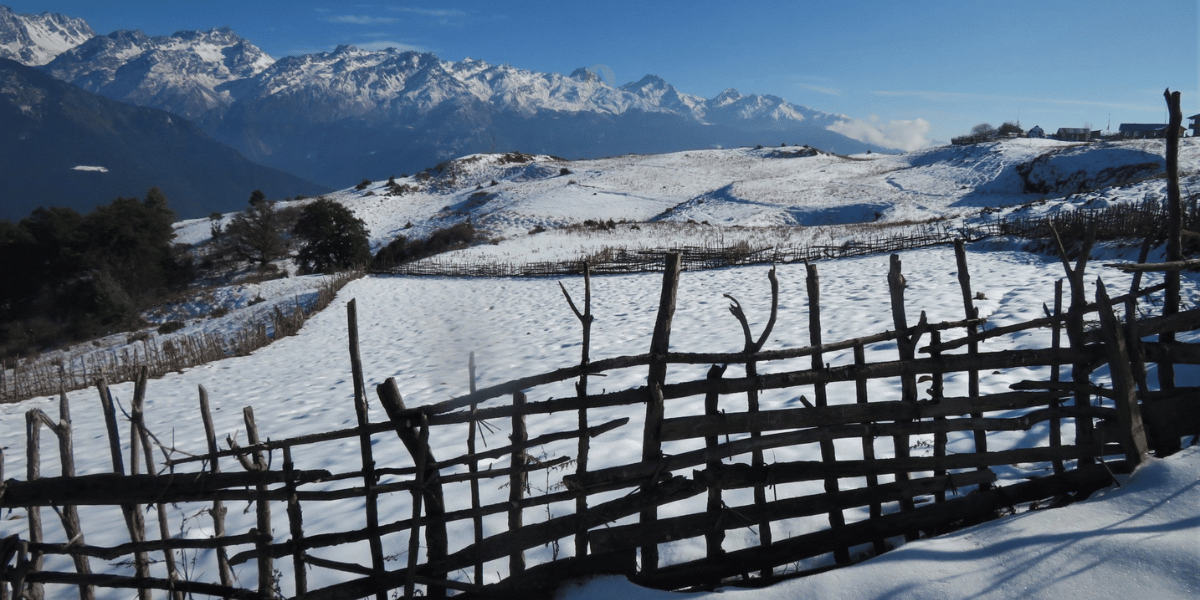
Without Langtang Valley in the itinerary, the highest altitude you will reach on the trail will be at Nagthali (3,165 m). In this case, the trek difficulty will mostly be due to the constant ascent and descent.
If you do not give your muscles sufficient time to recover, you might experience muscle soreness and joint pain. For this reason, you must not rush the trek despite the stops being at an altitude lower than 3,000 m. Instead of rushing, take time to enjoy the culture and engage with the people.
But if you do have Langtang Valley included in your itinerary, then you will join the Langtang Valley Trek from Briddhim (2,229 m), making your way to Lama Hotel (2,515 m).
After that, the difficult regions are the same as Langtang Valley Treks: Langtang Gumba to Langtang Village, Lower Kyanjin Ri, and Tserko Ri.
Panch Pokhari Trek
The Panch Pokhari Trek will lead you to a cluster of 5 lakes that are nestled like sapphires right below the Jugal Himal Range. Amidst its growing popularity, you are more likely to find more Nepalese trekkers than foreigners.
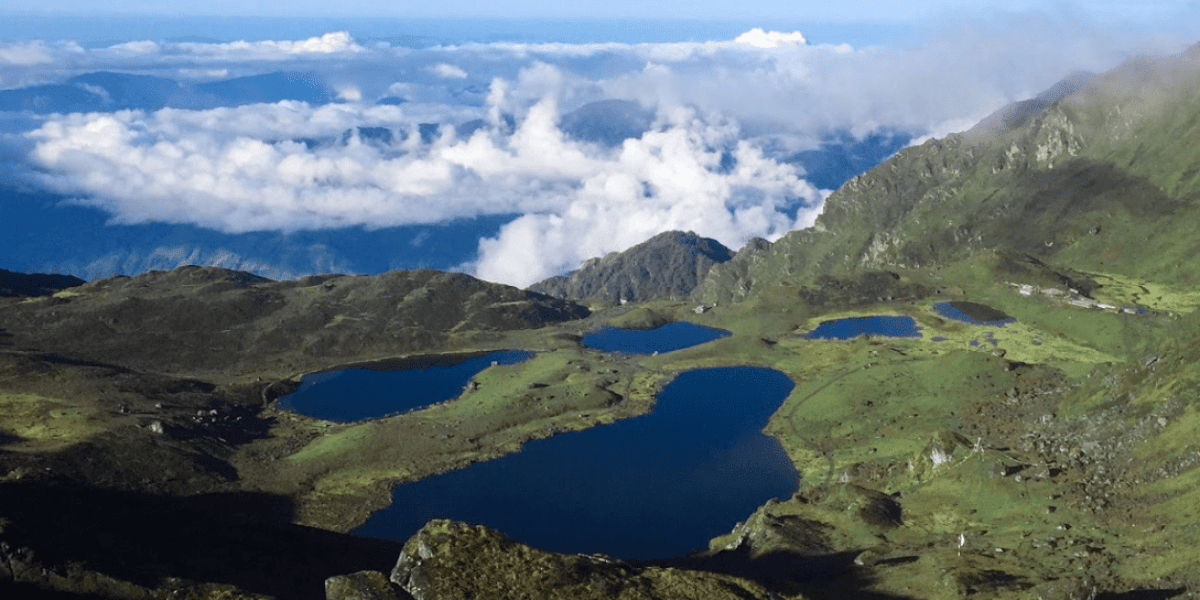
As for the difficulty, your toughest climb is most likely to start at Saat Ghumti (3,800 m), lasting till Lauribina (approx. 4,015 m). No, this is not the same as Gosainkunda’s Lauribina. Coming back to Saat Ghumti, Saat Ghumti basically means ‘Seven Bends’.
So in this case, you will have to climb uphill while going through seven winding turns and make your way up to the spot above 4,000 m. Many trekkers have reported this as one of the most exhausting and difficult paths in the Panch Pokhari trek.
But once you reach Lauribina, you will find yourself celebrating quietly because Panch Pokhari and its viewpoint are close by.
Helambu Circuit
Similar to Tamang Heritage Trail, the Helambu Circuit has two distinct trails. The classic circuit takes you through the villages of the indigenous tribes of Helambu. This means the highest altitude in this old circuit is Aama Yangri (3,772 m).
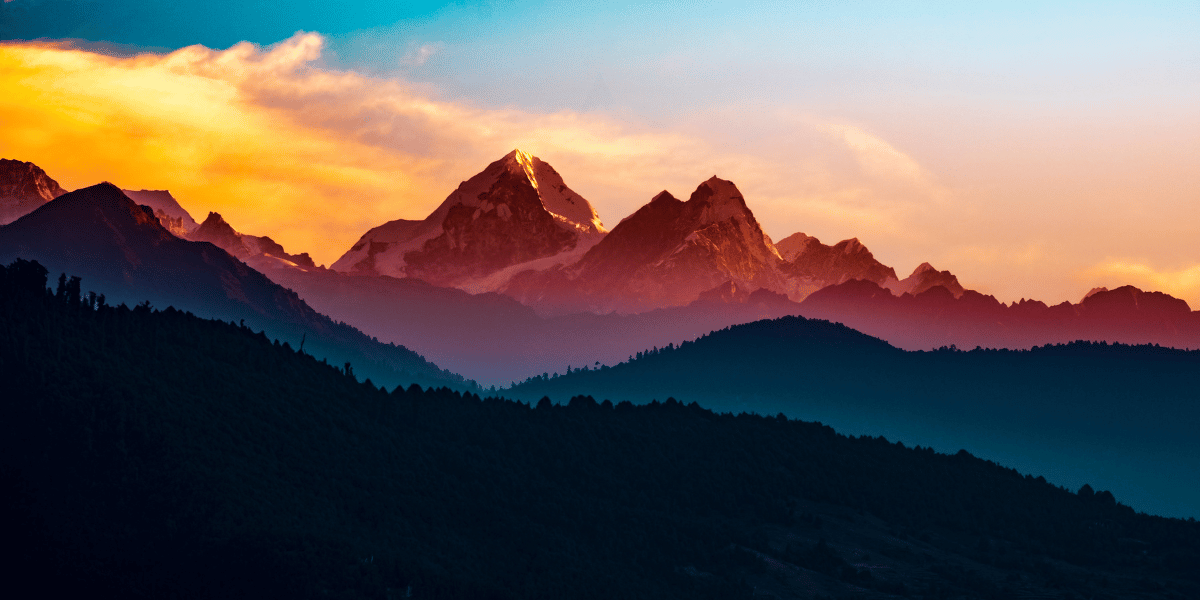
Although the climb is steep after Tarkeyghyang (2,600 m), the walk won’t last longer than 4-5 hours for beginners. Additionally, construction of roadways has now made the region accessible for non-trekkers these days.
But make sure that you take a 4WD if you are driving all the way to the base camp. For trekkers, the trail goes through forests where the atmosphere is cool, but be careful as the path gets slippery after rain.
If Nepal is a paradise for trekkers, then you can be sure that the Nepalese have trekking in their blood. So to keep the thrill of the Helambu Circuit alive, a newer circuit has been introduced.
In the newer version, the Lauribina Pass (4,610 m) has been included, and some trekkers also incorporate the Gosainkunda Trek trail in the same itinerary. In that case, the toughest walk will be through this pass.
Compared to other passes in the region like the Ganja La Pass (5,180 m) and Tilman Pass (5,350 m), Lauribina Pass is at a comparatively lower altitude. However, given that it is still at a higher altitude, the altitude, combined with unpredictable harsh weather conditions, can definitely make the trek challenging.
Jugal Himal Trek
Before we even start with the trail of the Jugal Himal Trek, let’s look into one of the major factors that adds to the difficulty of the trek - Accommodation.
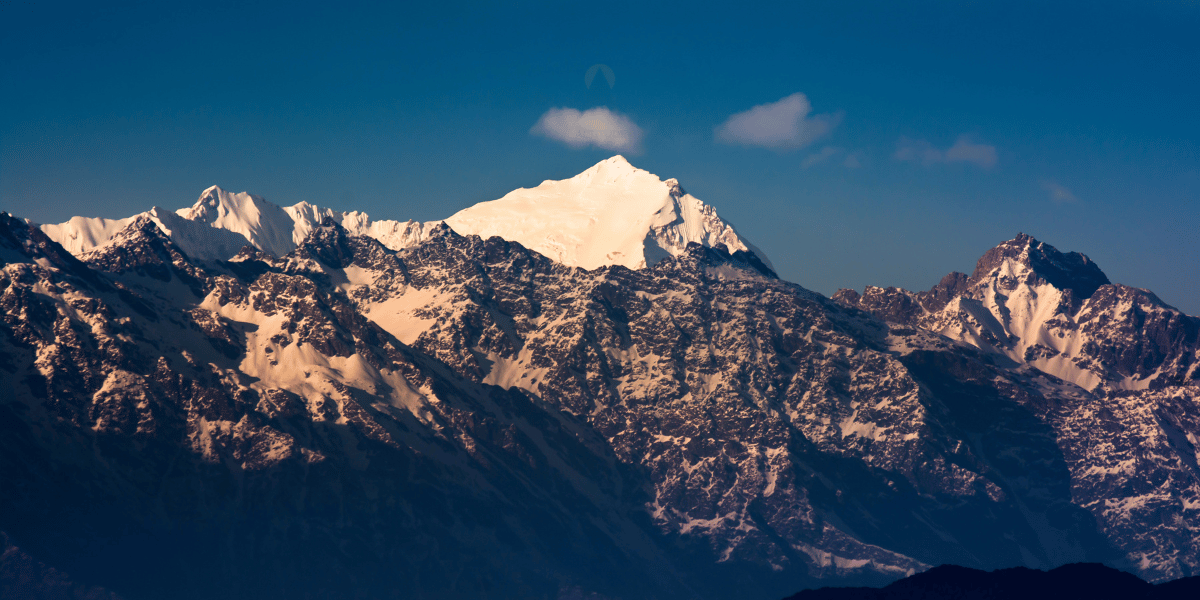
Unlike other trails like that of Langtang Valley and Tamang Heritage Trail, Jugal Himal Trek is not as happening, and it has only been a few years since it got popular. This means most of the stops on the trail do not have standard teahouses.
In fact, some stops do not have teahouses at all. This leads trekkers to rely on camping for accommodation, drastically reducing the level of comfort they can expect on the rest of the trails of Langtang National Park.
Talking about the trail, Jugal Himal’s trail takes the same route as that of Panch Pokhari’s. As a result, Saat Ghumti and Panch Pokhari’s Lauribina are already on the list.
As for the trail, once you cross Bumbaserpu (4,200 m), the climb to the High Camp (5,200 m) will feel like a battle between the hills and your spirit. Additionally, you will be walking on the Jugal Glacier from the Base Camp (4,700 m) to the High Camp.
Walking on a glacier means taking your chances against harsh weather conditions, extreme cold, and unpredictable trails that are complex to navigate.
Peak Climbing: Yala Peak and Naya Kanga
Based on NMA’s list of trekking peaks, Langtang National Park is renowned for two of its climbing peaks: Yala Peak (5,732 m) and Naya Kanga/Ganja La Chuli (5,863 m).
So let’s look into the difficulty descriptions for each of these peaks:
Yala Peak
If you are summiting the Yala Peak for your first climb, then I expect you to be an experienced trekker who has completed numerous high-altitude treks.
In this case, the first test of your strength will take place when you cross Tserko Ri on your way to Yala Kharka (approx. 4,600 m). Please note that there are no accommodation providers beyond Kyanjin Gompa, and you will have to camp at the base camp.
Then the toughest part starts on the day of the summit. You start early in the morning before sunrise and cross the elevation of 5000 m. Even if the peak is known for non-technical climbing, expect the climb to be steep and risky as you reach the final ridge.
Completing the summit can feel draining, as the entire climb back and forth can take more than 6 hours. Be careful as you make your way across the loose rocks and stick close to your group and your guide.
Naya Kanga (Ganja La Chuli)
Compared to Yala Peak, Naya Kanga is known for being more difficult. The climbing trail goes through Yak Kharka (4,817 m) near Palphu Khola.
After crossing Yak Kharka, you make your way to High Camp (4,987 m) where you spend the night before the summit. The summit takes longer than Yala Peak, taking almost 9 hours for a round trip.
The climb as you approach the summit can be as steep as you can imagine, and the crevasses make it even more difficult.
If peak climbing is not for you, you can always choose the alternative trek to Ganja La Pass (5,180 m). This pass is one of the most thrilling passes in the Langtang Region.
Note: Always ensure that a rope fixing team is tagging along with your group for the Naya Kanga summit. Gears like crampons and ice axes are a must for both peaks. Please be reminded that Naya Kanga requires more gear, as it is classified under Alpine Grade PD+, meaning that the route does have parts where technical climbing is involved.
Which Langtang Trek is Right For Me?
Now that you know all the relevant details regarding the difficulties of trekking in the Langtang Region, let’s find out which trek is suitable for you based on your purpose and capacity.
Best for Beginners
Before I start on this, here’s a quick reminder; trekking is not an easy task. It is an activity that pushes your limits, mentally and physically. But to decide that you want to go on a trek is progress in itself.
So if you are a beginner, here are some beginner-friendly treks that Langtang National Park welcomes you to:
- Langtang Valley Trek: This is one of the most loved treks in Nepal and can be completed within a week’s time. While some parts of the trail are as steep as it can get, beginners can easily push through.
Additionally, the accommodation facilities are decent and plentiful. So even if you get tired, you will certainly find a place to rest for the night without any difficulties.
This factor makes the trek more flexible and gives you enough time to recover for the next day. And instead of hiking up to Tserko Ri, you can opt for Kyanjin Ri or its lower viewpoint.
- Tamang Heritage Trail (without Langtang Valley): If you do not want to risk altitude sickness on your first trek, then go for the shorter version of the Tamang Heritage Trail.
The shorter itinerary typically lasts for 6 days, and the highest altitude region of this trail is at 3,165 m (Nagthali). This version is not as exhausting as the one with Langtang Valley.
And similar to the Langtang Valley Trek, the accommodations are quite decent here. Furthermore, in case of any emergencies, most of the settlements have connections to roadways.
Both of these treks are also the best options for short treks if you are short on time. Lasting less than a week, these treks are the perfect choice for beginners and experienced trekkers.
While Gosainkunda Trek is also beginner-friendly, I would suggest that you save it for your second trek in Langtang National Park. This is not because of the difficulty level; it’s more about experiencing Langtang Valley first, the heart of the national park.
Best for Experienced Trekkers
If you are an experienced trekker, then you have a whole different benefit of trekking in Langtang National Park; combining two or more trails, depending on the time you have. Here are some trails that might interest you:
- Langtang-Gosainkunda Trek: This can be one of the most amazing experiences where you combine the sacred Langtang Valley with a visit to the holy Gosainkunda Trek.
You can complete this trek within 10 days. In those 10 days, you will be able to view Langtang Lirung from Kyanjin Ri and Tserko Ri and the ranges of Langtang Himal and Jugal Himal from Lauribina.
And if you have already done the Langtang Valley Trek, you can go for the Gosainkunda Trek but make a change in your itinerary. Instead of returning to Dhunche or Syabrubesi, you can continue your way ahead to Lauribina Pass and end your trek at Sundarijal. This itinerary, too, can be completed within 9 days.
- Jugal Himal Trek: If you have experience trekking in Nepal or other remote places, then you are prepared for the Jugal Himal Trek. What’s even better is that the Jugal Himal Trek comes with Panch Pokhari Trek.
It requires about 14 days of your time. If you want, the Jugal Himal Trek can also be started from Barhabise (975 m). In that case, you can also visit Bhairav Kund (3,985 m) in the Gaurishankar Conservation Area.
The reason why this is best for experienced trekkers is because the trail is not as commercial and can be a real tester for one’s navigation skills. Additionally, the lack of teahouse infrastructures means that this trek is only for those who are confident about being self-sufficient.
Hardest Treks in Langtang
The trails mentioned in this subsection are some of the best treks but also the hardest due to different reasons. While some are attributed to high altitude, others are mentioned for their duration and distance. Here’s the list for those chasing the adrenaline:
- Tamang Heritage-Langtang Valley-Gosainkunda Circuit: If the name is this long, then you can imagine how long the trek is going to last for. This trail is the combination of the Tamang Heritage Trail, Langtang Valley, and Gosainkunda and takes 19 days for completion (excluding the buffer days in case of emergency).
Apart from the high altitude regions, which are obviously guaranteed, what makes this trek one of the hardest is its duration. This trek comes with countless ascents and descents. So if you are adding this circuit to your bucket list, then make sure to prepare physically at least a couple of months prior to your journey.
- Helambu Circuit with Gosainkunda: This is another interesting combination that one can start from Chisapani (2,165 m) or Syabrubesi. Apart from Gosainkunda Lake, two other major attractions in this trek are the Ama Yangri Base Camp (3,220 m) and the Lauribina Pass.
This trek can be completed within 12-14 days. Although the lower Helambu circuit of this trek is quite easy, the trek will be difficult after you complete the Gosainkunda trail. Therefore, this trek too requires physical preparedness.
If you want, you can leave out the Gosainkunda and go for the Upper Helambu Circuit. For this trail, you start from Chisapani, and once you reach Thadepati Bhanjyang (3,690 m) you move towards Takpa Chasa instead of Ghopte.
By taking this route, you trade the Lauribina Pass for Gupula Pass (4,353 m) and Pisang Si Pass (4,246 m). The Upper Helambu Circuit would take more than a week to complete.
Best Remote Adventures
In the present day, some trails of the Langtang Region have gone through drastic changes due to developing roadways. But by maintaining trekking trails, the people have tried to keep the essence of wilderness alive.
However, if you are looking for a completely isolated experience in nature, then these are the main highlights of Langtang region:
- Jugal Himal Trek: When I said above that this trail lacks teahouse infrastructure, I meant that after Panch Pokhari, you will have to rely on camping.
Because of zero commercialization, the Jugal Himal Trail never had the chance to get developed as the modern definition of a proper trekking trail. You will only realise this once you enter the trail.
With a trekking crew, you will need to carry almost everything for your survival during the trek. This means after Panch Pokhari, you will rarely find teahouse owners inviting you in for the night’s shelter and a warm plate of Daal Bhat.
You and your team can consider yourselves to be literally “on your own” after you start from Panch Pokhari while heading towards Chidakpu Kharka (2,513 m). And this is the case all the way to High Camp (5,200 m). No teahouse, no health post, and rescue? Only through a helicopter.
- Panch Pokhari: The road that leads to Jugal Himal, Panch Pokhari, might not be as remote as Jugal’s trail, but it is a notable contender for this subsection. Compared to other trails, this trail has fewer teahouses with reduced services and amenities.
Some teahouses are built adjacent to barns for cattle. But do not expect the teahouses to be like the ones you can find in Langtang Valley Trek or the Tamang Heritage Trail. Some accommodations only have mattresses instead of a bed.
And if you are trekking during the off-season, then there are high chances that you might find all teahouses closed. So to stay on the safer side, carrying a tent can never go wrong.
- Langtang Valley Trek (for Langshisa Kharka and Yala Base Camp): If your Langtang Valley Trek goes beyond Kyanjin Gompa, then consider yourself to be ‘out in the wild’.
While Kyanjin Gompa has some of the best teahouses and lodges, the scene completely flips after that because after Kyanjin Gompa, it is only you and the mountains, no settlements in between.
Your journey to Yala Peak’s base camp (excluding the summit) or Langshisa Kharka (4,080 m) will require a proper crew. Similar to Jugal Himal Trek, from accommodations to food, you will have to ensure that you have everything.
Best Cultural Experiences
If we’re talking about the Langtang Region and culture in the same conversation, then here’s one thing for sure: you are going to see a beautiful blend of Tibetan and Nepalese culture.
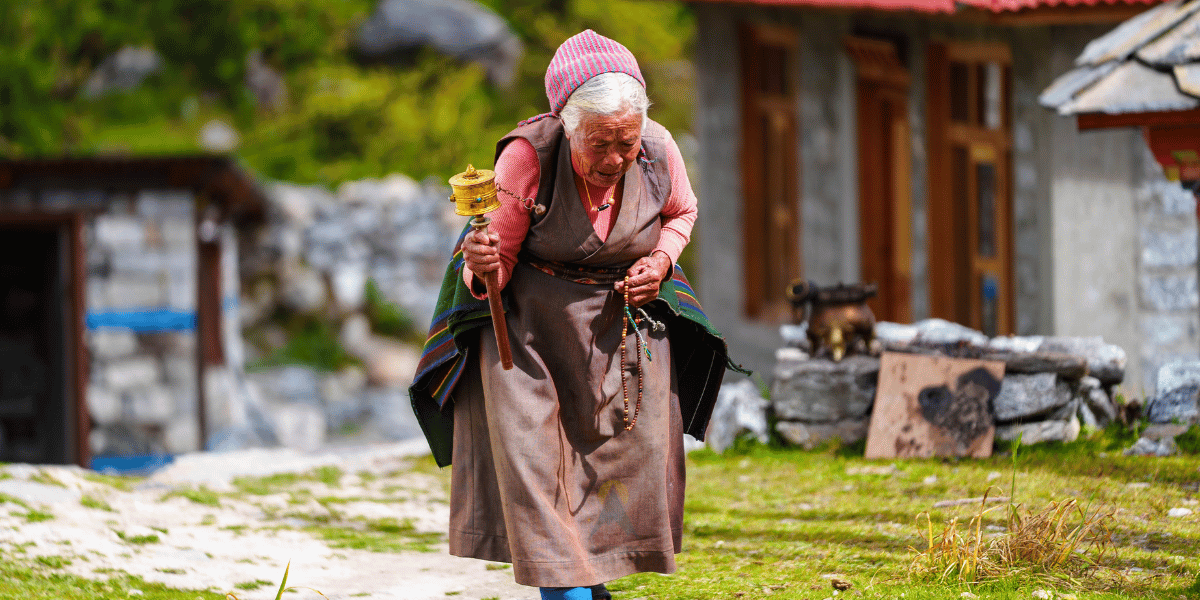
Inhabited mostly by Tibetan Tamangs and Hyolmos, from their architecture to their ensemble and their cuisine, the Langtang Region is one of the most engaging regions one can go on a trek for a cultural experience.
Here is the list for trails that are going to engrave Tibetan-Nepalese culture in your heart for the longest time:
- Tamang Heritage Trail x Langtang Valley Trek: Do it combined or separate; both of these trails offer you the unadulterated charm of the Tamang people.
While the Tamang Heritage Trail goes through the Tamang villages that are located at a comparatively lower altitude, the Langtang Valley takes you to the higher settlements of the indigenous tribe. And with the shift in altitude, you will notice the change in infrastructure and the architecture.
If you can see the blend of shamanic as well as Hinduism with Buddhism in the Tamang Heritage Trail, Langtang Valley follows Tibetan Buddhism to its core.
If you are doing these trails combined or separately, make sure to spend your time talking to the locals. You will get unfiltered knowledge about their history and their lifestyle.
- Helambu Circuit: On the southeastern side of Langtang Valley Trek trail, there is another rural municipality known as Helambu. There you will find a cluster of villages, and walking through those small villages is what we call doing the Helambu Circuit.
If the Langtang Valley is the home to Tibetan Tamangs, then Helambu is one of the most well-preserved cultures in Nepal. And if you are in Helambu, make sure to try their traditional cuisine Bakpe and Rildok.
Each village has its own monastery where you can witness their religious rituals. While visiting villages like Sermathang (2,590 m) and Melamchigaon (2,530 m), make sure to spend a longer time and enjoy the nature and spirituality present there.
If you are planning on travelling for these specific reasons, make sure to check out their festivals and cultures before you start the journey. If possible, try fitting your dates around the festivities to get the most out of your trek.
Best Peak Climbing Experiences
If you are looking for a peak climbing experience in Langtang Region, then Yala Peak wins the competition. Known as a non-technical climbing peak, Yala Peak is one of the most accessible peaks for beginners.
If you are interested in climbing this peak, then please be aware that you need to be an accomplished trekker. As mentioned before, the final ridges can be difficult, as it includes a nearly vertical climb.
Climbing the peak gives you a glimpse into the terrains of the Forbidden Land, Tibet. And in Tibet, you will also be able to see some of the most majestic and stunning peaks like Langtang Lirung (7,234m), Gangchenpo (6,378m), and Shishapangma (8,027m).
Additionally, you don’t have to pay any royalties, making it one of the most budget-friendly climbs in Nepal.
Who Should Avoid Certain Treks in Langtang National Park?
While the experiences and views in Langtang are remarkable and things that one must witness in their lifetime, as humans, there are certain conditions, both physical and environmental, that act as barriers for activities like trekking and peak climbing.
Here are some conditions that act as a barrier for people under different circumstances that can hamper one’s desire to trek freely in Langtang Region:
Existing Respiratory and Cardiovascular Conditions
While people with mild asthma can go for treks, it is very important that they ensure that their symptoms are manageable and controlled. Additionally, beginners with such conditions are advised not to go higher than 4,000m, especially if it’s their first trek.
If you have a pre-existing cardiovascular condition, always get advice from your cardiologist before you sign up for a trek. The terrain of Langtang demands physical exertion and can get your respiratory system overworked.
With these circumstances as examples, the best choices of treks in the Langtang Region for first-timers with pre-existing respiratory and cardiovascular conditions are the Tamang Heritage Trail without Langtang Valley and Helambu Circuit (lower settlements).
Beginners Without Navigation Skills
If you are a beginner to trekking and are hoping to go on a solo trek in the Langtang Region, then avoid high-altitude regions as well as non-commercialised trails.
Because, unlike the Langtang Valley Trek and Tamang Heritage Trail, where you have signboards throughout the trail to indicate the path, trails in extremely isolated paths do not have such indicators.
Getting lost in such trails means getting exposed to the wilderness without any network connectivity. So if you are not sure about your navigation skills, I suggest avoiding treks like Jugal Himal Trek and Gosainkunda-Sundarijal Trek.
Those With a Tight Schedule
If you have a fixed and tight schedule in hand, avoid regions that are known for unpredictable weather. Unpredictable weather can result in buffer days and extend the number of trekking days.
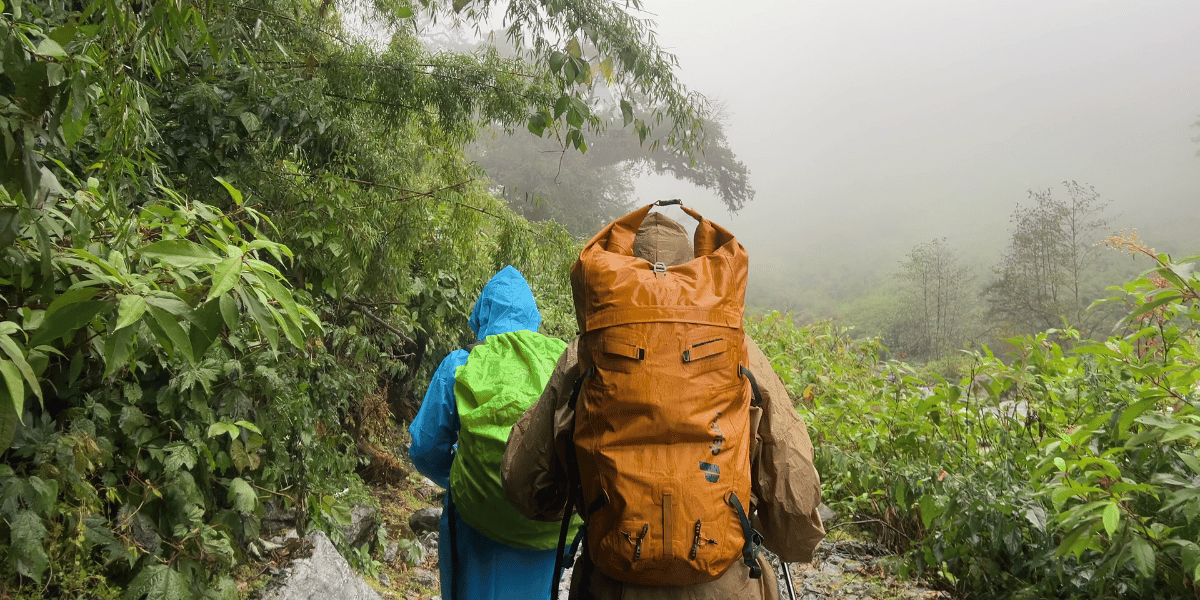
Instead, you can opt for treks like Langtang Valley Trek (during mid-spring and mid-autumn), Helambu Circuit, and Panch Pokhari. Leave out treks to Ganja La Pass, Gosainkunda-Helambu circuit, and any trekking peaks for next time.
Inexperienced Trekkers in Off-season
Monsoon and winter are off-seasons for trekking in Nepal, and beginners should completely avoid trekking during these times.
For instance, the trail of the Langtang Valley Trek goes along the Langtang River’s corridor. So you must avoid it in the monsoon as heavy rainfall activates landslides and mudslides. Additionally, the force of the river can be life-threatening in case you lose your balance.
Avoid any treks that include passes like the Lauribina Pass, Tilman Pass, and Ganja La Pass in the winter. Heavy snowfall can result in closure of the trail and walking in ice only increases your chances of getting in an accident.
To make it worse, the freezing temperature can make you more vulnerable to illnesses. Combining health factors with chances of natural disasters means you will have to be prepared for buffer days.
To conclude this section, trekking in Langtang Region can be one of the most rewarding experiences only if you come prepared. So before you take on this adventure, make sure to assess each and every factor within and around you.
Preparation Tips to Make Your Langtang Trek Easier
We have basically covered every component regarding difficulties that you might face during your trek in Langtang Region, along with trail suggestions based on your personal factors.
Now let’s look at the tips that can help you prepare and advice that you can follow to avoid common mistakes that trekkers make.
Tips for Physical Preparation Before the Trek
Since trekking in Langtang requires multiple days, you need to be able to handle the physical stress. This does not mean that you have to complete the trek effortlessly.
Here are some achievable workout tips that you can start at least 2 months before your trek:
- You don’t need to bulk up or anything. Cardio is more than enough. It enhances your heart and lungs functioning, as well as your immune system.
- Build your lower body strength. This could mean exercises like running, squats and lunges targeting your quads and glutes. These exercises are simple and do not require any equipment. When you have strength in your lower body, it gets easier to push your body weight uphill while trekking.
- For weighted training, carry a daypack with some weight, about 6 to 7 kg. Being prepared never goes wrong, and even if you are hiring a porter for the trek, you will still be carrying your daypack.
- Instead of flat running, redirect your focus to walking uphill (even stairs will do) and build elevation gradually before the trek starts. Set a target of steps you want to achieve on a daily basis.
- If you have a new pair of trekking boots, use them while training in order to break into the boots. This will help avoid blisters during the trek.
- Don’t underestimate stability workouts. These exercises are simple and don’t really feel strenuous, but they make your knees, shoulders, and core more stable and flexible. The trail conditions demand balance and flexibility, and rigidity can make you more vulnerable to accidents. Apart from trekking, these workouts also enhance mobility for your daily activities.
- If you have health issues related to joints, visit the doctor before the trek. Constant ascents and descents will only aggravate the condition, especially on your knees and ankles.
Common Mistakes Trekkers Make that You Should Avoid
If you are new to trekking, then you must have done your research and checked out stories of other trekkers. In my case, I also looked for stories where trekkers spoke about trails that they could not complete.
So here are some common mistakes that you should avoid while trekking:
- Being on the trail on the first day is an exciting feeling for everyone. You are finally away from the concrete jungle and are seeing nature for its true self. And this excitement often pushes trekkers to cover a long distance on their first day.
Avoid doing this. Take it slow, and move according to your itinerary’s timing. Your body needs to adjust to the change in physical movement. Covering a huge distance on the first day itself might result in severe fatigue.
- Do not underestimate the days that have been scheduled solely for acclimatization. You might feel fine physically, but you need to understand that your body is adapting to the change at its own pace.
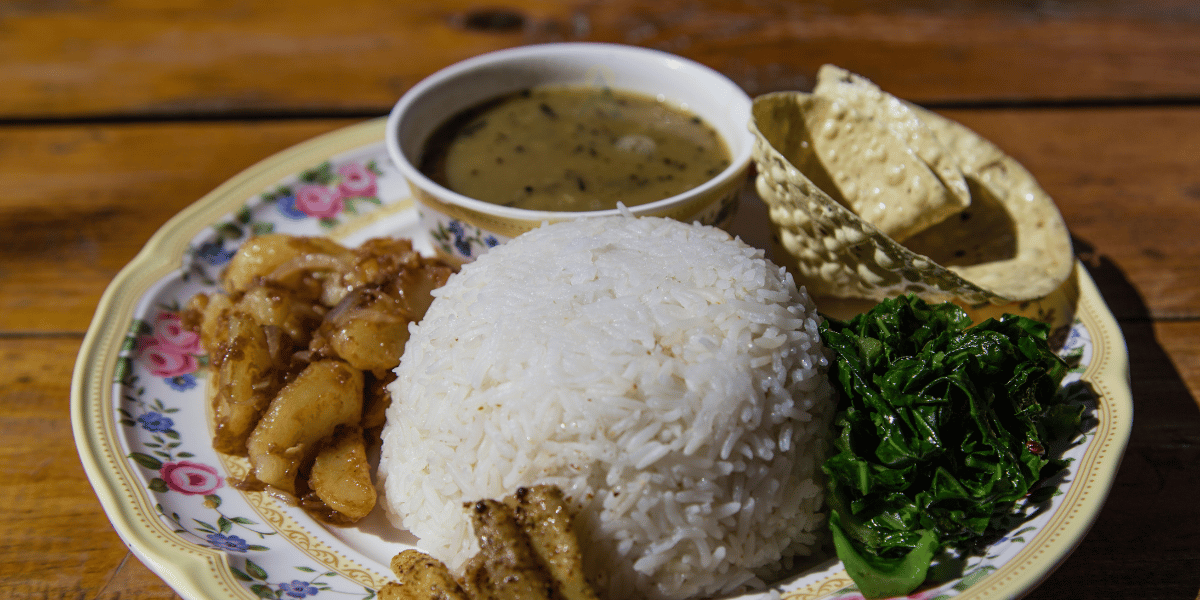
- Altitude affects your appetite. There will be times when you won’t feel hungry. But given the energy you lose while walking for long hours, you must eat no matter what. So make sure to carry healthy snacks for times you don’t feel like finishing an entire meal. But for dinner, you might want to force yourself to eat Daal Bhat!
- Overpacking. Many trekkers make the mistake of overpacking, and once they enter the trail, they find themselves exhausted sooner than expected. So make sure you only pack the items that you will need. For example, instead of carrying a separate moisturizer and sunscreen, go for a single product that has qualities of both the items.
- Do not create a fixed itinerary if you are going on a long trek in high altitude regions. If your trek lasts longer than 9 days, always keep 2 to 3 days aside as buffer days. Even if you are trekking when the weather is said to be perfect, the mountains decide that, not the weather forecast. So even if you might not use the buffer days, stay prepared for unpredictable events.
- Seeing trekking as an ‘activity’ to be completed is another mistake that beginners make. If you have worked that hard to reach the most isolated places of the world, why would you rush to descend immediately? Trekking is not just about walking and observing. It is also about absorbing. Absorb what is around you. The culture, the spirituality, and the blessings have made it that far.
Regarding Altitude Sickness
If you have read our blogs, we always give a special mention to altitude sickness. Why? Because every year, we are met with the devastating news of AMS-caused deaths among trekkers.
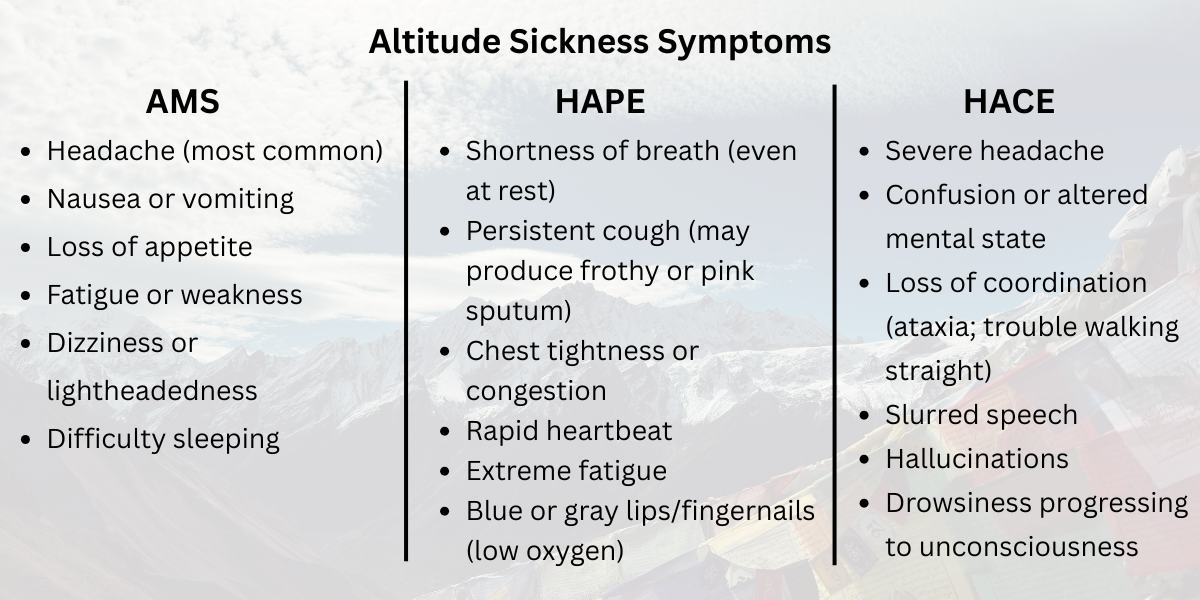
But trekking, being an adventurous activity, does not have to be a fatal one. So this part has been crafted to avoid mistakes that trekkers make with regard to altitude sickness.
- If you feel a headache, do not dismiss it. Make a quick stop and wait for a while. Many trekkers confuse the symptoms of altitude sickness with fatigue and carry on without proper self-assessment. Don’t make this mistake and listen to your body.
- Do not use medications like Diamox as a shortcut to climb higher. Even if you are taking such medicines, the rules for ascending stay the same. Do not aim for an elevation gain higher than 500 m once you reach the altitude of 3000 m.
- The best cure for altitude sickness is to descend from wherever you notice the symptoms. It is human nature to be stubborn, and it does make sense, the disappointment of having to descend after making it that high. But a descent as low as 500 m is enough to relieve the symptoms. Do not wait for the symptoms to get worse, make the right move at the right time.
- Try to avoid alcohol as much as you can. Alcohol consumption slowers acclimatization, and it also makes you prone to other weather-related illnesses. Instead, you can save it for later and celebrate it once you reach the end of the trek.
- While travelling in a group, always check on your team members. Many people feel the peer pressure and stay quiet about their symptoms with the fear that they might ruin the trip. Be alert and see if any of the members are quieter and slower than usual.
- Don’t assume that the acclimatization from your previous trek will work for this trek. Your body’s response to altitude keeps changing trek after trek.
- Altitude affects sleep. But that does not mean that you should take sleeping pills. Do not take extra medications unless you have to. Please refrain from taking any kind of sedatives unless you have been suggested by healthcare experts.
Final Thoughts
Now that we have reached the end of this blog, I’m sure that you are well aware that each trail is different from the other, yet equally extraordinary and culturally diverse.
But one thing is for sure, Langtang is one of the best choices for beginners; for trekking as well as peak climbing. In fact, my first trek was the Langtang Valley Trek.
With proper mental and physical preparation, the trails in this region can be one of the most rewarding experiences for anyone.
While we cannot compromise with the difficulty, weather, and personal factors, we can surely make the best out of it with guided preparation. And I hope that this blog has served that purpose.
No one knows about your experience and capability better than you yourself. So take the knowledge from this blog, assess yourself thoroughly, and decide which trail would suit you and your purpose the best.


 Suraksha Subba