Be it Langtang Valley or the Helambu Circuit, in the Langtang Region, you might have to sleep in the narrowest beds, but you will certainly sleep with a content heart. By the second or third day of the trek, you will start seeing luxury and convenience from a whole different angle.
Before we start, here are the trails that you will be learning about in this blog: Langtang Valley Trek, Tamang Heritage Trail, Gosainkunda Trek, Helambu Circuit Trek, Panch Pokhari, and Jugal Himal Trail.
These trails, known for different levels of difficulty, are located in some of the most remote areas of Nepal but bring visitors to some of the cosiest lodges and teahouses. While the amenities might lack, their warmth will make up for the overall hospitality.
So if you are planning your trek for the Langtang Region, make sure that you do not miss out on checking the accommodations. I hope you read this blog till the end to get an in-depth understanding of the accommodations that you will find there along with the major details and practical tips.
Types of Accommodation
One of the best things about the Langtang Region is that tourism there is mostly managed by the indigenous communities. No matter where you choose to stay, you will be indulging in the culture in unimaginable ways.
This means, if you stick to the Langtang Valley Trail and the Tamang Heritage Trail, then there is a high chance that you will be hosted by the Tamang People. But if you move towards Panch Pokhari and the Helambu Circuit, you will meet more indigenous tribes like the Sherpas and the Hyolmos.
Observe deeper, and you will also find that the accommodations are mostly run by families. The concept of employee-employer relationship rarely exists there unless you find relatively larger hotels, which is very rare but not impossible.
So to make sure that your preparation for the trek is complete, let me brief you on the types of accommodations that you will find on the different trekking trails of the Langtang Region:
Teahouses
Teahouses are the new hotels when it comes to the remote mountainous regions of Nepal. While the amenities and the services might not meet your regular hotel’s standards, one thing is for sure, pre-booking is always appreciated and helpful!
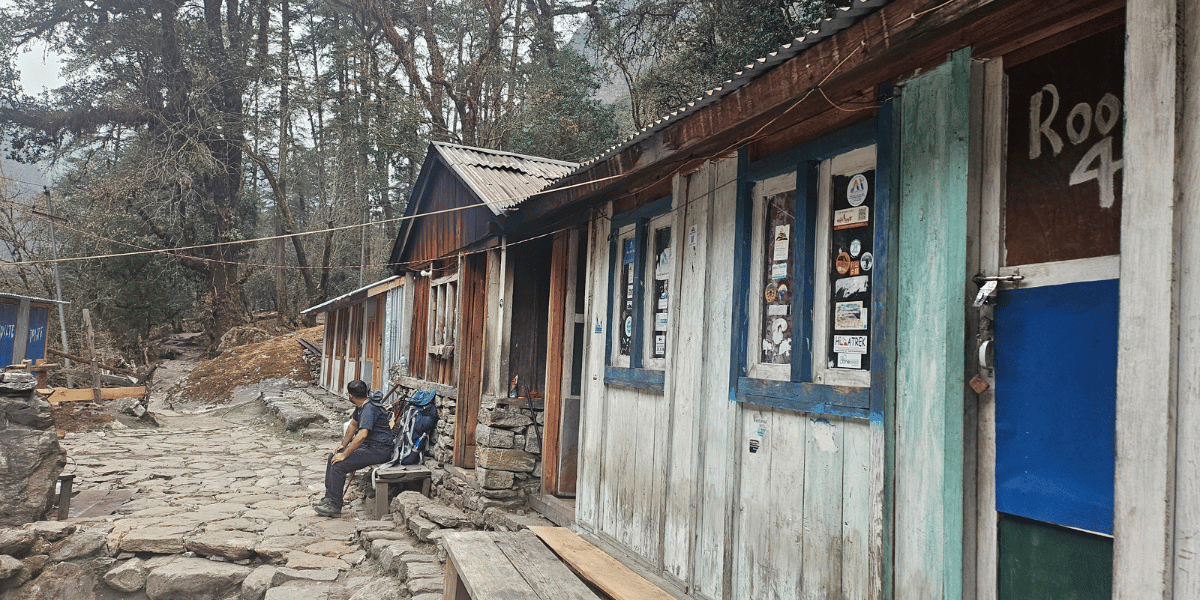
While staying at teahouses in Langtang Region, expect a single bed (often in a shared room) with a table at most. The most social spot will always be the dining area, where you meet and dine with other trekkers.
It is also the only space with a heating system (usually a wood stove), which explains why it is always jam packed with trekkers, guides, and porters. If homestays are where you connect with the locals, the dining area is where you connect with the global population!
Lodges
Now, lodges are certainly more well-equipped compared to teahouses, but they are mostly only available around the starting points of the trek. For more clarity, lodges are more prevalent in locations with transport accessibility or regions where tourism is more guaranteed.
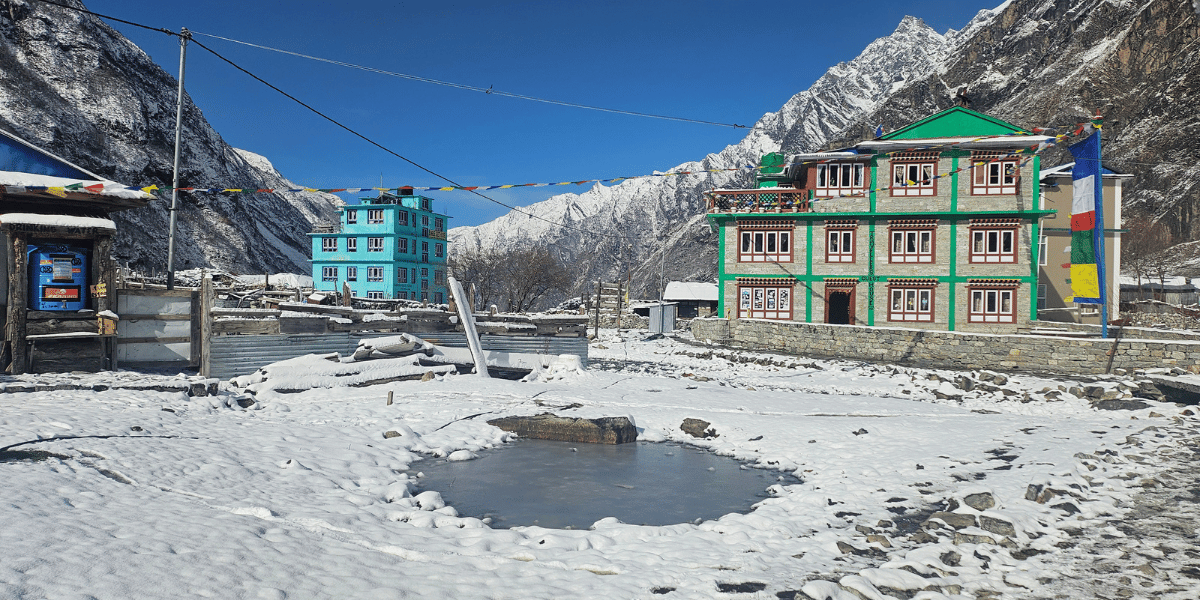
These places certainly have better spacious rooms and bedding, along with stable electricity connections, compared to teahouses in higher altitude regions. They also have better sanitation, and many provide attached bathrooms.
Unlike teahouses, here you will find more privacy as you do not have to keep running to the dining area for basic needs like charging.
Homestays
If you want to hear the untold stories of any region, then homestays are for you! Homestays are not just about supporting a local business; they are about spending time with the host family, sharing meals with them, and exchanging knowledge, stories, and experiences.
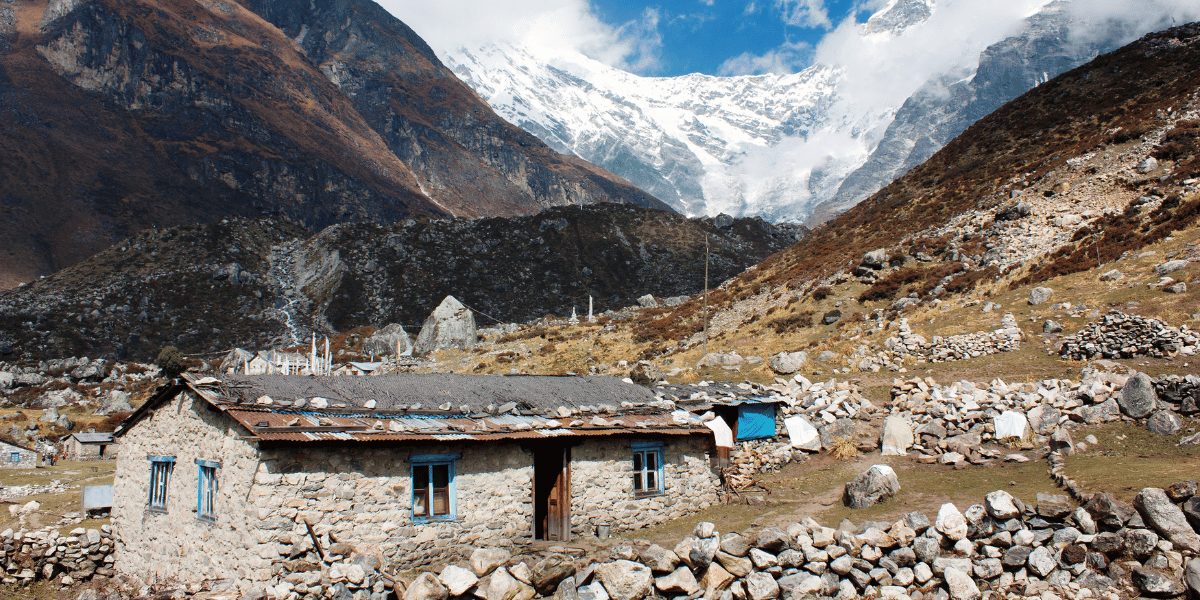
In terms of architecture, homestays are definitely smaller than teahouses and can only accommodate a limited number of guests. Furthermore, it is one of the most intimate forms of cultural exchange that you can experience in Nepal.
The amenities and the facilities depend on how well-developed the region is.
Pro tip: If you want to find the hidden gems of the trail, make sure to wander around with the kids!
Camping
Camping used to be more prevalent when the trails were fresher. But in the past decade, the trails of the Langtang Region have become more commercial, so you will find teahouses and homestays even in the most remote areas, reducing trekkers’ need for camping sites.
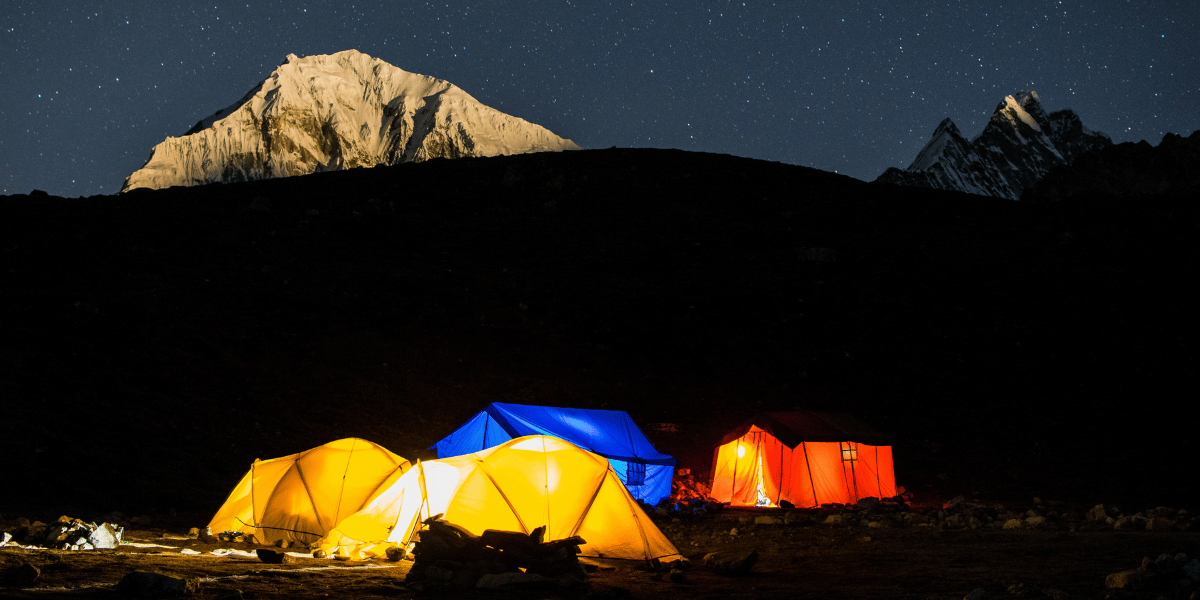
With the trails becoming more convenient for guests, camping is now an activity that is only for the passionate ones.
For those wishing to camp, please be aware that there are designated stops on the trail for campsites. Of all the trails within the Langtang Region, camping is only relevant when it comes to the Jugal Himal Trail, as it is not as commercial as other trails, and Yala Peak Base Camp is for those aiming for the summit.
One thing is for sure: if you see a courtyard outside your place of stay, you can always wake up early and have a peaceful yoga session with the fresh breeze. Light stretching can never go wrong before resuming the trek!
Now that we’ve covered the different types of accommodations, let’s jump into the trails so that you can have a better idea as to what you can expect at different stops while trekking.
Where to Stay?
With an area of 1,710 sq km, Langtang National Park has no shortage of trekking trails. But in this article, we have covered 6 specific trails. Each trail covers a range of altitudes and has its own major attractions.
So, read this section to get details about the accommodations based on the trail that interests you.
Langtang Valley Trek
One of the most popular trails in Nepal, loved by many as a solo trekking destination, the Langtang Valley Trek is one of the most beautiful treks that you can go for. Furthermore, this trek is beginner-friendly and the best choice if you are short on time.
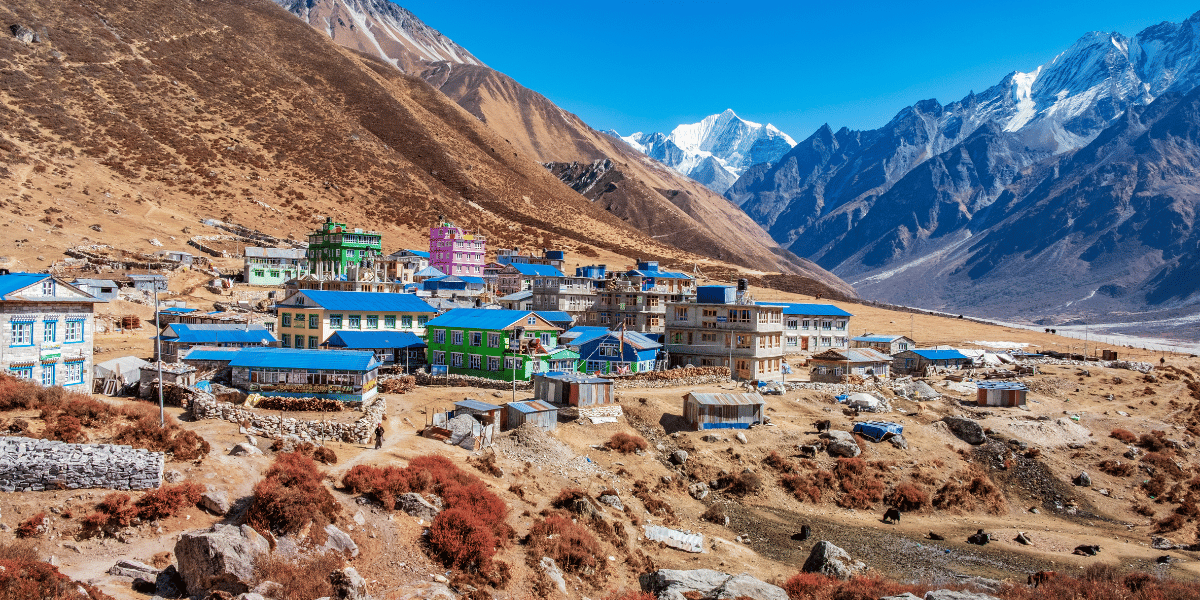
Starting from Syabrubesi, this trek goes all the way up to Kyanjin Ri and Tsergo Ri, giving you an undisturbed view of the Langtang and Jugal Range. Now let’s look into the major stops of this trail along with options for some of the best accommodations in Langtang Valley trek at each stop.
|
Major Stops on the Trail
|
Options of Lodges/Teahouses/Homestays
|
|
Syabrubesi (1,467 m)
|
- Buddha Guesthouse and Restaurant
- Royal Himalaya Hotel and Lodge
- Yak Hotel and Lodge
|
|
Domen (1,565 m)
|
- Domen Riverview Hotel
|
|
Pairo (1,722 m)
|
- Hotel Namaste Guesthouse
- Pairo Riverview Hotel
|
|
Bamboo (1,984 m)
|
- Hotel Bamboo and Lodge
- Bamboo Tibet Hotel
- Bamboo Sherpa Hotel
|
|
Rimche (2,495 m)
|
- Ganesh View Hotel and Espresso Station
- Moon Light Lodge
|
|
Lama Hotel (2,515 m)
|
- Friendly Guest House
- Sherpa Hotel and Lodge - Lama Hotel
- Hotel Green Hill
- Tibet Guest House
- Lama Hotel
|
|
Riverside/Gumnachok (2,770 m)
|
- Riverside Hotel (Riverside)
- Hotel Woodland (Chunamma)
|
|
Ghoda Tabela (3,008 m)
|
- Hotel Tibetan
- Lovely Guest House
|
|
Thangshyap (3,140 m)
|
- Hotel Thangshyap Tibet Guest House
- Summit Sips Cafe and Bakery
- Buddha Guest House
|
|
Langtang Gumba (3,400 m)
|
- Sunset Lodge
- Lovely Guest House and Lodge
|
|
Langtang Village (3,455 m)
|
- Blue Sky Guest House and Restaurant
- Mount Kailash Guest House
- Traveller’s Guest House
- Glacier Guest House
|
|
Mundu, also has Mundu Health Post (3,550 m)
|
- Himalayan Guest House
- Dragon Guest House
|
|
Sindhum (3,555 m)
|
- Me Very Happy Guest House
- Sindhum Valley Home Stay
|
|
Kyanjin Gompa (3,890 m)
|
- Ghangchenpo Guest House
- Namaste Guest House
- Summit Guest House
- Hotel Super View
|
Table 1.1: Accommodation options for Langtang Valley Trek.
Tamang Heritage Trail
The name itself gives away what the Tamang Heritage Trail has to offer. Taking you around the settlements of the indigenous Tamang people, you will learn that the culture there is as untouched as their surroundings.
Taking the Tamang Heritage Trail is one of the best ways to learn and engage with the communities of the region who make tourism possible there. And what could be better than learning about sustainability and slow living in the Himalayas?
Please look at the table below to find suggested accommodations for the major stops on the Tamang Heritage Trail.
|
Major Stops on the Trail
|
Options of Teahouse/Lodges/Homestays
|
|
Syabrubesi (1,467 m)
|
Check Table 1.1
|
|
Gatlang (2,238 m)
|
- Paldor Peak Guesthouse
- Hotel Zeppa
- Gatlang Guesthouse and Homestay
|
|
Tatopani (2,607 m)
|
- Eco Guest House
- Yiga Guest House
- Tibet Guest House
- Pilgrims Hotel and Lodge
|
|
Nagthali (3,165 m)
|
- Mountain View Guest House
- Nagthali Super Guest House
- Nagthali Tibet View Guest House
- Nagthali Great Wall Hotel and Lodge
|
|
Thuman (2,338 m)
|
- Village View and Guest House
- Sambuta Homestay
|
|
Briddhim (2,229 m)
|
- Briddhim Guesthouse
- Red Panda Homestay
- Pema Guest House
- Tibetan Friendly Homestay
|
|
Lama Hotel (2,515 m)
|
Check Table 1.1
|
|
Langtang Village (3,455 m)
|
Check Table 1.1
|
|
Kyanjin Gompa (3,890 m)
|
Check Table 1.1
|
Table 2.1: Accommodation options for Tamang Heritage Trail.
Gosainkunda Trek
Gosainkunda Trek is popular among two groups of travellers; pilgrims and trekkers. However, for both groups, the major attraction is the holy Gosainkunda Lake, which is believed to be where the Trishuli River traditionally originates.
At an altitude of 4,380 m, Gosainkunda Lake is where Hindu devotees come for the festival of Janai Purnima. They also widely believe that taking a dip in this lake can cleanse them of their sins. While the trail is certainly challenging, the view once you reach the lake makes it feel like it was all worth it.
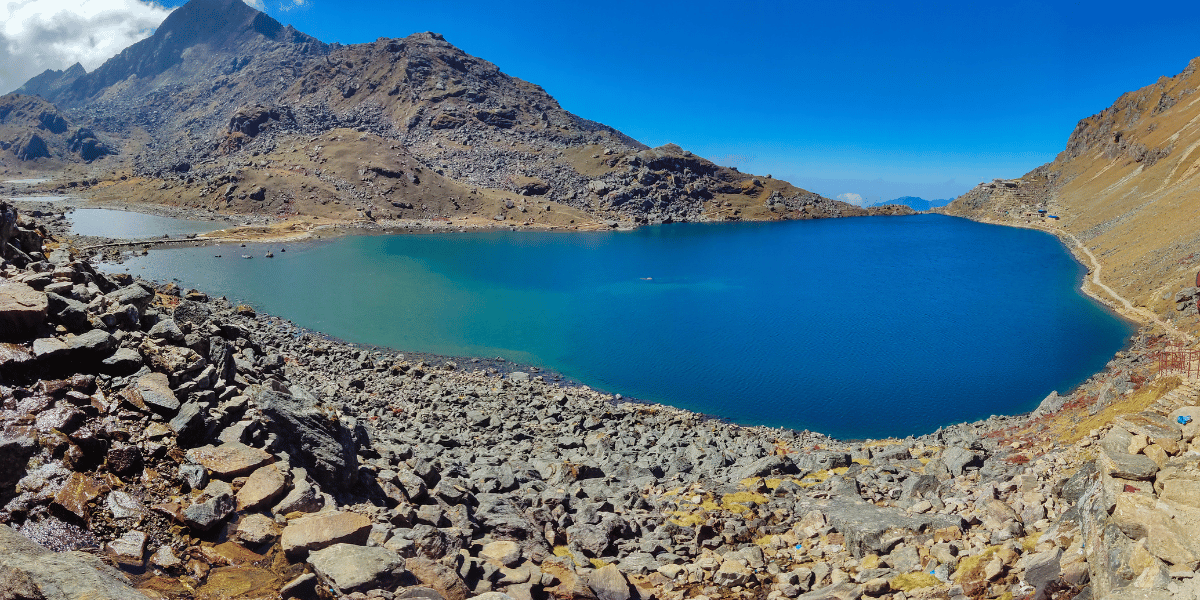
Gosainkunda Lake is not the only lake in this region. In its close proximity, there are other holy lakes, namely, Saraswati Kunda, Bhairab Kunda, Surya Kunda, and Ganesh Kunda.
If you are going for this trek, you can start from either Syabrubesi or Dhunche. If you start your trek from Syabrubesi, your trail will connect you to Cholang Pati. Please look at the table below to find some accommodation options for the major stops from Syabrubesi before Cholang Pati.
Route 1: Starting Point from Syabrubesi
|
Major Stops on the Trail
|
Options of Teahouse/Lodges/Homestays
|
|
Syabrubesi (1,467 m)
|
Check table 1.1
|
|
Thulo Syabru (2,250 m), also has Thulo Syafru Health Clinic
|
- Tibetan Friendly Guesthouse
- Buddha Guest House and Restaurant
- Hotel Norling and Restaurant
- Mona Lisa Guesthouse
|
Table 3.1: Accommodation options for Gosainkunda Trek (if starting from Syabrubesi).
Note: Syabrubesi and Thulo Syabru mostly have lodges rather than teahouses, and you can expect the same at Dhunche.
After this, your trail will lead you straight to Cholang Pati, where the other trail from Dhunche eventually connects to.
Route 2: Starting Point from Dhunche
|
Major Stops on the Trail
|
Options of Teahouse/Lodges/Homestays
|
|
Dhunche (1,960 m)
|
- Dhunche National Hotel and Lodge
- Hotel While Panda
|
|
Deurali (2,662 m)
|
- Hotel View Point Deurali
- Deurali Hotel and Lodge
|
|
Dhimsa (3.030 m)
|
- Dhimsa Lama Hotel
- Lali Gurans View Hotel and Lodge
- Yanchhyu Hotel and Lodge
|
|
Chandanbari (3,250 m)
|
- Sherpa Hotel
- Little Buddha Guest House
- The Hotel Yak and Nak
|
|
Cholang Pati (3,584 m)
|
- Hotel Tibet Mountain View
- Langtang Lerung View Hotel
|
|
Lauribinayak (3,910 m)
|
- Hotel Mount Rest
- Maya Hotel and Lodge
- Hotel Morning View
|
|
Gosainkunda (4,380 m)
|
- Hotel Tibet
- Hotel Lake Side
- Gosaikunda Lakeside View
|
Table 3.2: Accommodation options for Gosainkunda Trek (if starting from Dhunche).
Note: Camps are also available in some accommodations in Lauribinayak and Gosaikunda, but only during peak tourist seasons. And if you’re thinking of carrying your own camping setup, an extra cost applies.
While the common way to return from Gosainkunda is to return on the same trail, some trekkers also include the Laurebina Pass in their itinerary. In that case, instead of returning back to Syabrubesi or Dhunche, the trekkers cross the pass and head towards Sundarijal to end the trek.
Here are some of the accommodation options that you can find on your way to Sundarijal from Gosainkunda:
|
Major Stops on the Trail
|
Options of Teahouse/Lodges/Homestays
|
|
Phedi (3,730 m)
|
- Hotel Phedi
|
|
Thadepati Bhanjyang (3,690 m)
|
- Hotel Yak and Yeti
- Tashi Dhelek Lodge
- Sumchho Top Lodge
|
|
Mangengoth (3,420 m)
|
- Hotel Green View and Lodge
- Lama Guest House and Restaurant
|
|
Kutumsang, also has Kutumsang Health Post (2,470 m)
|
- Hotel Himalayan Inn
- Mountain View Lodge
- Aama Yangri Lodge and Restaurant
- Gosainkunda Hotel
- Hotel Namaste and Lodge
|
|
Golphu Bhanjyang (2,130 m)
|
- Himalayan New Lodge and Restaurant
- New Gosainkunnda Lodge and Restaurant
|
|
Chisapani (2,165 m)
|
- Hotel Sunrise Lodge
- Dorje Lakpa Lodge
- Hotel Himalayan Visa
- Chisapani Jungle View Resort
|
Table 3.3: Accommodation recommendations for Gosainkunda Trek (post-Gosainkunda if you are ending the trek at Sundarijal).
Helambu Circuit Trek
Home to the Hyolmo people, protected by the sacred Aama Yangri, the Helambu Circuit Trek is a perfect getaway for those hoping to relish the view of the Langtang Range and Jugal Peak.
Although we now have a roadway connected all the way up to Tarkeyghyang, the trekking trails have still been maintained prioritizing the trekkers in the region. However, given the duration of the trek, the difficulty has been graded as moderate. So if you are a beginner, make sure that you have sufficient physical training.
Taking you around Helambu, this trail gives you a close look into the lives of the Hyolmo people who, like Tamangs of the Langtang Village, migrated from Tibet centuries ago.
|
Major Stops on the Trail
|
Options of Teahouse/Lodges/Homestays
|
|
Chisapani (2,165 m)
|
Check Table 3.3
|
|
Golphu Bhanjyang (2,130 m)
|
Check Table 3.3
|
|
Kutumsang, also has Kutumsang Health Post (2,470 m)
|
Check Table 3.3
|
|
Mangengoth (3,420 m)
|
Check Table 3.3
|
|
Thadepati Bhanjyang (3,690 m)
|
Check Table 3.3
|
|
Melamchigaon (2,530 m)
|
- Helambu Hotel and Restaurant
- Wild View Hotel
- Hotel Eco Friendly
- Hotel Yangrima and Lodge
|
|
Tarkeyghyang (2,600 m)
|
- Buddha Lodge
- Aama La Homestay
- Hotel Tarkeyghyang
- Yangrima Hotel and Restaurant
|
|
Aama Yangri Base Camp (3,200 m)
|
- Chyomuthang Resort
|
|
Timbu (1,580 m)
|
- Helambu Guest House
|
|
Sermathang (2,590 m)
|
- Dorje Guest House
- Mountain View Lodge and Hotel
- Aama Homestay
- Ngajo Homestay
- Helambu Mountain Resort
|
|
Melamchi (870 m)
|
- Melamchi Heritage
- Shreedevi Hotel
- Hotel Melamchi Side
|
Table 4.1: Accommodation options for Helambu Circuit Trek.
Note: Due to better transportation infrastructures, most of the stops have lodges available. Some lodges also have dorms, and camping experiences are available within the lodges’ premises.
Panch Pokhari Trek
Surrounded by rich pasturelands, Panch Pokhari means Five Lakes when translated. The names of the alpine lakes are as follows: Surya Kunda, Bhairav Kunda, Ganesh Kunda, Nag Kunda, and Saraswati Kunda.
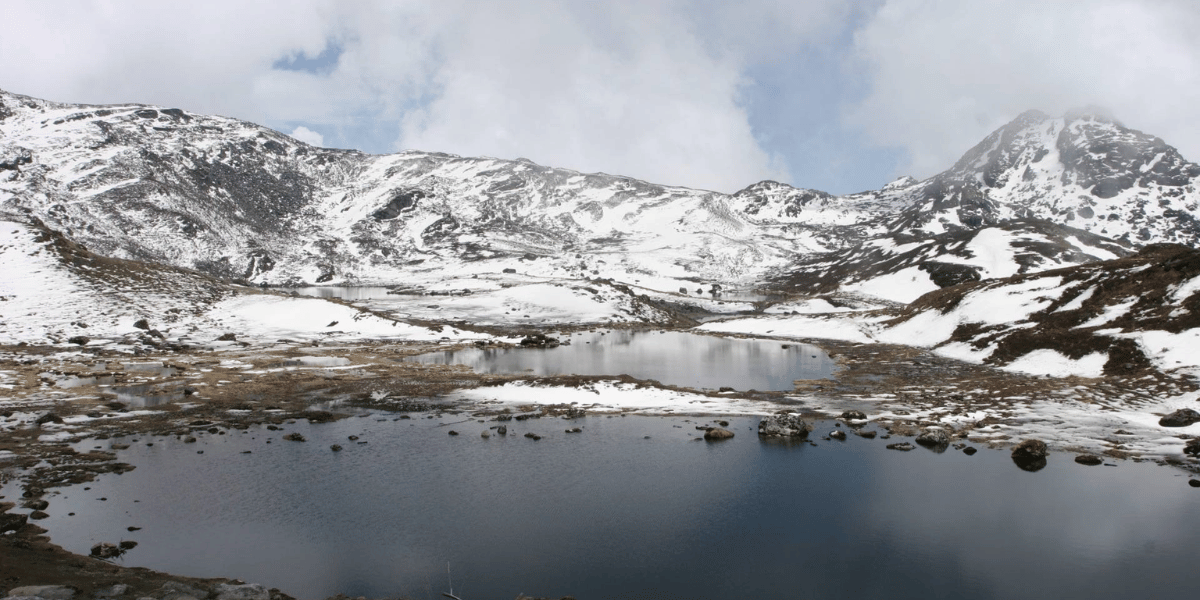
Similar to Gosainkunda Lake, Panch Pokhari is also another revered place for the festival Janai Purnima. In the past few years, the Panch Pokhari Trek has been gaining a well-deserved traction among Nepalese travellers.
However, since it has only been some years since this trail got commercialized, please note that the accommodations might not even meet the standards of teahouses in a few places.
|
Major Stops on the Trail
|
Options of Teahouse/Lodges/Homestays
|
|
Bhothang (1,791 m)
|
- Oman Homestay
- Panch Pokhari Soman Homestay
- Ngima Hasina Homestay
|
|
Chimti (1,893 m)
|
- Panch Pokhari Hotel Pvt. Ltd
- Panch Pokhari Bhim Arjun Shankar Homestay
- Santosh Homestay Hotel and Lodge
|
|
Deurali (2,105 m)
|
- Tungna Hotel and Homestay
- Pachpokhari Lama Sherpa Hotel
|
|
Tuppi Danda (approx. 2,400 m)
|
- Captain Bijay Lama Hotel and Lodge
- Brondogang Tuppi Danda Homestay
|
|
Noshyam Pati (3,700)
|
- Lal Laxmi Hotel
- Noshyampati Hotel and Lodge
|
|
Panch Pokhari (4,010 m)
|
- Panch Pokhari Saila Hotel
- Hotel Lama Lopchan
- Sonam & Tungna Hotel
- Bhim Arjun Shankar Hotel and Lodge
- Panchpokhari Sindhu Hotel
|
Table 5.1: Accommodation options for Panch Pokhari Trek.
Jugal Himal Trail
If you think that Panch Pokhari is a hidden trekker’s paradise, wait until you hear about the Jugal Himal Trail. And what’s even better is that the trail continues from Panch Pokhari. So if you want to see the alpine lakes and the Jugal Range, then this trek makes it possible.
This also means that until Panch Pokhari, the accommodation suggestions provided in Table 5.1 are applicable for this trek. However, after Panch Pokhari, camping is the most suitable form of accommodation.
This is because the trail is not as commercial, and the unavailability of transport infrastructures has made it difficult for the establishment of teahouses and lodges. So the best option that you have here is to take a camping crew along with you.
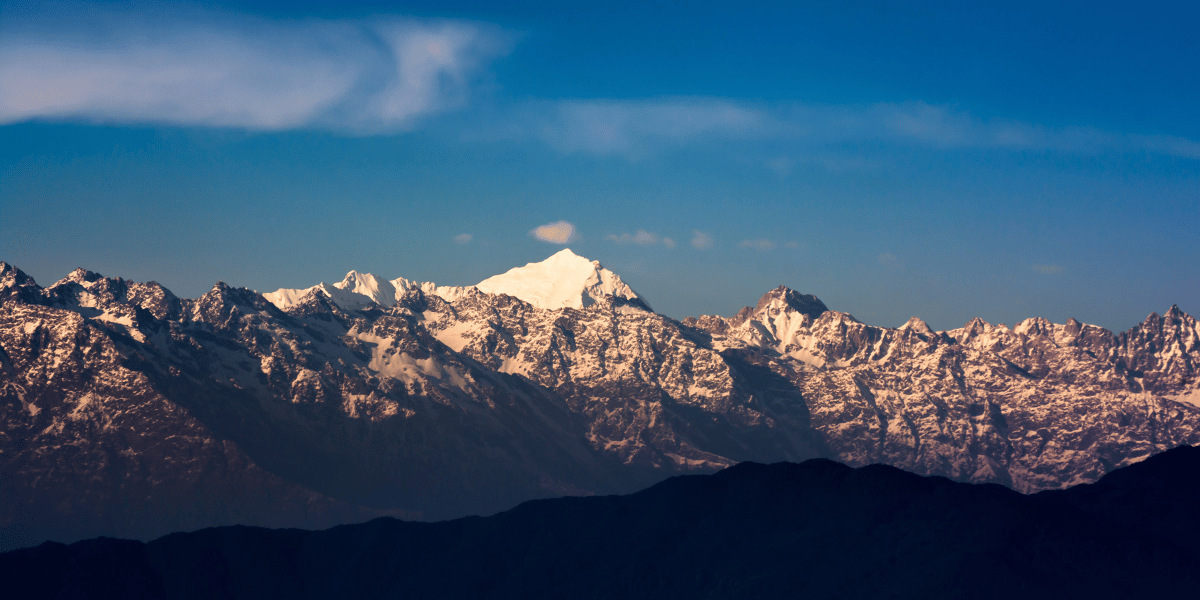
In the off-beat trails of Jugal Himal where infrastructures are quite underdeveloped, choosing camping can be beneficial for you in many ways. You can choose your own meals where shops and teahouses are limited, and you also get the most authentic experience in the wilderness.
To learn more about the major stops in detail, make sure to read our blog on Routes of Langtang Region Treks.
Facilities and Amenities
You might have already guessed that although Langtang Region is home to some of the best trekking destinations, the major prominent trails are only a few of the six mentioned above.
The most renowned trails are those of Langtang Valley Trek, Tamang Heritage Trek, and Gosainkunda Lake. In this section, you will learn about the amenities and facilities that you can expect in these three trails.
Langtang Valley Trek
After the 2015 earthquake, Langtang Valley was left in rubbles. Today, what you will see in the trails is the outcome of the people’s resilience who rebuilt the valley brick by brick.
Bamboo to Thanshyap
From Bamboo to Thangshyap, you will mostly find teahouses. These settlements, built on some of the most remote and fragile terrains, have the most minimal teahouses. But don’t underestimate them because you will eventually realise that “little things matter”.
So let’s look into the amenities and facilities that you can expect in the teahouses there:
- Rooms: When I say that your privacy is compromised, I’m not saying that you will have random people walking into your rooms. It’s just that the walls in most of the rooms are made of plywood, so if you can hear the conversation in the next room, expect the same from your neighbors.
As for the beds, expect a single bed with thin mattresses. However, the hosts will make sure to provide you blankets to keep you warm in the night. Tables are quite rare here, but you will find nails on the walls to hang your belongings.
Lastly, rooms are provided on a sharing basis, so if you are trekking solo in peak season, you might have to share the room with fellow trekkers. However, this is only the case if the teahouses are booked beyond its capacity.
The rooms are quite clean, and after an exhausting day, you will be more than grateful with what you have been given!
- Toilets: In teahouses, apart from your personal belongings, most of the things are shared. For example, rooms, dining tables, and the washroom. I hope this statement has eliminated the expectation of an attached washroom from your mind, because in this trail, that is non-existent.
Most of the toilets are equipped with squatting pans, but that is actually quite relieving because western toilets are one of the best transmitters of bacteria and diseases when used by many.
- Hot Showers: Although hot showers are available in teahouses, please be prepared to pay extra. This is because the teahouses use gas geysers for hot showers and the majority of the gas cylinders are transported by mules.
- Electricity and Charging: Although Langtang Valley Trek goes through some of the most isolated localities, thankfully, some mico-hydropower stations and solar power on the roof have made the lives of the people and the trekkers easier.
However, the power supply often gets disrupted due to weather conditions. In that case, the people always have solar panels that are just enough to power basic electrical appliances like light bulbs and sockets. So from Bamboo to Thanshyap, the teahouse hosts may charge you extra for charging facilities.
- Internet Connection: Apart from Lama Hotel, you will find WiFi in almost all the stops as long as the teahouses have stable electricity supply and clear weather. This is because Lama Hotel is located in a steep gorge. But the teahouses there do sell prepaid internet cards.
As for cellular networks, I have one word to describe it: inconsistent. In a few spots you might suddenly notice a bar or two on the network indicator, but other than that, expect zero connection.
For instance, you will find minimal connectivity at the edge of Friendly Guest House at Lama Hotel. At Bamboo, depending on the weather and network provider of the SIM, you might be able to find cellular networks.
- Drinking Water: Teahouses always have bottled water for sale but they are priced at a higher rate. For instance, if a bottle of water costs Rs. 25, they might charge you Rs. 100 up there. Again, these are due to logistical difficulties.
If you do not want to pay extra for bottled water, then make sure to carry water purifying tablets. This is because the locals drink tap water. As for hot water, some teahouses might charge you extra, while others might just include it in your package.
- Dining and Food: The case for dining and food is the same throughout the trail, even in Syabrubesi and above Thanshyap. You will have your meals in the dining hall with other trekkers and the menu actually has a lot more items than what you would expect in those isolated areas. For detailed information on the menu, make sure to read Food in Langtang Valley Trek.
Syabrubesi, Langtang Village, and Kyanjin Gompa
If Syabrubesi is where your trek begins, then Langtang Valley and Kyanjin Gompa are the markers of your trek’s end. In these three regions, you will notice that the houses are comparatively grander than other stops so you can certainly expect to find better facilities.
In Syabrubesi, all the accommodations that you will find are lodges. In Langtang Valley and Kyanjin Gompa, you will mostly find lodges with few teahouses and homestays.
- Rooms: Compared to the stops between Syabrubesi and Langtang Village, these three locations have far better rooms. Even if the rooms are not heated, you will notice that the beddings are better.
In Syabrubesi, the lodges are much bigger, giving you the choice of private rooms. But in Langtang Village and Kyanjin Gompa, the lodges are small and rooms are still provided on a shared basis.
- Toilets: In these three settlements, you will find attached bathrooms depending on the type of room you choose. While the lodges in Syabrubesi might have attached bathrooms in the majority of the rooms, in the case of Langtang Village and Kyanjin Gompa, the availability entirely depends on the type of lodge you choose.
Furthermore, the rooms are provided on a first-come-first-served basis in higher altitude regions. So if you want better rooms in Langtang Village and Kyanjin Gompa, your biggest determinant will be your walking pace. The sooner you reach the settlements, the better rooms you will be given by the hosts.

- Hot Showers: Here's good news for you: hot showers are free in Syabrubesi; if available. As for Langtang Village and Kyanjin Gompa, hot showers are available, but whether they are free or with a certain charge depends on the hosts.
- Electricity and Charging: With micro-hydropower projects built in various regions of the Langtang Region, the lives of the people there have certainly become easier.
As a result, all three settlements have a stable supply of electricity, which is often disrupted by weather conditions. But one thing is for certain, that trekkers do not have to pay extra for charging their electronic devices.
If you visit the terrace of the guesthouses, you might also notice solar panels of decent sizes. While these panels do not power the entire structure, they are enough to be used for charging.
- Internet Connection: WiFi is available in all three locations. Connectivity may get disrupted when the weather is too windy or if there is heavy snowfall. You do not have to worry about paying extra for internet connectivity.
Syabrubesi has the best cellular network connectivity. As for Langtang Village and Kyanjin Gompa, you will find connectivity if you are using NTC SIM Cards. However, weather, as usual, determines the speed and availability.
- Drinking Water: In case of drinking water, the conditions are the same throughout the trail. If you don’t want to pay extra for bottled water, carry water purifying tablets.
- Dining and Food: While the meal hours are similar in all the settlements of the trail, food is certainly better in these three areas. They also have more options in their menus.
In Syabrubesi, you might find the choice to dine at your own convenience, but Langtang Village and Kyanjin Gompa follow the same teahouse culture of dining with other trekkers.
Please note that the food prices are higher in Langtang Village and Kyanjin Gompa. In case you want to try yak cheese, make sure to visit the Organic Yak Cheese Production Center at Kyanjin Gompa.
Tamang Heritage Trail
One of the most culturally engaging trekking trails of Nepal, the Tamang Heritage Trail is the one for you if you want to live and celebrate life like the Tamangs. The trail starts from Syabrubesi and eventually connects to Lama Hotel and continues on to Langtang Valley.
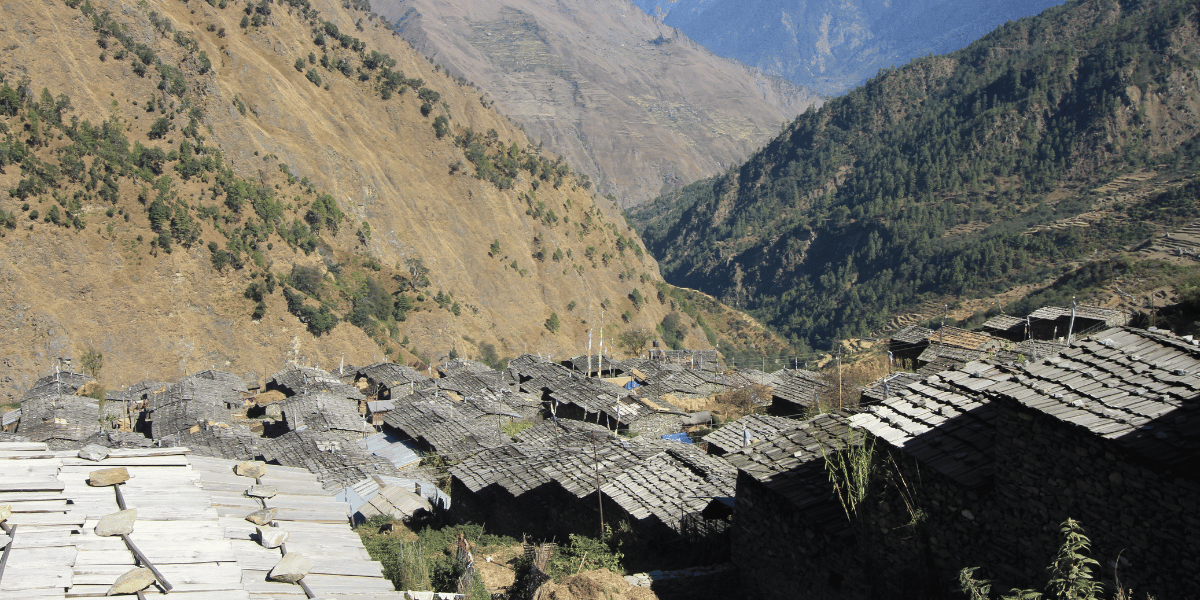
Now let's find out what the accommodations between Syabrubesi and Lama Hotel have to offer from Gatlang to Briddhim. But before we continue, please note that most of the accommodations available are teahouses and homestays. In fact, the Tamang Heritage Trail is well-known for community-based homestays.
- Rooms: With wooden walls and basic parqueting, the rooms you will be provided in the teahouses and homestays are no different than the ones found in the trail of Langtang Valley Trek.
Similarly, some places do provide private rooms, but do make up your mind beforehand to stay in a shared room if it is a peak trekking season.
- Toilets: If you find rooms available in a lodge in Briddhim, then consider yourself lucky because there you might find attached toilets. Other than that, you will have to adjust to shared washrooms and squat-style toilets.
- Hot Showers: While hot showers are more readily available in lodges, we cannot say the same about teahouses and homestays. For instance, in places like Nagthali, teahouses provide hot water to trekkers in buckets, and that can cost anywhere between Rs. 400 to Rs. 600.
- Electricity and Charging: Tamang Heritage Trail has a better power supply, which can be attributed to micro-hydropower stations in the area and the rise of solar panels’ use. As usual, power outages are frequent due to adverse weather conditions, but that is the case in most of Nepal’s high-altitude regions.
While well-established lodges provide free charging services. Teahouses and homestays rely majorly on solar power and may require trekkers to pay extra to charge their electronic gadgets.
- Internet connection: From Gatlang to Briddhim, most homestays and teahouses have stable WiFi connections depending on the stability of the power supply. WiFi is generally free on this trail.
As for network connectivity, NTC’s network is functional in villages but you will be disconnected on the trail. In Nagthali and Tatopani, you can expect network disturbances, but as mentioned above, they have WiFi available in teahouses and homestays.
- Drinking Water: The advice for Langtang Valley Trek applies here as well. While tap water in the Himalayas is considered to be clean, carrying purification tablets can never go wrong!
- Dining and Food: The name “Tamang Heritage Trail” itself gives away the essence of this trek. So if you are doing this trek, get ready to taste Tamang cuisine with a hint of Tibetan influence.
The dining area is shared, which I am sure that you are already aware of. Enjoy your time with fellow trekkers as you eat freshly prepared meals with seasonal vegetables grown in the host’s own garden.
Gosainkunda Trek
If you compare Gosainkunda Trek with Langtang Valley Trek and Tamang Heritage Trail, you will notice that the trail is more secluded. And the more secluded a trail is, the more you will have to adjust to the lack of facilities and amenities.
Read below to find the difference in the services of Gosainkunda Trek.
- Rooms: If you are starting your trek from Syabrubesi, then you find some of the best lodges in Syabrubesi and Thulo Syabru. But if you are starting your trek from Dhunche, then you will find notably good lodges in Dhunche and Chandanbari.
But in the remaining stops, you will have to adjust to teahouses. If you want to get an idea on how the teahouses are, then you can take Langtang Valley Trek’s Bamboo and Lama Hotel as references.
With the simplest rooms, you will find that the thin walls are made of plywood. Apart from a bed, you might be given a table, or not! Once again, do not expect to find heated rooms unless it is the dining hall.
- Toilets: Your chances of finding attached washrooms are limited to Syabrubesi, Thulo Syabru, Dhunche, and Chandanbari. In the rest of the stops, you will have to use the shared toilet.
When you pack for your trek, make sure to carry toilet papers/tissue papers, as they can be quite expensive compared to the city prices.
- Hot Showers: When making a stop in remote areas, hosts will charge you a certain amount for hot showers. Please be aware that as you go higher, so will the prices for commodities.
For instance, some teahouses in Lauribina charge about NRs. 500 to 600 for a hot shower.
- Electricity and Charging: As long as the weather is favorable, you do not have to worry about power supply. However, most of the places will charge you a certain amount for charging (about NRS 250); it all depends on your host and trekking guide.
- Internet Connection: While stops before Gosainkunda might offer trekkers with free WiFi, some teahouses in Gosainkunda will charge you approximately Rs. 300 for WiFi connection.
Depending on your SIM Cards, if the weather is good, you might be able to use your mobile data for the internet.
- Drinking Water: Again, the choice is simple: you either pay extra for packaged water bottles, settle with tap water, or carry water purification tablets in your bag.
Many teahouses charge trekkers an extra amount for hot drinking water. So make sure to book your trek with Altitude Himalaya to avoid unnecessary fees.
- Dining and Food: The teahouse culture of dining with fellow trekkers applies everywhere. However, the choices of food options in the menu are more limited in this trail compared to the two trails covered before.
Similarly, you might also notice that the food on this trail is not as great as the food you will find on the other major trails of the Langtang Region. Nonetheless, be assured that the hosts do maintain sanitation.
While in Chandanbari, do visit the DDC Yak Cheese Production Center for locally produced yak cheese products!
Teahouse Culture You Should Know
With the major details like accommodations, recommendations, and expectations that you can keep in different trails all covered, you have made it to the other half of this blog. In this section, we will look into the teahouse culture, to make things convenient for you and your host.
- As I have already mentioned above, teahouses give rooms to guests on a first-come-first-serve basis. So if you are trekking solo and haven’t booked your room in advance, your chances of getting better rooms are determined by your walking speed.
- Do not smoke inside the bedroom. You will leave the next morning, but the very same afternoon, another trekker might book the room. And not everyone is comfortable sleeping in a smoky room, especially at higher altitudes.
- In Nepal, most of the electric sockets are type C, D, or M, so carry a universal adapter. Also, the voltage may be lower in the mountains.
- When it comes to meals, the timing for Daal Bhat is the same for everyone. So if you are ordering Daal Bhaat, then you will be dining with other trekkers in the teahouse at the same time.
But if you are ordering some other items from the menu, then you somewhat have the freedom to decide the timing. Just make sure to have your meals fresh and warm, and before the kitchen closes!
- Always inform your host about your choice of breakfast and the timing the night before. This gives them enough time to prepare the ingredients and let you know if the meal is available. It also allows you to move according to your schedule without any delays.
- I have mentioned this time and again that the walls of the teahouses are very thin. So make sure that you do not make loud noises at night as it can disturb other trekkers staying in the teahouse. Sleep early so that you can start your day early and move according to your itinerary.
- The dining hall is a shared space no matter which type of accommodation you choose. So please ensure that a sense of mutual respect is maintained between you, other trekkers, and the host.
Enjoy your time at the common space as you stay warm and share your stories with trekkers you befriend at the teahouse!
- You will eventually realise why Daal Bhat is a haven for trekkers. So if you are planning on having that for your lunch, make sure to reach the planned teahouse-cum-restaurant before 2:00 PM.
This is because by 2 in the afternoon, most of the trekkers will have finished their lunch, and daal bhat is typically prepared at once for all the estimated guests. Late arrival means the hosts will have to cook the meal all over, and that can be time consuming.
- The closing hours of kitchens in teahouses range between 9:00 PM to 10:00 PM, so order your meals in time. This is because the kitchen opens early in the morning.
- The main income of teahouses comes from meals as food is expensive in the Himalayas. So if you are taking a package of about Rs. 1100 per night, there is a high chance that Rs. 800 is for your dinner and breakfast.
(If you are taking a package, you must eat what the host provides; you don’t get to choose items from the menu. So if you want to choose other food items, you will need to pay separately for food and accommodation, which might end up affecting the total cost of your Langtang trip.)
So make sure you eat where you stay, as eating outside is considered disrespectful. However, while exploring the towns, feel free to visit bakeries and coffee shops to try the local delicacies!
- While you cannot be sure about your cellphone’s network connectivity, if you are taking a SIM card in Nepal, go for NTC.
Apart from NTC, Ncell is another biggest network provider, but its connectivity is compromised in higher altitude regions.
Note: The most important culture you need to be aware of is to have fun. Enjoy your time at the teahouses, engage with the hosts and their families, make new friends with trekkers from different parts of the world, and collect extraordinary memories!
Accommodation Cost Practices
Let’s start this section with a simple fact: The higher you go, the higher the cost goes.
Moving on, let’s look into the cost structuring that is practiced by owners of accommodation providers in the Langtang region:
Package System
Most of the teahouses have packages that can cost anywhere between Rs. 1200 to Rs. 3500. Within their given price, you will be provided with bedding and hotel meal plans.
Separate Costs
If you do not want to go with the meal plans provided at the teahouses, you can always ask the hosts to bill the expenses separately. In this case, you will have to pay separately for the lodging. However, you will have the freedom to choose any food items from the menu.
While some teahouses include the charges for WiFi and charging in their packages, others may add them as separate expenses in the bill. Always review the bill before you make the payment.
Trekking Through an Agency
Trekking through a travel agency is not just about the ease of hiring a guide and a porter. When you trek through a reliable trekking agency, you can always ask them to give you a breakdown of the cost.
Apart from that, you get to meet your trekking guide before you start the trek and build rapport so that you do not have to worry about feeling uncomfortable with a strange company later.
Once the trek starts, your guide will handle all the payments on the trail so that you do not have to look at the finances. A well-established trekking agency also means that you get an experienced guide.
When you have an experienced guide, you can be rest assured that the guides are connected with the hosts and teahouses. This can be very handy as they can negotiate costs during peak trekking season.
Furthermore, in peak trekking season, there is a rise in the number walk-in rates of trekkers at teahouses. Your well-connected guide and agency plays a major role in pre-booking your rooms and ensuring you get the best room and the best services.
And who knows? Maybe you won’t have to pay for additional charges that are often levied for charging and WiFi!
Booking and Availability
The majority of the solo trekkers often choose to walk-in to the accommodation rather than making reservations, and that is completely fine. However, during peak trekking seasons, accommodations see a huge influx of trekkers, and trekkers who arrive late often struggle to get a room.
So how can you avoid this from happening? Well, if you have a trekking guide accompanying you, then you don’t have to worry. Because your guide has probably walked the same trail multiple times and already knows the teahouse owners personally.
Furthermore, the guide calls the hosts prior to your arrival and ensures that there is a room, or at least a bed for you. This is another benefit of trekking with a guide because they not only know the landscape, but they also know the people and the culture.
If you are trekking alone, then before you start from Kathmandu, you can check the stops on your itinerary, get their numbers from Google Maps, make a call and book your room in advance. It is suggested to do this in Kathmandu because network connectivity can be unreliable once you enter the trails.
What Happens When Accommodations Are Full?
If you have heard about Nepal’s culture and natural beauty, wait until you experience the hospitality. In a land where guests resemble gods, you can be certain that the people will not turn their backs on you even if the accommodations are booked.
The hosts will try their best to accommodate you in shared rooms with other trekkers if there is a bed free. Otherwise, you will be invited to stay in the dining area where guides and porters generally spend the night.
Some teahouses also have spare tents, which are used when the accommodations are jam packed. However, the tent scenario depends on teahouses and the trail you take.
What You Should Not Expect?
I am sure that the entire blog so far has already made it clear as to what you can expect and what you should not. But to make sure that you do not end up shocked once you start the trek, let’s go over the things you cannot expect there one last time.
- Western-style toilets are not entirely non-existent, but they are very rare. But that is actually a healthy choice because using a seated toilet that is used by countless trekkers only increases the chances of bacterial infection.
- Do not expect linen sheets and comfortable mattresses once you enter deep into the trails. Accommodations come with basic foam mattresses. If you want, you can carry a sleeping bag liner. It helps with comfort and warmth in the high-altitude regions.
- While teahouses and other types of accommodations might have basic medications for trekkers like paracetamol and Zolamide, make sure to carry your own personal first-aid kit in case of emergency.
- If you are a light sleeper, carry earplugs. The walls of the rooms are thin and soundproofing is an unreal concept up there. This means you will hear what your next-door neighbors are up to, and since trekkers start early in the morning, you might hear each and every tenant's moves from 5 AM in the morning.
- If you are allergic to anything, make sure you have sufficient EpiPens in your bag. You can always inform your guide about ingredients you are allergic to.
If you are trekking alone, make sure to communicate the information to the hosts. You can always carry a note written in Nepali about your medical condition, or there will be other guides there to translate it for you.
- Be prepared to watch the prices on the menu soar as you climb higher. In places where transportation is a feat, paying a little extra is the least you can do to fill your stomach and support the local economy there. Unless they charge you an unreasonably high amount, please refrain from bargaining. Even the hosts are trying their best to give you the finest services that they can.
- Eat your meals according to the accommodation’s scheduled hours. Worst case scenario, the kitchen might close, or you might fall behind on your itinerary if you order your meals late.
- Don’t be too confident about the door locks. In areas where walls barely give you privacy, locks are not something that you can really rely on. This is not about you and your belongings’ safety; it’s more about staying organized. Otherwise, the Himalayas are actually pretty safe.
- Do not expect a fancy menu. And if you do see pizza and pasta on the menu, order it at your own risk. I personally would not go for continental dishes in the rural areas of Nepal. Rather than sanitation, it might not meet your expectations.
As for non-vegetarian items in regions where Tibetan Buddhism is practiced, do not expect fresh meat. Most of the non-vegetarian items are made using canned fish and meat products. So eat local, eat fresh, eat healthy!
Conclusion
This has been a surprisingly long read, but if you have made it this far, then I hope that I have prepared you for your stay in the Langtang Region. Trekking can feel unsettling at times, given one’s experience with convenience in their daily lives.
But for centuries, people have been coming to the Himalayas to find inner peace. This sort of implies that maybe peace is not always about comfort. Maybe peace is more about the feeling that is earned after a certain duration of hardship. And if you are ready to feel that peace, get your permits and let’s get moving!
So if your spring mattresses and Italian-tiled-floors have not been able to give you that sense of fulfillment, why not try the wooden halls of the Tamangs and the Hyolmos? Each night in these simple houses will take you closer to a fresh dip in the Gosainkunda, or the face of Langtang Lirung, or any of the gems that Langtang has kept secret from the world.


 Suraksha Subba