

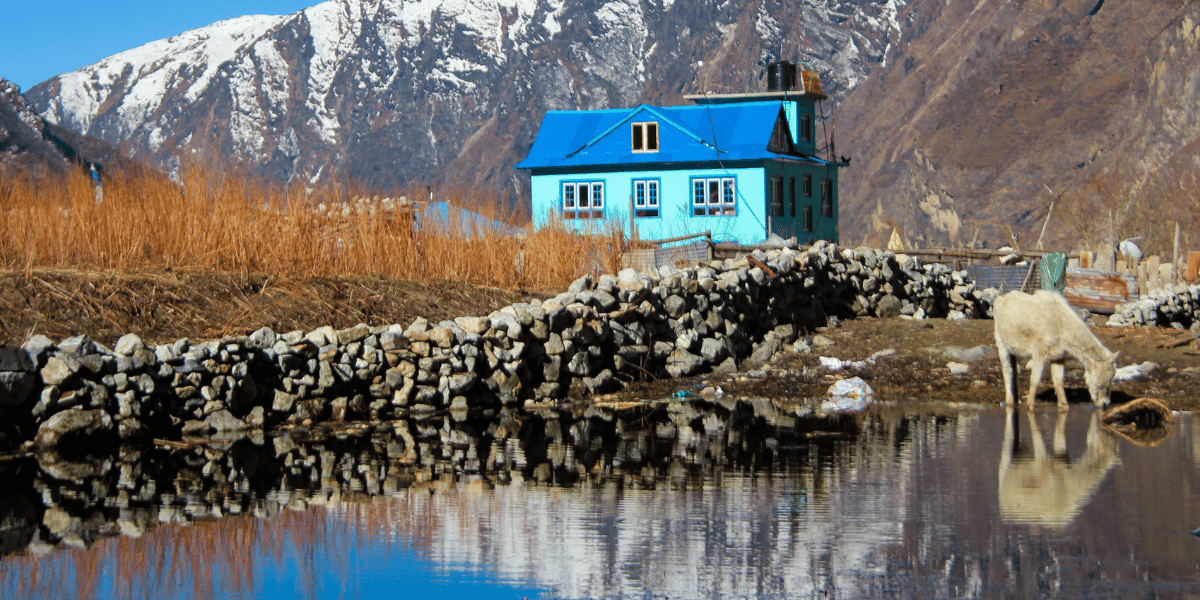
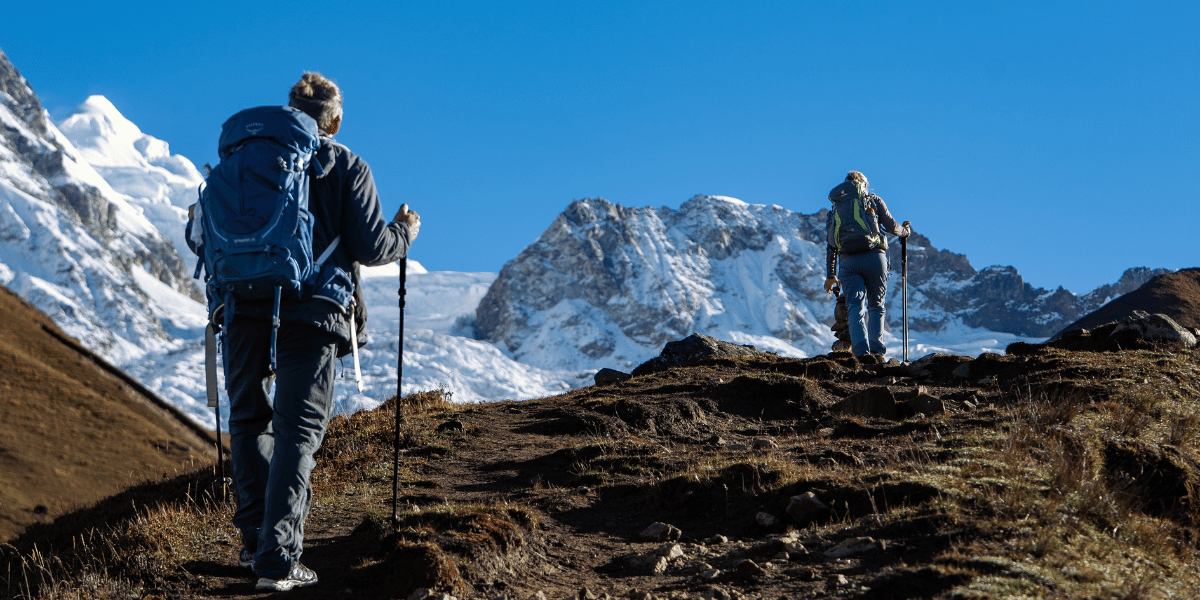


Five days is all it takes to walk into one of the most beautiful mountain valleys in the world. We’re talking about the LANGTANG VALLEY!
This 5-Day Langtang Valley Trek comes with dense forests, traditional Tamang villages, a glacial valley, and panoramic views of the Langtang and Jugal Himal ranges in one compact itinerary.
You’ll be walking along the trails of Langtang National Park, which was established in 1976 as Nepal's first Himalayan national park. It spans 1,710 sq km across elevations ranging from 792 m to 7,234 m within a single protected area.
Now, that extraordinary range is precisely what makes walking through Langtang Valley so visually dramatic as you enter through subtropical forest and reach open alpine valley, where snow giants stand on every side!
Your 5-day Short Langtang Valley Trek starts with a 110 km drive from Kathmandu to Syaphru Bensi (or Syabrubesi). From there, you’ll trek 8 km to Bamboo on the first day, followed by a 15 km hike to Langtang Village on the second day.
Day 3 takes you to Kyanjin Gompa with a 7 to 9 hour hike that also comes with an evening Kyanjin Ri sunset hike, taking you to the elevation of 4,700 m (if you choose to get to the upper viewpoint).
Day 4 is a gentler descent back to Lama Hotel with an optional early morning Kyanjin Ri sunrise hike if you missed it the day before. And Day 5 completes your Langtang journey with a downhill trek to Syaphru Bensi followed by the 5 to 6 hour drive back to the capital city. Kathmandu.
Go through this package completely before you book with us! The itinerary, trail conditions, packing list, and preparation tips below will give you a full picture of what to expect and how to get the most out of these five days.
Why and Who Should Choose This 5-Day Langtang Trek?
To be very clear upfront: this package does not include your arrival or departure, and it also does not include a pre-trek sightseeing in Kathmandu.
You can book this if you are already in Nepal and looking for a short trek to experience Langtang Valley, or if you have a tight schedule and want to make the most of a limited window.
This also means the cost is considerably more budget-friendly than a full-length itinerary. You are paying for the core trekking experience, which covers the guide, accommodation along the trail, meals, permits, and transportation for the duration of the trek itself.
This Short 5-Day Langtang Valley Trek is the right choice for those who:
- Want their first Himalayan trekking experience.
- Prefer a shorter and more manageable itinerary to test their fitness.
- Have already booked a longer Nepal trip and want to add a high-quality short trek before or after their main adventure without overextending the schedule.
- Has already done major treks in Everest or Annapurna region, and wants a quieter, less-crowded valley experience close to Kathmandu.
- Are on a budget and want a completely guided Himalayan trek experience at a lower overall cost, since a 5-day trek requires fewer accommodation nights, fewer meals, and less time away from work.
- Are already in Kathmandu and realize a short trek is possible before flying back home.
Well, Langtang is the closest significant trekking destination to the capital, and this itinerary is specifically designed for exactly that situation!
Major Stops Along the Route
The Langtang Valley trail follows a linear route: you go in, reach the highest point at Kyanjin Gompa, and come back through the same path. Each stop has its own importance on this short 5-day trek:
- Syaphru Bensi (1,467 m): This is the gateway to Langtang National Park and also the starting point for the trek. It’s where the Langtang Khola mixes with the Bhote Koshi River and also gives you your first real taste of Tamang life as we stop for lunch before and after the trek.
- Bamboo (1,984 m): Named for the bamboo groves that line the trail around this small settlement, Bamboo is your overnight stop on Day 1. It is a quiet, minimal settlement where the teahouses are basic but functional. The sound of the Langtang Khola running nearby makes for a peaceful night.
- Lama Hotel (2,515 m): Originally called Changdam village, this stop was renamed after the local lama who built the first lodge here. It sits inside a steep gorge surrounded by oak and rhododendron forests, and you will stay here for a night on the way back down.
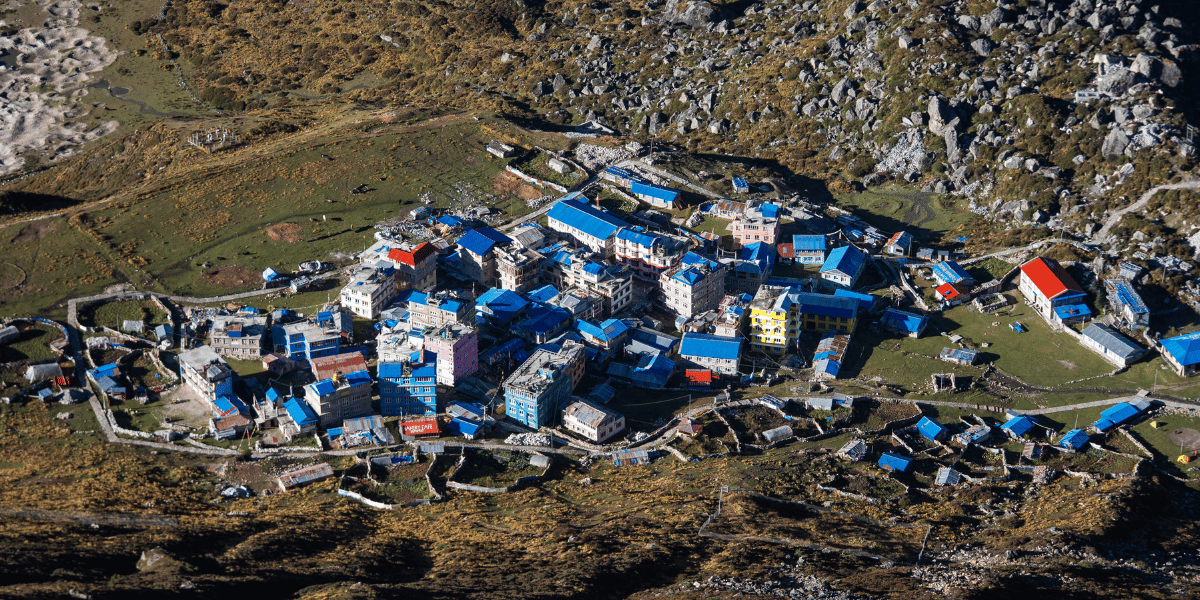
- Langtang Village (3,455 m): This is the main cultural settlement of the Langtang region and carries a deeply emotional weight. The old village was entirely destroyed in the 2015 earthquake when a massive avalanche swept through it. And more than 300 people lost their lives! Where you’ll stay is in a newer village built around a km away, raised-up by a community that refused to abandon their home. Take time to walk through the avalanche area, speak to the locals if you can, and pause at the memorial along the route.
- Kyanjin Gompa (3,890 m): This village is your final destination of this short trek and the major highlight of the entire route. Kyanjin is a small village completely surrounded by mountains on all four sides. On your third day, you reach here by lunchtime, which gives you the afternoon to do the Kyanjin Ri hike before sunset. The Kyanjin Monastery, the Yak Cheese Production Centre, and the Lirung Glacial Lake are all within walking distance.
- Other popular stops (where you will stop for snacks or lunch):
- Ghoda Tabela (3,008 m): It translates to "horse stable" and you will see exactly that when you arrive, with horses and mules grazing in the area. There is also a checkpoint here, so keep your Langtang National Park Entry Permit ready.
- Thangshyap (3,140 m), Gumba (3,400 m), and Sindhum (3,555 m) are other short stops along the upper stretches of the trail where you can catch your breath, grab a cup of tea or a glass of seabuckthorn juice, and take in the dramatic mountain views before pushing forward.
Major Attractions of This Short Langtang Trek
Five days is short, but what this trek promises to deliver is a river-fed valley walk through multiple ecological zones, close-up views of the Langtang and Jugal ranges, a hike to a panoramic high-altitude viewpoint, and genuine immersion into Tibetan Buddhist culture.
Here are the major attractions of this Langtang trek:
Walking Along Langtang Khola and Langtang Valley
The Langtang Khola feels like the spine of this entire trek. From the moment you join the valley trail above Syaphru Bensi, this river stays with you, running alongside the path all the way up to Kyanjin Gompa.
It eventually drains into the Bhote Koshi River near Syaphru Bensi, which then meets the Trishuli River further downstream at Dhunche.
What makes walking along the Langtang Khola so compelling is that the landscape around you changes completely as you gain altitude.
In the lower sections around Bamboo and Lama Hotel, you walk through dense subtropical and temperate forests of oak, pine, maple, and rhododendron. In spring, those rhododendrons explode into red, pink, and white blooms that line the trail on both sides.
In monsoon, the forest turns a deep, saturated green, and the river runs louder and faster beside you.
By the time you pass Ghoda Tabela and begin the final push toward Langtang Village and Kyanjin Gompa, the forests gradually give way to alpine meadows and open rocky terrain.
The trees disappear slowly, the sky opens up, and suddenly, the mountains now become enormous all around you! That transition, from dense forest floor to open Himalayan valley, is what makes this one of the best treks in Langtang region overall.
Mountains From Every Direction: Langtang and Jugal Range Views
The mountains start announcing themselves before you even leave Kathmandu. On a clear day, you can see snow-capped peaks from the outskirts of the valley as you begin the drive north toward Syaphru Bensi.
Syaphru Bensi introduces you to the valley landscape and the first distant glimpses of the Langtang range.
As you trek through the lower forest sections and reach Lama Hotel, Langtang Lirung (7,234 m) becomes visible for the first time with proper clarity. It is the highest peak in the region, and seeing it rise above the treeline gives you a very tangible sense of how high you still need to go!
By the time you reach Langtang Village, the mountains are on three sides. The Langtang range lines one side of the valley, the Jugal Himal fills the other, and smaller peaks like Pangshungtramo (5,262 m), Gochenpo (5,296 m), and Boden-Powell South Peak (5,857 m) frame the horizon ahead.
Arriving at Kyanjin Gompa is a different experience altogether. The valley opens into a wide, flat alpine bowl, and mountains rise on all sides without exception. Ganchenpo (6,378 m) dominates the view directly above the village, with Tsergo Ri or Tserko Ri (4,985 m) on the side.
The Kyanjin Ri hike, which is included in the evening of Day 3 brings all of these views together into a single 360-degree panorama.
From the summit, you can see peaks that were blocked by the ridgeline below, including Kimshung or Tsangbu Ri (6,781 m), Yubra Himal (6,048 m), Yansa Tsenji (6,567 m), Salbachum (6,707 m), Bhemdang Ri (6,150 m), Yala Peak (5,732 m), and more!
Langtang Lirung appears so close from here that it almost feels within reach. Definitely pose for as many pictures as you can.
Hike to the Main Vantage Point of Kyanjin Ri
Kyanjin Ri is the single major highlight that most trekkers remember vividly from the Langtang trek route. You have covered three days of trekking to get here, which makes reaching the summit feel genuinely earned.
Kyanjin Ri has two viewpoints:
- Lower Kyanjin Ri (4,400 m): It takes about 1.5 hours to reach via a 1.5 km steep rocky trail. From there, you already get sweeping views of Langtang Lirung and the Lirung Glacier below it. If you are pressed for time or feeling the effects of altitude, you can stop here and still come away with exceptional views. Also, you get to see Kyanjin village sitting directly beneath you!
- Upper Kyanjin Ri (4,700 m): For those going all the way to the main summit, it is an additional hour of hiking over a further 1 km of steep, rocky terrain. The difference in what you see from the top is significant. The full panorama from 4,700 m adds mountains that are completely invisible from the valley below.
On this itinerary, we plan the Kyanjin Ri hike for the evening of Day 3 to catch the sunset panorama. But if weather does not cooperate, the hike moves to early morning of Day 4 instead.
Experience Tamang Culture and Tibetan Buddhism
The cultural experience on this trek is every bit as meaningful as the physical one. The Tamang people who live in the Langtang region are of Tibetan origin and follow Tibetan Buddhism, and that heritage is visible everywhere along the trail.
From the first teahouse itself, you will notice traditional altars decorated with butter lamps, water bowls, and portraits of the Dalai Lama carved into wooden panels.
As you walk, you will pass long mani walls, prayer wheels, chortens, and stupas that line the trail between settlements. The standard practice is to pass them clockwise, and your guide will remind you of this along the way.
The Kyanjin Gompa monastery itself, sitting at the heart of Kyanjin village, is the most significant religious structure along this route. It is generally open in the mornings, and a visit gives you a quiet window into the daily practice of the community that has lived here for generations.
One more thing: the 2015 earthquake changed Langtang deeply! The scale of what happened here, where an earthquake-triggered avalanche buried nearly the entire old village in seconds, is not something you can fully grasp from a distance.
Being there, speaking to families who survived and rebuilt, and standing at the memorial erected in the village's honor gives this trek a layer of emotional depth that most mountain routes simply do not have.
Other Attractions Worth Your Time
The four attractions above were the headline experiences of this short 5-day trek. But Langtang Valley holds a few more things worth your attention, and missing them simply because they are not on the main itinerary would be a shame.
These do not require extra days or major detours. Most of them fit naturally into the gaps already built into our 5-day itinerary:
- Organic Yak Cheese Production Centre (Kyanjin Gompa): Nepal's first high-altitude cheese factory, established with Swiss support in the 1950s, still operates here. The yak cheese is genuinely worth trying, and watching the production process (during the right season) is a fascinating bonus that takes less than an hour.
- Lirung Glacial Lake (approx. 3,960 m): Visible from Kyanjin Ri and even reachable on foot if you have spare time on Day 3 or 4. This proglacial lake feeds a 100 kW hydropower station that powers the entire Kyanjin village, making it Nepal's first hydropower project using a glacial lake!
Now that we’ve given you the details of this 5-day Langtang Valley Trek, let’s head into the itinerary section below. We’ve covered each day in detail, so go through it to understand the exact distances, elevation changes, and what to expect at each destination before you start preparing for this trek.
 1984 M
 Tea House