
close
  • Trip Code
    Trip Code LV10D
  • calendar
    Duration 10 Days
  • meter
    Trip Difficulty moderate
  • group
    Group Size 2-15 People
  • start
    Start Point Kathmandu
  • meal
    Meals As Mentioned

Trip Highlights

  • Start with a cultural exploration of Kathmandu before heading for the trek.
  • Walk beside the Langtang Khola river for a soothing experience.
  • Gain altitude steadily and learn about Langtang plus Jugal mountains.
  • Pass through mani walls, stupas, chortens, etc., that gives a proper glimpse of Tibetan Buddhism.
  • Stop at the old Langtang Village and observe a moment of silence for those who lost their lives.
  • Spend two nights in the Himalayan village of Kyanjin Gompa and meet the Tamang people here.
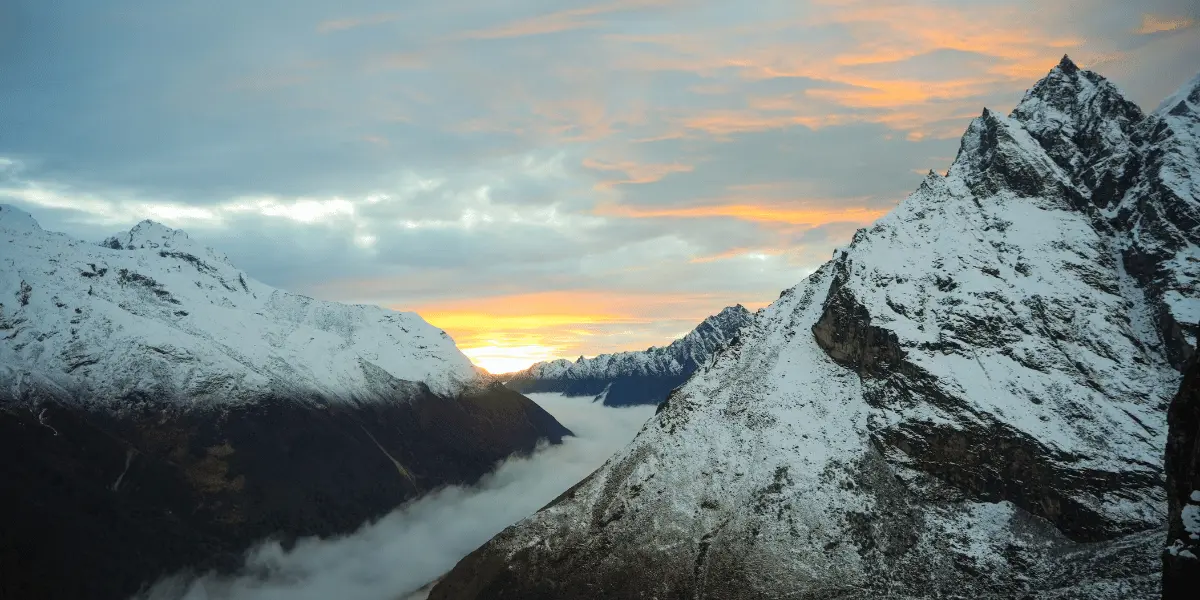
  • Reach Kyanjin Ri to enjoy the breathtaking sunrise over the Langtang and Jugal ranges.
  • Go for the challenging Tsergo Ri hike at almost 5,000 meters!
  • Spend ample time in the Langtang National Park with the possibility of sighting unique wildlife.

Trip Overview

Langtang National Park is the closest major Himalayan trekking destination to Kathmandu. The park rises from 1,000 m in its subtropical lower forests to 7,234 m at the top of Langtang Lirung.

It spans 1,710 sq km across three districts (Rasuwa, Sindhupalchok, and Nuwakot) and is home to 46 species of mammals, over 345 species of birds, and more than 1,000 species of vascular plants within those boundaries.

On this 10-Day Classic Langtang Valley Trek, you enter Rasuwa via Nuwakot and go through a forested route, walk along the Langtang Khola river, and enjoy nature in the best way possible!

In fact, this is our most complete format for the Langtang region and also the most popular package on this route. 

The reason is straightforward: it handles everything from the moment you land at Tribhuvan International Airport to the moment you head back, so there are no loose ends to manage independently. You arrive and enjoy Langtang while we take care of the rest!

The 10 days of your Nepal trip break down like this:

  • Day 1 is your airport arrival and trek briefing. 
  • Day 2 is a guided full-day exploration of 4 UNESCO World Heritage Sites in Kathmandu Valley
  • Day 3 begins the drive to Syaphru Bensi and the first walk to Bamboo. 
  • Days 4 to 8 cover the full Langtang circuit, from the river trail to Kyanjin Gompa and both the Kyanjin Ri sunset hike and the Tsergo Ri or Tserko Ri (4,985 m) summit. 
  • Day 9 is the drive back to Kathmandu and a traditional Thakali cultural dinner. 
  • And Day 10 is your airport departure.

So, at USD XXX per person, you’re getting the complete Langtang Valley Trail, both high-altitude summit hikes, 2 nights in Kyanjin Gompa, a Kathmandu cultural day, and a celebratory dinner at the end. We promise: this package does not leave anything important out!

Having doubts? Well, go through the full package content before you hit that BOOK NOW button. We’ve shared the complete itinerary and route details, along with breaking down every attraction below to help you get a complete picture of what to expect across all 10 days.

Who Should Choose This Package?

This 10-day format of Langtang Valley is honestly one of the best treks in the Langtang region and remains a perfect choice for anyone wanting the complete experience without having to manage any of the logistics parts yourself. Here is precisely who it works best for:

  • Those visiting Nepal for the first time and want a fully organized trip. From your airport pickup on Day 1 to your departure drop-off on Day 10, our team handles transport, accommodation, permits, guides, porters, and briefings. You focus on the experience, not the logistics.
  • Trekkers who want a Kathmandu cultural experience included before the trek. The Day 2 guided tour of 4 out of 7 UNESCO World Heritage Sites is one of the most valuable parts of this package. Many first-time visitors try to rush Kathmandu on their own, miss the context, and arrive at the mountains without understanding what they are trekking through. Our Day 2 tour changes that!
  • Those with a fixed 10-day window who want the full Langtang experience. This itinerary is designed around a set schedule with consistent daily distances. It does not rush any single day, and every stop from Bamboo to Kyanjin Gompa gives your body the time it needs to adjust to Langtang’s altitude progressively.
  • Trekkers who want both Kyanjin Ri and Tsergo Ri without compromise. Some shorter itineraries force you to choose one or skip both due to timing. This 10-day format dedicates Day 5 to the Kyanjin Ri sunset hike and all of Day 6 to the Tsergo Ri summit, so neither hike gets rushed.
  • Those who are just starting out on trekking in the Himalayas. The gradual daily elevation gain, the two nights in Kyanjin Gompa, and the guide who monitors you throughout make this format genuinely safe for people who have never been above 3,000 m. The only challenging days are Days 5 and 6, and both are manageable with basic fitness preparation.
  • Groups with mixed fitness levels. Because no single day is excessively long or rushed, and because the Tsergo Ri hike on Day 6 can be modified or skipped based on individual condition, this format accommodates people with different physical capabilities on the same trip.

Main Stops and Villages Along the Route

This trek follows a linear out-and-back trail from Syaphru Bensi, reaches deep into Langtang Valley, and the return is the same route!

Full Route: Kathmandu > Syaphru Bensi > Bamboo > Thangshyap > Kyanjin Gompa > Kyanjin Ri > Kyanjin Gompa > Tsergo Ri > Kyanjin Gompa > Lama Hotel > Syaphru Bensi > Kathmandu

Here is what you need to know about each overnight stop on this itinerary:

  • Kathmandu (1,317 m): Your first 2 nights and final night of the trip are here, all at a 3-star hotel (usually in Thamel, often known as the main tourist hub of Kathmandu). On Day 1, this is your recovery night after the flight. On Day 2, it is your base for the UNESCO heritage tour. And on Day 9, it is where the Thakali cultural dinner and trek completion certificate presentation happens. Thamel itself is worth walking in the evenings and is well-known for its nightlife too! 
  • Bamboo (1,984 m): The name gives it away! The lower trail from Syaphru Bensi passes via Tiwari, Domen and through dense bamboo groves mixed with oak, alder, and rhododendron before reaching this small settlement sitting right on the Langtang Khola riverbank. The sound of the river from your bed on the first night is something that our prior guests have consistently mentioned. The forested trail between Syaphru Bensi and Bamboo is also one of the best sections for red panda sightings, particularly at dusk in the bamboo zones.
  • Thangshyap (3,140 m): This stop is what separates a well-paced 7 days from the rushed 5-day or 6-day versions that push to Langtang Village on the same day. By stopping here instead of going further, you keep Day 4 to a manageable 11 km and 1,160 m of elevation gain, and your body crosses the 3,000 m threshold gradually rather than in a single push. Thangshyap is basically a small settlement, with just a few teahouses, but that also means it is quieter than the more popular overnight stops.
  • Kyanjin Gompa (3,890 m): This is the best stop on your entire 10-day Nepal tour, honestly. And to complement that, we have added 2 full nights here, which is the only way to do both Kyanjin Ri and Tsergo Ri properly. The village is surrounded by peaks on all three sides, with Ganchenpo stealing the spotlight in front and Lower Kyanjin Ri right above your head! It’s also home to the oldest monastery in the upper Langtang valley, Organic Yak Cheese Production Centre, Lirung Glacial Lake, local bakery cafes, etc.
  • Lama Hotel (2,515 m): Originally called Changdam village, this settlement got its current name from a small lodge run by a local lama in the early days of Langtang trekking. Early foreign trekkers started calling it Lama Hotel, and the name stuck. On the ascent, this is a lunch stop on Day 4. On the descent, it is your overnight stop on Day 7, and the significant drop in altitude from Kyanjin means you breathe easily here, sleep well, and usually feel your appetite return properly for the first time since Day 5. Moreover, the riverside setting is similar to Bamboo, and the Langtang Khola is right beside you again!
  • Syaphru Bensi (1,467 m): This town is the gateway to the Langtang Valley and is close to the Timure/Rasuwagadhi border, used to cross into Tibet. You can find multiple monasteries here that you can visit on the final day of the trek. Since we’ll arrive early, you get the entire afternoon to yourself here, which is more than enough to explore the town, or you may choose to simply rest and relax.

Major Attractions of This Trek

Within this 10-day timeframe, you get to visit 4 UNESCO-listed sites in Kathmandu Valley, explore Langtang National Park, meet one of Nepal's most distinct ethnic Tamang communities, walk beside a glacially-fed Langtang Khola river for three consecutive days, and summit a 4,985 m viewpoint peak!

Now, allow us to explain what each of those experiences actually involves (in order):

A Full-Day Kathmandu Heritage Tour

Nepal has 10 UNESCO World Heritage Sites in total, and 7 of them sit within Kathmandu Valley. You get to visit 4 of them on Day 2 with a government-licensed guide on this itinerary:

  • Kathmandu Durbar Square: This is the historic palace complex of the Malla and Shah kings, which is located in Basantapur. The square holds the Kumari Ghar, home of the living goddess Kumari, and also the Hanuman Dhoka Palace Museum. While the 2015 earthquake had damaged several structures here, much of the complex has been carefully restored as of 2026.
  • Swayambhunath Stupa: This happens to be one of the oldest Buddhist monuments in the valley, believed to date back to approximately 460 AD based on the Chronicles of Gо-pal. It sits on a hill west of the city and offers the best views across Kathmandu Valley from the top! That’s not just about it. Its iconic all-seeing eyes of the Buddha (painted on all four sides of the tower) is one of the most photographed images in Nepal!
  • Boudhanath Stupa: Considered the largest one in Nepal, Boudhanath is in fact the largest spherical stupa in the world and is well-known for being the spiritual centre of the Tibetan Buddhist community. There are over 50 Tibetan monasteries and gompas around the main structure. The main highlight here is kora (circumambulation) that happens throughout the day and can be performed by anyone!
  • Pashupatinath Temple: It is one of the holiest Shiva temples in the world, built on the banks of the sacred Bagmati River. The overall temple complex includes the main shrine (not accessible to non-Hindus), but the ghats along the river, where cremation rituals are performed, are open to visitors. You can stay late to watch the Sandhya Aarati ceremony at around 6-7 PM, which is one of the most culturally significant things to witness in Nepal! 

A Drive to Remember via Nuwakot and Rasuwa

The 110 km drive from Kathmandu to Syaphru Bensi is where your trip actually begins as you finally start seeing the natural attractions of Nepal. The route heads north through Tokha and into Nuwakot District, where the road follows the Trishuli River gorge for much of the journey.

Just to give you some context: Nuwakot has its own historical significance that most trekkers pass through without knowing. Prithvi Narayan Shah, the founder of modern Nepal, used Nuwakot as one of his key military bases during the unification campaign and was successful in capturing the Kathmandu Valley too.

You will stop near here for tea with your trekking squad before entering another district, Rasuwa, that shares a direct border with China.

The terraced hillsides around Nuwakot grow rice, maize, and millet at lower elevations, and the settlements along the river look remarkably different from Kathmandu's urban density, even though you are only a couple of hours from the capital.

After Betrawati Bazaar, the landscape shifts, with hills becoming steeper and the vegetation becoming thicker. The road begins to climb through landslide-prone sections that are a genuine reminder that this Pasang Lhamu Highway is a Himalayan road, not just any normal highway!

The army checkpoint at Dhunche is where your Langtang National Park permit is processed, and from Dhunche, the final drive to Syaphru Bensi takes less than an hour!

Langtang Glacier, Langtang Khola, and Bhotekoshi River

The river you will walk beside for most of this trek originates from the Langtang Glacier, the longest glacier in the Langtang region, which itself is fed by Langtang Lirung (7,234 m).

The Langtang Glacier stretches approximately 18 km and spans an area of roughly 46.5 sq km between altitudes of 4,500 m and 7,000 m. The meltwater from this system feeds the Langtang Khola continuously throughout the year!

At Syaphru Bensi (1,467 m), this Langtang Khola meets the Bhote Koshi River, whose origin is the Zhangzangbo Glacier in Tibet and enters Nepal through the Rasuwagadhi border. 

On the trail, you walk beside clean, fast glacial water for most of Days 3, 4, and 7! The sound of the Langtang Khola carries through the forest all the way from Syaphru Bensi to Kyanjin Gompa. 

At Bamboo and Lama Hotel, your teahouse sits right on the bank. You might want to plunge in or drink water directly, but do not do either!

Meet Tamang Community from the Very Start

According to the 2021 Nepal Census, Rasuwa District has a total population of 46,689 people, of whom 68.78% are Tamang (29,782). This makes them the dominant community across the entire district and even the largest in Bagmati province (with a population of 1,216,517)!

The district name itself comes from the Tibetan words "ra" (lamb) and "sowa" (grazing), a reference to the historical role of highland herding that the Tamang communities practised across these hills for centuries!

The Tamangs are historically of Tibetan origin and arrived in this region from across the northern passes. Their language (Tamang), religious practice (Tibetan Buddhism), and material culture are very distinct from those of the Hindu communities.

The good news is that you will meet them at every stop from Syaphru Bensi to Kyanjin Gompa. The teahouse families, the lodge owners, the guides and porters, and even the farmers in the fields beside the trail are all Tamangs.

The major festivals celebrated by people in Langtang are Sonam Lhosar (Tamang New Year, celebrated in mid-January), Gyalpo Lhosar (Tibetan New Year, mid-February in the higher Langtang Valley), Mani Rimdu (late October to early November), Dumji (June to July), and Dhukpu Cheju (around July).

If your trek dates fall near any of these, the atmosphere in Kyanjin Gompa and the valley villages is noticeably different and worth planning around!

Furthermore, Tibetan Buddhist culture is present at every step along the Langtang Trek route. Mani walls, which are long stone walls inscribed with the mantra Om Mani Padme Hum, are available from Syaphru Bensi onward.

Also, you get to see prayer wheels, chortens, and prayer flags appear at every village entrance and trail junction. Don’t worry! The included guide from this package will explain these before you even start walking.

Langtang and Jugal Mountains Visible Along the Trail

The mountain views on your Langtang trek build up as you gain elevation, rather than appearing all at once. You get proper glimpses of Langtang Lirung from Lama Hotel on a clear morning, but the real opening of the panorama begins after Ghoda Tabela:

  • From Langtang Village (3,455 m): Langtang Lirung (7,234 m), Langtang II (6,571 m), Luri Himal (6,924 m), Pangshungtramo (5,262 m), Gochenpo (5,296 m), Boden-Powell South Peak (5,857 m).
  • From Kyanjin Gompa (3,890 m): All of the above, plus Tsergo Ri / Tserko Ri (4,985 m) directly above the village, Ganchenpo (6,378 m), Pongen Dokpu (5,928 m), Dshabu Ri (4,943 m), Kanja La Chuli (5,652 m), Ghanja La Chuli / Naya Khanga (5,863 m), and Donagpo (4,992 m).

From the two viewpoints above Kyanjin, the panorama expands further in both directions:

  • From Kyanjin Ri (4,700 m): All Kyanjin Gompa peaks, plus Kimshung/Tsangbu Ri (6,781 m), Yubra Himal (6,048 m), Yansa Tsenji (6,567 m), Salbachum (6,707 m), Bhemdang Ri (6,150 m), Bhemdang Karpo (6,865 m), Yala Peak (5,732 m), and Yala Peak South (5,520 m).
  • From Tsergo Ri (4,985 m): Everything visible from Kyanjin Ri, plus Ramthang Karpo Ri (6,865 m), Langhisha Ri (6,412 m), Gurkarpo Ri (6,891 m), Loenpo Gang (6,979 m), Dorje Lhakpa (6,966 m), Kanshurm (6,078 m), and Urkenmang (6,150 m).

Let’s learn more about the two viewpoints below.

The Hike to Kyanjin Ri

On Day 5 of this 10-day itinerary, you reach Kyanjin Gompa by around midday. After lunch, the afternoon is dedicated to the Kyanjin Ri hike, timed specifically for the evening light.

The trail begins from the east side of Kyanjin village and climbs immediately on a steep, direct path up the ridgeline.

The lower viewpoint, Lower Kyanjin Ri (4,300 m), is 1.5 km from the village and takes about 1.5 hours to reach. Langtang Lirung appears directly ahead, the Lirung Glacier is visible right beneath it, and Kyanjin Gompa village sits on the other side.

For trekkers who are feeling the altitude or prefer a shorter summit, this viewpoint is already a significant achievement. But to those who wish to continue to the main summit of Upper Kyanjin Ri (4,700 m), you add another 1 km of gradual ridge climbing from the lower viewpoint, which takes about an hour more.

The sunset from here (when weather conditions cooperate) is one of the best photographs you will take on this trek for sure!

You see, it is going to be a demanding afternoon following a long walking day from Thangshyap, but the two-night stay in Kyanjin means you have a full rest before Tsergo Ri the next morning.

Reaching Tsergo Ri: The Ultimate Summit of This Trek

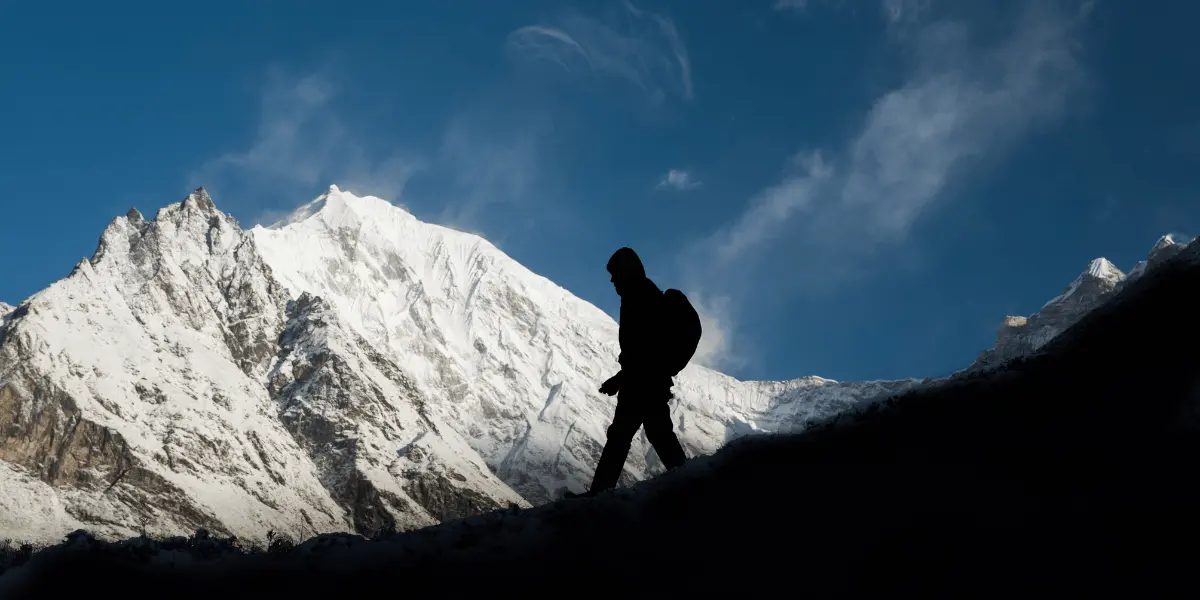
Tsergo Ri (4,985 m) is the highest point you will reach on this 10-day itinerary, is the most demanding day of the entire trip, and is also one of the best attractions of the Langtang NP!

The trail heads north from the village into the glacial valley, and you will gain approx. 1,110 m of elevation over roughly 5 km to the summit. Above 4,000 m, the terrain can be icy and snowy regardless of season, so crampons are necessary for the upper sections (can be rented from the teahouse if needed).

The elevation gain from Kyanjin to the summit is constant but not technical. There is no climbing involved. What makes it hard is the altitude!

At 4,500 m and above, even slow, steady walking demands noticeably more from your lungs than the same gradient at lower elevations. Most trekkers take 4 to 5 hours to reach the summit and 2 to 3 hours for the descent, which makes a total of 7 to 8 hours round trip.

But what you see from the top is definitely worth the distance you’re covering! The summit is wide enough to sit comfortably, so be sure to enjoy and take tons of pictures here.

But remember to descend before noon. That’s because afternoon winds in the glacial valley can be significant, and the upper trail becomes more difficult to navigate in wind!

Now that you have a full picture of what this trek involves across every stage, from the streets of Kathmandu to the top of Tsergo Ri, let’s go through the day-by-day itinerary below for the specific route, distances, and elevation data for each of the 10 days.

Read More

Outline Itinerary

DAY 1: Kathmandu Arrival, Trek Briefing.

DAY 2: Kathmandu Sightseeing.

DAY 3: Kathmandu to Syaphru Bensi Drive, Reach Bamboo.

DAY 4: Bamboo to Thangshyap.

DAY 5: Thangshyap to Kyanjin Gompa, Kyanjin Ri Sunset Hike.

DAY 6: Tsergo Ri Morning Hike, Explore Kyanjin.

DAY 7: Kyanjin Gompa to Lama Hotel.

DAY 8: Lama Hotel to Syaphru Bensi.

DAY 9: Drive Back to Kathmandu, Cultural Dinner.

DAY 10: Farewell, Departure.

Detailed Itinerary

Expand all
Day 1

Kathmandu Arrival, Trek Briefing.

ascent 1317 M
trip-accomodation 3 Star Hotel
trip-meals N/A
Day 2

Kathmandu Sightseeing.

ascent 1317 M
trip-accomodation 3 Star Hotel
trip-meals B
Day 3

Kathmandu to Syaphru Bensi Drive, Reach Bamboo.

ascent 1984 M
trip-accomodation Teahouse
trip-meals B,L,D
Day 4

Bamboo to Thangshyap.

ascent 3140 M
trip-accomodation Teahouse
trip-meals B,L,D
Day 5

Thangshyap to Kyanjin Gompa, Kyanjin Ri Sunset Hike.

ascent 3890 M
trip-accomodation Lodge
trip-meals B,L,D
Day 6

Tsergo Ri Morning Hike, Explore Kyanjin.

ascent 3890 M
trip-accomodation Lodge
trip-meals B,L,D
Day 7

Kyanjin Gompa to Lama Hotel.

ascent 2515 M
trip-accomodation Teahouse
trip-meals B,L,D
Day 8

Lama Hotel to Syaphru Bensi.

ascent 1467 M
trip-accomodation Lodge
trip-meals B,L,D
Day 9

Drive Back to Kathmandu, Cultural Dinner.

ascent 1317 M
trip-accomodation 3 Star Hotel
trip-meals B,L,D
Day 10

Farewell, Departure.

trip-meals B

Price Includes

  • All required airport pickup and drop off on a private basis.
  • All the mentioned sightseeing in Kathmandu on a private vehicle.
  • Kathmandu sightseeing entrance fees.
  • Professional government-licensed tour guide for sightseeing in Kathmandu.
  • A private vehicle for your drive from Kathmandu to Syaphru Bensi and return.
  • All 3 Nights hotel accommodation in Kathmandu in a 3-star hotel on a double/twin sharing basis.
  • All 6 nights' accommodation during the trek in local lodges or teahouses.
  • Daily breakfast at the respective hotels or local lodges from the next day of your arrival.
  • Lunch and Dinner in the entire trekking journey.
  • All required trekking permits: Langtang National Park Entry Permit and TIMS Card (if required).
  • Duffle bag and trekking map (if required).
  • A professional English-speaking government-licensed trek guide.
  • A porter during the trek (who carries 20-22 kg for two trekkers).
  • Guide, driver, and porter’s food, salary, accommodation, and allowance.
  • One local SIM card (returnable).
  • Arrangement of an emergency helicopter service, which will be covered by the traveller's insurance.
  • All government and local taxes.
  • Traditional Nepali cultural dinner in Kathmandu on the last evening of your trip.
  • A Langtang Trek Completion Certificate.

Price Excludes

  • Personal expenses.
  • International flights.
  • Nepal visa cost.
  • Lunch and Dinner in Kathmandu.
  • Travel insurance covering helicopter and other forms of high-altitude rescue (highly recommended).
  • Tips for the guide, porter, and anyone else involved.
  • Sweet things like dessert/chocolates during the trek.
  • Any alcoholic and non-alcoholic drinks. 
  • Hot showers/battery charges/heater/mineral water during the trek.
  • Services that are not mentioned above.

Tour Guide, Tips

There are always a handful of questions that come up before booking a short trek like this one: is it difficult enough to need special preparation?, when is the best time to go?, what are the teahouses actually like?, and how much of the food on the trail is actually good?

Well, this section addresses all of that directly, so you have a clear and honest picture before you book this 10-day trek.

How Do We Organize This Trip?

Before we get into the trek guide, it is worth knowing who you are trekking with and how this trip is being organized.

Langtang Valley is a subsidiary run by Altitude Himalaya Pvt. Ltd., a Kathmandu-based trekking company that has been organizing treks and tours across Nepal since 2013!

We created this website specifically to give Langtang the focused attention it deserves as one of Nepal's finest and most underrated trekking destinations.

Our team at Altitude Himalaya is young but experienced and, most importantly, very passionate about every trekking destination in Nepal. In fact, we have trekked these trails ourselves and bring to you first-hand knowledge in every itinerary we design and publish!

And here’s how we have been organizing every trek in the Langtang region:

  • First of all, we are a government-licensed and registered trekking operator under the Nepal Tourism Board and Trekkers' Agencies Association of Nepal (TAAN).  This means we shall be organizing your trip in a completely legal way. One can check Altitude Himalaya’s company profile on the TAAN website too!
  • We do include generalist licensed trekking guides but those who know the route really well! They have walked the trails multiple times and understand what each guest wants, can predict weather patterns, and make decisions instantly.
  • We remain transparent about our prices. So, what you're seeing in the package is what you'll need to pay. We have clearly listed the inclusions and exclusions, and even if you have any confusion, we're happy to clarify anything before you book!
  • We promise to be quick at responding and are always ready to customize your itinerary when needed. In fact, we even handle permit logistics, pre-book your accommodations, and manage all transport arrangements on a private basis (you won't have to look into any of this).
  • And if you want to extend your trip, add another trek, or explore any other place in Nepal after your Langtang adventure, our team at Altitude Himalaya is always ready to help!

Difficulty Level Explained

The 10-Day Classic Langtang Valley Trek is the most relaxed full Langtang itinerary we offer. No single day is rushed, and the average daily distance stays at 10 to 12 km across most of the trek.

For first-timers, the difficulty remains moderate, mainly because of the two high-altitude hikes that require early starts, sustained climbing above 4,500 m, and a clear head in cold morning conditions.

Overall Difficulty Grade: Easy to Moderate

Which Parts Are the Most Difficult?

Day 5 is the longest day of the entire 7-day trek, which involves 15 km from Thangshyap to Kyanjin Gompa with up to 1,560 m of elevation gain, followed by the Kyanjin Ri evening hike. On this day, starting at 6 to 7 AM is essential!

Day 6's Tsergo Ri hike might not be the longest day by distance, but it is the most demanding by altitude. Above 4,500 m, even a gentle incline takes noticeably more out of you than it would at the lower altitudes! 

Also, you need to start early; at around 3 to 4 AM, the temperatures in the upper sections remain cold, and you need to go on a steady climb. All of this combines to make it the hardest day for most trekkers. 

While Day 7 involves 18 km of downhill from Kyanjin Gompa to Lama Hotel, the length is easy on your lungs but genuinely tough on your knees! So, wearing compression sleeves on Day 5 is something we strongly recommend to anyone with any existing knee sensitivity.

Can Beginners Do This Trek?

Yes, and many first-time trekkers specifically choose this 10-day format with us because it is not forced! 

The daily distances are manageable, the acclimatization is gradual, and having two nights in Kyanjin Gompa is enough for rest and exploration. 

The only honest challenges are the two high-altitude hikes:

  • Kyanjin Ri is manageable for most beginners. 
  • Tsergo Ri requires more from you, both physically and mentally, because of the high altitude and the early start. 

Also, for beginners, we even give you the option to not summit Tsergo Ri and only stick with Kynajin Ri (or no Kyanjin Ri, only Tsergo Ri). 

If on Day 6 you are not feeling well or the conditions are difficult, skipping the summit or turning back at a lower point is always the right call. Good news is that our guide will always be at your support, no matter what decision you make!

Note for solo trekkers: This trek is permitted for solo trekking, but having a guide makes the route significantly safer and more informative, particularly on the Tsergo Ri ascent, where trail conditions above 4,000 m require local knowledge.

Best Time For This Langtang Itinerary

The two best seasons for this trek are spring and autumn. But what’s more important is to check the weather window, and that way, every season becomes the best.

Here’s what each season looks like in Langtang to help you choose the right time to book this package:

  • Spring (March to Mid-June) brings rhododendron blooms throughout the lower forests, clear mountain views, and warm daytime temperatures. Late March through April is particularly stunning when the trails between Bamboo and Lama Hotel are lined with red and pink blossoms.
  • Autumn (Late-September to Mid-December) is the most popular season for a reason. The skies are consistently clear after the monsoon, mountain visibility is at its peak, and temperatures are comfortable for hiking. Mid-October to mid-November gives you the best of all conditions!
  • Monsoon (Late-June to Mid-September) brings heavy rainfall and leech-prone trails in the lower sections but also a lush green landscape and very few other trekkers. It is doable but requires caution on the lower trail sections, which are prone to landslides.
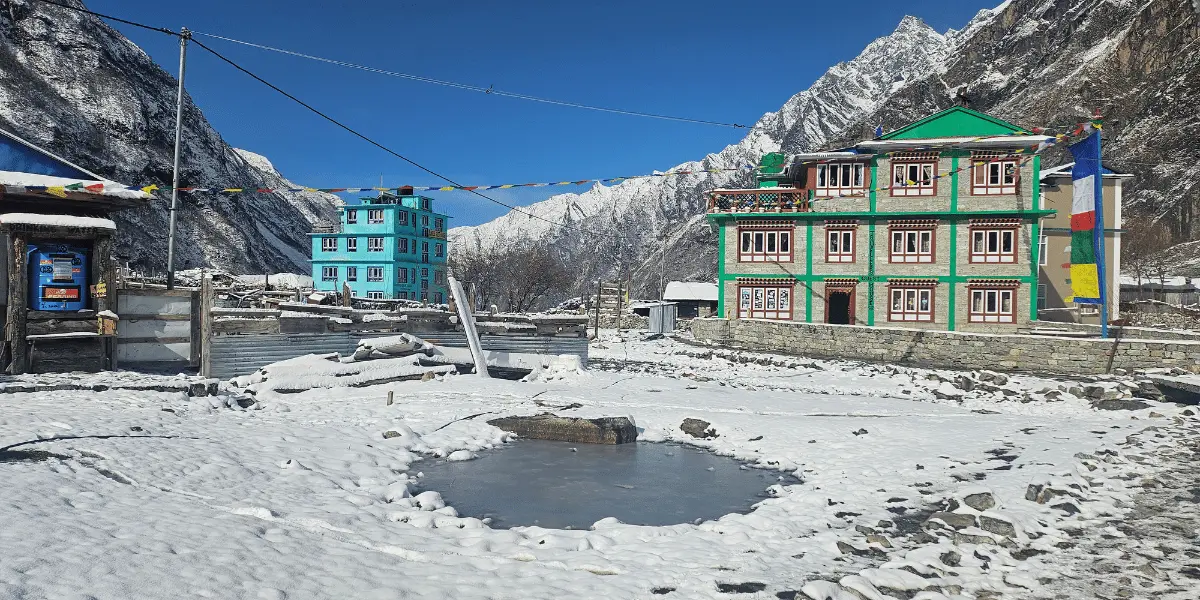
  • Winter (Late-December to February) brings snow to the upper sections from Langtang Village upward, and the Kyanjin Ri hike can be icy. It is the least crowded season and offers a very different kind of beauty, but you need to be prepared for cold nights and limited teahouse availability in the highest stops.

Accommodations Included in This Package

As mentioned in the aforementioned itinerary, your overnight stops are going to be in Kathmandu (Days 1, 2, and 9), Bamboo (Day 3), Thangshyap (Day 4), Kyanjin Gompa (Days 5 and 6), Lama Hotel (Day 7), and Syaphru Bensi (Day 8).

Now, let’s look at what to realistically expect at each of the destinations:

  • Kathmandu: We have included a 3-star property in Thamel, where you can expect a clean private room with a proper bed, hot shower, western-style toilet, WiFi, and room service. In fact, Thamel also serves as a practical base for last-minute gear shopping and currency exchange. Your hotel will also store any excess luggage you do not want to take on the trek, so you get to carry only the essentials on Day 3!
  • Bamboo: Basic teahouses with shared rooms on plywood-divided walls. Expect thin mattresses, shared squat toilets, and hot showers available for an extra charge. But electricity and even basic charging facilities are unavailable right now (but will likely be available in a few years). Wi-Fi is here, though!
  • Thangshyap: A smaller stop with limited teahouses compared to Lama Hotel or Langtang Village. Rooms are shared and basic, toilets are squat-style, and hot showers cost extra. The electricity supply here is intermittent but usually sufficient for basic charging. The altitude (3,140 m) means it can feel noticeably cold at night, so keep extra layers accessible.
  • Kyanjin Gompa: The best of all locations, with proper bedding, an accessible mobile network, WiFi available, device charging in rooms, and in some even shared toilets! Hot showers are also available depending on the lodge (some offer them for free). And the cozy, warm dining rooms here are where the best memories you’ll have!
  • Lama Hotel: Accommodation here is mostly in teahouses (no proper lodges like Langtang and Kyanjin). Also, there are just about 7-8 teahouses, so instead of pre-booking, the hosts rely more on a “first-come, first-serve” policy. WiFi here is less reliable than at other stops, but WiFi cards are available for purchase (which you can get before the trek starts). Note that rooms are basic and hot showers come at a small extra charge.
  • Syaphru Bensi: The most comfortable overnight stop on the entire trail. The location comes with proper lodges with private room options, free hot showers, stable WiFi, and a significantly wider food menu than anywhere higher up. The full afternoon and evening that were included on Day 6 give you genuine rest, and the town has enough to explore if you want to walk around as well.

Regarding mobile network coverage: an NTC SIM card (compared to Ncell) is the most reliable option along the entire Langtang trail. Its signal holds in most major stops, though it drops in gorge sections like the Lama Hotel. 

Also, the mobile network is heavily weather-dependent. So, do not rely on data connectivity.

Meals and Local Foods/Drinks to Try

Food on the Langtang trek is not just for fuel but rather a part of the experience!

And this package includes three meals a day throughout the trek, and knowing what to order and when makes a genuine difference to how your body holds up on the trail.

Meals Included in this 10-day Package

Our Langtang package covers breakfast, lunch, and dinner for the entire duration of the trek. Meals are served at the teahouses where you stay or stop along the route.

  • Breakfast options you will find: Porridge, muesli, omelette, Tibetan bread with jam or vegetable curry, chapati, pancakes, and toast. Most teahouses begin serving from 6:00 AM to 7:30 AM. Order your breakfast the night before so there are no delays on early-start mornings.
  • Lunch and dinner options: Dal bhat (steamed rice with lentil soup, vegetables, and pickle), fried rice, noodle soup or thukpa, chowmein, momo, and a range of local soups, including garlic soup and potato soup. Some lower teahouses also list pasta, pizza, and spaghetti, though for energy and digestion on the trail, DAL BHAT remains the best and most reliable choice
  • Packed Lunch for Tsergo Ri: There are no teahouses along the Tsergo Ri route, so your Day 4 lunch is a packed meal prepared by the teahouse staff the evening before. They wrap it in aluminium foil to keep it as warm as possible, and your guide carries it along with trail snacks. Make sure to mention any dietary preferences the night before Day 4 so the kitchen can prepare accordingly.

Local Foods and Drinks Worth Trying

Beyond the standard menu, the Langtang trail has a few things you should specifically seek out:

  • Garlic Soup: Order this whenever you are feeling the altitude or starting to feel a headache coming on. Garlic contains allicin, a compound that supports blood circulation and oxygen delivery, which makes it a genuinely useful high-altitude remedy beyond just being a warm, savory soup.
  • Sea Buckthorn Juice: You will start seeing boards advertising this around the Ghoda Tabela area. The juice is pressed from the sea buckthorn berry, a Himalayan superfruit rich in vitamins C, A, K, and E. Locals drink it to boost immunity and combat altitude effects. The taste is sharp and citrusy, and after a long uphill stretch, it is exactly what your body wants! Also, this juice is known to aid digestion and contains anti-inflammatory properties that can seriously help with muscle recovery.
  • Tibetan Bread: This is a staple breakfast in the Himalayas, made of fried flour dough. It’s chewy and rich in carbohydrates, and you should pair the bread with vegetable curry or jam. 
  • Yak Cheese (from Kyanjin Gompa): Made at the Organic Yak Cheese Production Centre, this is one of the most unique food experiences along the route. Try it fresh or in a sandwich at one of the Kyanjin teahouses.
  • Churpi: This is the hard, dried cheese that comes in two forms: a softer fresh version and an extremely hard, dried version that can be chewed slowly over hours like a snack on the trail. You will find it sold in small pieces at teahouses as well as the Yak Cheese Production Centre. Definitely try one, as it is very much part of not just Langtang but a proper Nepali experience too!

When in Kathmandu, the food situation is almost the opposite of the trail. Thamel alone has hundreds of cafes and restaurant options covering Newari, Nepali, Tibetan, Indian, continental, and other cuisines.

But to those who are willing to try local Nepalese food, definitely try Mo:Mo:, Newari cuisine, Sel Roti, Laphing, Chowmein, Thukpa, etc. 

You might like reading: 10 Unique foods of Nepal and Most popular beverages

Permits Required for This Trek

Only one permit is required for this 7-day Langtang Valley Trek, which is the Langtang National Park Entry Permit

This is the standard entry permit for all trekkers entering Langtang National Park. The current cost is:

  • NPR 3,000 for foreign nationals 
  • NPR 1,500 for SAARC nationals

The permit is checked at the Army Checkpoint in Dhunche on the drive in/out and also at the checkpoint in Ghoda Tabela on the trail.

The TIMS (Trekkers' Information Management System) card was previously required for this route but is no longer mandatory as of recent regulation changes. 

That said, permit rules in Nepal can change, and in case the TIMS requirement is reinstated before or during your trip, we will handle it on your behalf without any additional hassle on your end!

Talking about Kathmandu Sightseeing Entrance Fees, Day 2 of the UNESCO heritage tour covers 4 sites and their entrance fees are also included in the package cost. For transparency, here are the current rates for foreign nationals:

  • Kathmandu Durbar Square: NPR 1,000
  • Swayambhunath Stupa: NPR 200
  • Boudhanath Stupa: NPR 400
  • Pashupatinath Temple: NPR 1,000

Note that museum entry fees within Durbar Square complexes and any additional monument entry fees are separate from the main site ticket and are not included in this package. But our guide will help you out, and you may pay them directly on-site!

So, budget approximately NPR 2,500 to 3,000 total for entrance fees on Day 2, plus any museum additions you choose to make.

All permits are arranged by our Langtang Valley team at Altitude Himalaya. Your guide takes care of the paperwork at the checkpoint. You just need to carry your passport with you!

Cost of 10-Day Langtang Valley Trek

The total cost of this 7-day Langtang Valley Trek package covers all the core components required for the trekking days. Understanding where that cost goes helps you see the value clearly.

You’re paying for:

  • Salaries of the two government-licensed guides (one tour guide for Kathmandu sightseeing and another trek guide for Langtang)
  • Trek guide's accommodation and meals for the duration of the trip. 
  • Sightseeing entrance fees in Kathmandu’s heritage sites.
  • Your accommodation along the trail at pre-arranged teahouses in Bamboo, Thangshyap, Kyanjin Gompa, Lama Hotel, and Syaphru Bensi. 
  • Accommodation with breakfast in Kathmandu’s 3-star hotel (lunch and dinner excluded).
  • A cultural farewell dinner in Kathmandu upon trek completion.
  • Your meals from the first lunch on the trek (in Day 3) through the final breakfast (on day 9).
  • Your Langtang National Park permit.
  • All land transportation between Kathmandu and Syaphru Bensi in a private vehicle.
  • Any standard emergency arrangements your guide may need to coordinate along the route.

What is typically not included is your personal spending along the trail (such as extra snacks, hot showers, additional beverages, or souvenirs), your international flights, your Nepal visa, travel insurance, and any personal tipping for the guide and driver at the end of the trip.

Why this cost from Altitude Himalaya is worth it:

  • You are trekking with a full operation team that has first-hand experience on this specific trail. This is not a booking platform that subcontracts the actual guiding.
  • All logistics, permits, and teahouse bookings are handled in advance, so you arrive and walk without the administrative friction. 
  • Our guides carry basic first aid and are trained in altitude sickness recognition, giving you a real safety layer on a route that reaches 4,985 m.
  • Pre-arranged accommodations in peak season so you don’t have to search for a room after a 6-to-7-hour hiking day.
  • You get direct support from our Kathmandu team throughout the trip for any changes, weather delays, or adjustments needed.

Preparation Tips For You

For a 10-day easy-to-moderate trek that reaches a maximum elevation of 4,985 m, your trek preparation does not need to be intense, but it does need to be good. A few specific areas are worth focusing on before you arrive, and we shall help you out in this section.

When to Book Your Flight?

Book your flight as soon as your trek dates are confirmed, but give yourself enough time to make the decision clearly. 

For the peak seasons of March to May and October to November, flight prices to Kathmandu tend to rise considerably as the season approaches, and popular departure dates fill up faster than most people expect.

A good rule of thumb is to book at least:

  • 6 to 8 weeks in advance for peak season travel 
  • 3 to 4 weeks in advance for off-peak months. 

Do not book so far in advance that a sudden schedule change becomes costly, but do not leave it so late that you end up paying significantly more or flying on an inconvenient itinerary.

Popular carriers flying into Tribhuvan International Airport (TIA) in Kathmandu include Qatar Airways, Turkish Airlines, Emirates, Singapore Airlines, and Air India. Be sure to compare prices across a few options before committing!

Getting Travel Insurance

Travel insurance is not compulsory for this 10-day trek in the Langtang region, but it is strongly recommended. 

The Langtang trail reaches 4,985 m at Tsergo Ri, and at that altitude, the nearest proper medical facility is hours away! That means helicopter rescue becomes the only emergency evacuation option from the upper sections of the trail.

When choosing a travel insurance policy, make sure it specifically covers:

  • High-altitude trekking above 5,000 m (even if your planned maximum is slightly lower).
  • Emergency helicopter evacuation
  • Medical treatment and hospitalization (because of altitude sickness)
  • Trip cancellation or interruption
  • Lost or delayed baggage.

Budgeting Beyond the Package Cost

Your package cost covers the core expenses of the trek, but there is a set of personal expenses you need to budget for separately. And being underprepared with cash in the mountains can become a genuine inconvenience!

Here are some essential tips:

  • Keep around USD 50 to 100 in NPR cash, as you might need it to spend on extra beverages, hot showers, snacks between meals, WiFi cards at Lama Hotel, or any small items you might like to pick up along the way. Prices increase as you gain altitude, so keep that in mind.
  • There are a few ATMs in Syaphru Bensi and only one in Kyanjin Gompa, and neither is reliable enough to depend on. Card payments are not accepted at teahouses anywhere on the route. Exchange your currency in Kathmandu before you leave, either at the airport on arrival or at a money exchange counter in Thamel.
  • On tipping: a combined tip of at least 10% of your total package cost, distributed among your guide, porter and driver, is the standard across all trekking destinations in Nepal!

Following Responsible Tourism Policy

Langtang National Park is one of the 13 national parks of Nepal, and the communities inside it are small, ecologically sensitive, and culturally distinct. How you move through this region matters, and we ask all our trekkers to follow our responsible tourism policy. A few things to keep in mind specifically for this route:

  • Carry out all waste that you bring in. Most teahouses have dustbins, but in the upper sections, waste management is limited.
  • Avoid using single-use plastics.
  • Buy from local producers where you can. The yak cheese at Kyanjin Gompa, hand-knitted gloves and woolen items sold in teahouses, and locally brewed snacks all support the families who live and work along the trail. 
  • The upper sections of the Langtang Valley are considered non-violent zones in the region's Tibetan Buddhist tradition. Even if meat is occasionally available, choosing vegetarian options above Syaphru Bensi shows respect for the beliefs of the communities you are passing through.

Altitude Sickness: Risks and Prevention

This 10-Day Langtang Valley Trek stays below 5,000 m, which means the altitude risk is low. But altitude sickness does not have a fixed threshold, and some people feel its effects as low as 3,000 m. 

So, dismissing the risk because the altitude seems manageable is the most common mistake trekkers make!

The early symptoms of Acute Mountain Sickness (AMS) are: persistent headache, nausea, dizziness, difficulty sleeping, and unusual fatigue. If you notice any of these, 

  • Slow down immediately. Do not push through hoping it will pass. 
  • Inform your guide, rest, drink water, and observe whether the symptoms improve or worsen over the next hour.

But as we know, prevention is better than cure. And here are the best tips for that:

  • Pace yourself properly. Do not rush the ascent, especially on Day 2 and Day 3.
  • Drink at least 3 to 4 litres of water per day. 
  • Avoid alcohol entirely during the trek. 
  • Garlic soup and sea buckthorn juice (that we mentioned earlier) are both available on the trail, and they genuinely support acclimatization. 
  • While acetazolamide (Diamox) is a great precautionary medication, please consult your physician before use. Don’t consume it like a normal medicine.

Good news: When trekking with our team, we have a guide who is trained to recognize AMS symptoms and will monitor your condition throughout the trek. 

If symptoms escalate, his/her immediate response will be to help you descend to a lower elevation immediately!

Keep Buffer Days in Your Schedule

Weather in the Langtang region can shift quickly, particularly in the upper valley beyond Langtang Village. Unexpected snowfall, rain, or low visibility can delay your Kyanjin Ri and Tsergo hikes or make the morning start impractical on a given day.

Plan at least one extra day in Kathmandu on top of your 7-day trek schedule. This gives you a weather buffer, a recovery day if needed, and a safety net in case of any unexpected delays on the drive or the trail. For peace of mind, two buffer days is better!

Packing Essentials: Clothing and Equipment List

The packing approach for this 10-day trek is pretty much straightforward: just carry what you need, and for the conditions you will actually face! 

The trail goes from subtropical lower sections at around 1,500 m to an alpine valley at nearly 4,985 m, so layering is essential. Let us help you out with the complete packing list for your Langtang trek:

For your jeep or vehicle drive:

  • Comfortable clothing for a 5 to 6-hour bumpy road journey
  • Light jacket (the mountain road gets cool even in warmer months)
  • Motion sickness tablets if you are sensitive to winding roads
  • Light snacks for the drive (optional)

For trekking in lower regions (Syaphru Bensi to Lama Hotel):

  • Moisture-wicking trekking shirts (2 to 3)
  • Lightweight trekking pants
  • Hiking shorts (optional, for warmer days)
  • Comfortable trekking boots that are already broken in
  • Trekking socks (4 to 5 pairs, wool recommended)
  • Sun hat and sunglasses

For trekking in higher regions (Lama Hotel to Kyanjin Gompa with side hikes):

  • Fleece or merino mid-layer jacket
  • Insulated down jacket (essential above 3,500 m)
  • Hardshell or windbreaker outer layer
  • Warm trekking pants or thermal leggings
  • Gloves (light for daytime, insulated for morning and evening)
  • Beanie or warm hat
  • Gaiters (optional, useful in snow or wet trail conditions, can be rented)

For overnight stays:

  • Thermals or base layer for sleeping
  • Camp sandals or flip-flops for inside the teahouse

Must-have trekking essentials:

  • Trekking poles (a pair; essential for the Kyanjin Ri and Tsergo Ri ascent along with the descent)
  • Daypack (20 to 30 L for the days when the main bag stays at the lodge)
  • Headlamp with extra batteries
  • Rain poncho or packable rain jacket

For Sightseeing in Kathmandu:

  • Comfortable walking shoes or light trekking shoes
  • Light daypack (for water, sunscreen, camera, and documents)
  • Clothing that covers your shoulders and knees (required entry at Pashupatinath and recommended at all religious sites)
  • Scarf or shawl (useful for temple etiquette, available to purchase in Thamel if needed)
  • Sunscreen and a sun hat (the sightseeing day involves significant time outdoors)
  • NPR cash for entrance fees (approximately NPR 2,600 to 3,000 for all 4 sites)
  • Your passport or a copy, as some sites check identification at entry

Tip: Do not wear your heavy trekking boots on Day 2. Save the break-in miles for the trail.

Personal care and toiletries:

  • Sunscreen (SPF 50 minimum; alpine UV is intense)
  • Lip balm with SPF
  • Hand sanitizer and wet wipes
  • Dry shampoo (optional)
  • Small personal towel
  • Tissues (dry and wet)
  • Blister plasters and basic first aid kit (with essential medicines)
  • Altitude medication (consult your doctor before the trip; Diamox/acetazolamide is commonly used)
  • Knee compression sleeves, if you have any existing joint sensitivity

Gadgets and electronics:

  • Camera with extra memory cards and lens cloth
  • Universal travel adapter (Nepal uses 230V, 50 Hz)
  • Power bank (essential for the higher stops where charging may be limited)
  • Earphones or earbuds and a downloaded playlist or podcast for the drives

Optional and recommended extras:

  • Water purification tablets (reduces reliance on bottled water at higher stops, where prices rise significantly)
  • Electrolyte sachets (optional, drink at least one per day from Thangshyap upward)
  • Trail snacks from Kathmandu, such as protein bars, nuts, dark chocolate, and granola bars (significantly cheaper to buy in Thamel than on the trail)
  • For Kathmandu stays, pick clothing based on season (summer clothes from May to September; a mix of summer/winter in March-April along with October-November; and mostly winter clothes from December to February).

Customizations That You Can Make

The 10-day format is already the most complete version of the Langtang Valley Trek. But there are a few adjustments worth knowing about before you book.

As mentioned eariler, if Tsergo Ri is not your priority, or if you only want to do one high-altitude hike rather than both, our 5-day Short Langtang Valley Trek is the better option. It covers Kyanjin Ri in the same format, keeps the overall duration shorter, and costs less. 

And even within this same 10-day itinerary, you have the flexibility to skip Tsergo Ri and use Day 6 differently. A second visit to Kyanjin Ri at sunrise, a short walk to Lirung Glacial Lake, a morning at the Kyanjin Monastery, or simply a rest day at the teahouse are all valid ways to spend that day.

The decision can also be made on the spot based on how you feel after Day 3. Your guide will support whatever works best for you!

If you want this same trek without including international arrival and departure included, a Kathmandu sightseeing day, and full logistics from the moment you land at Tribhuvan International Airport, our 7-Day Classic Langtang Valley Trek would be a much better option for you!

You may even extend your cultural exploration beyond the capital district itself. The popular choice would be three of the valley's UNESCO sites that are located outside Kathmandu and can be visited as additional half-day trips: Patan Durbar Square (in Lalitpur district), Bhaktapur Durbar Square (in Bhaktapur district), and Changu Narayan Temple (in Bhaktapur district).

But if you want something different, definitely check out these other packages available from our team:

  • 8-Day Langtang Valley Trek or 11-Day with Arrival/Departure (with one more option: Langshisha Kharka or Langtang Lirung Base Camp)
  • 9-Day or 12-Day Langtang Valley with Gosaikunda Lake Trek
  • 11-Day or 14-Day Langtang Valley Trek with Tamang Heritage Trail
  • 9-Day or 12-Day Yala Peak Climb that will pass via Langtang Valley (for more adventerous souls out there!)
  • 19-Day big Langtang region adventure (where you’ll pass Tamang Heritage trail, Langtang Valley, Gosaikunda-Suryakunda region, and some parts of Helambu)

Beyond these packages, we can also customize the itinerary based on your requirements within Langtang region. These may include separate or combined trips focused on Helambu, Panch Pokhari-Thangkpal, or even Jugal Himal areas.

And for citizens of the USA, the UK, and Australia, we have our separate teams in these countires. Be sure to contact our team at Altitude Himalaya Australia, Tours From USA, Tours From UK, or Tours From Australia to learn more.

Thanks for sticking with this package until the end! We hope to serve you in Nepal very soon. And to learn more about Langtang Valley, be sure to go through our regularly updated blogs here.

Frequently Asked Questions

Do I need prior trekking experience for this 10-day Langtang trek?

How cold does it get at night in Kyanjin Gompa?

What if I feel unwell and cannot continue?

Can I exclude my hikes to Tsergo Ri or Kyanjin Ri on the spot?

Is this trek suitable for solo female trekkers?

Are drones allowed on the trek?

What happens to my belongings in Kathmandu while I am on the trek?

Can I do the Kathmandu sightseeing after the trek instead of before?

What if I want to extend my Kathmandu time beyond what is included in this package?