



The 7-Day Classic Langtang Valley Trek is the kind of format that is suitable for both experienced and beginner trekkers. In fact, this is one of the most popular trekking itineraries in the Langtang region and also across the country.
The length of 7 days is perfect and it is also one that gives you the complete LANGTANG VALLEY experience without leaving anything important behind!
Note that your journey starts directly from Kathmandu, with no domestic flights and no complicated logistics. If you have arrived in Nepal and have seven days available, this trek is all ready to go!
You do not need to be a seasoned trekker either, because the daily distances average 10 to 12 km on most days, and the overall pace remains comfortable throughout for every type of trekker.
Our 7-Day Langtang Valley Trek package covers the full Langtang Valley route, from the subtropical forests near Syaphru Bensi all the way up to the high alpine village of Kyanjin Gompa.
Along the way, you will stop at Bamboo and Thangshyap before passing through the rebuilt Langtang Village and then hike to Kyanjin Ri (lower or upper, based on your choice) for a 360-degree panorama of the Langtang and Jugal ranges.
The ultimate highlight is to summit Tsergo Ri (4,985 m) on Day 4 for the widest views this region has to offer!
Now, go through this complete package before booking with us! The itinerary, trail conditions, accommodation details, and preparation guide below will give you a clear picture of everything to expect across all seven days.
Who Should Choose This 7-Day Langtang Package?
As mentioned earlier, this 7-day version of the Langtang Valley Trek starts directly from Kathmandu and does not include your international arrival, departure, or any pre-trek sightseeing in the capital city.
You’ll need to manage your flights and hotel in the capital city on your own. Once your guide picks you up on the morning of Day 1, everything from that point onward is handled by our team.
What this 7-day offers that the shorter versions do not is a combination of both high-altitude hikes and a more relaxed daily structure.
The extra two days translate directly into lower physical pressure across the week, and the Tsergo Ri summit on Day 4 is the experience that makes this trek the complete Langtang itinerary.
This 7-Day Classic Langtang Valley Trek is the right choice for those who:
- Want to do the full Langtang experience without skipping Tsergo Ri. If summiting the highest viewpoint in the region at 4,985 m is on your list, this is the best itinerary that includes it without rushing!
- Are trekking in the Himalayas for the first time and want a proper introduction. The 7-day pace gives your body time to adjust to the altitude of Langtang gradually, and no single day is so demanding that it ruins the days that follow.
- Want the itinerary that locals and our guides actually recommend. This is the classic Langtang format that has been the standard for years, and there is a good reason it remains the most popular choice.
- Have moderate fitness and 7 days to spare. You do not need prior trekking experience, but a reasonable fitness level and a willingness to walk for 6 to 8 hours on most days will make this a much more enjoyable experience.
- Are returning trekkers who have done shorter hikes or day walks in Nepal and now want a proper multi-day Himalayan trail with two serious summit hikes.
- Want the extra buffer of a final night in Syaphru Bensi. Unlike some itineraries that drive back to Kathmandu on the last day, this itinerary lets you rest in Syaphru Bensi on Day 6 before the drive on Day 7.
Main Stops and Villages Along the Route
The Classic Langtang Valley Trek is without a doubt one of the best treks in the overall Langtang region. It follows the same linear trail as the shorter 4 to 6-day itineraries or even longer 8 to 11-day itineraries. What this means is that you go in along one route and return via the same path.
Here is something you need to know about each major stop on this itinerary (these are basically all the places where you’ll spend the night):
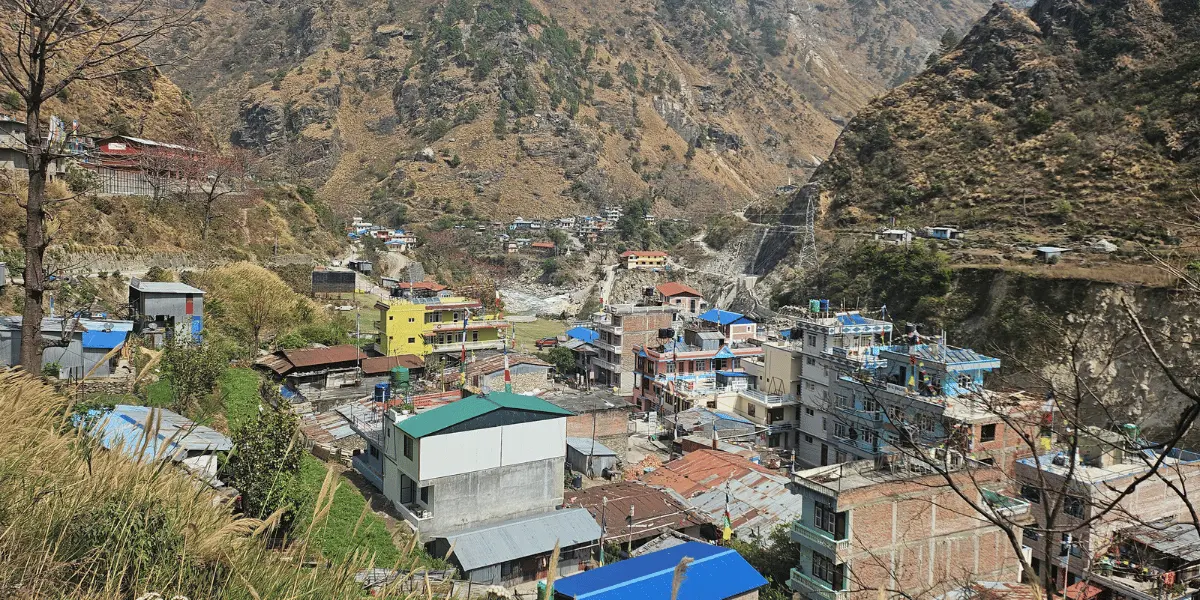
- Syaphru Bensi (1,467 m): This is the gateway town to Langtang National Park and the official starting point of multiple Langtang region trails. On this 7-day itinerary, you stop here for lunch on Day 1 before starting the trek and return for a full overnight stay on Day 6, which means you get to explore the town. Be sure to visit Duksangag Choeling Monastery and have a proper rest before the Day 7 drive back.
- Bamboo (1,984 m): A small, quiet settlement along the trail that is well known for the soothing sounds of Langtang Khola! In fact, your overnight stop on Day 1 will be here, and we’re sure you’d love to spend time in the riverside teahouse.
- Lama Hotel (2,515 m): Originally called Changdam village, this place remains perfect for lunch on Day 2. Also, you’ll return here for an overnight stay on Day 5 after the descent from Kyanjin Gompa. The vibe here is similar to Bamboo, right beside the Langtang Khola.
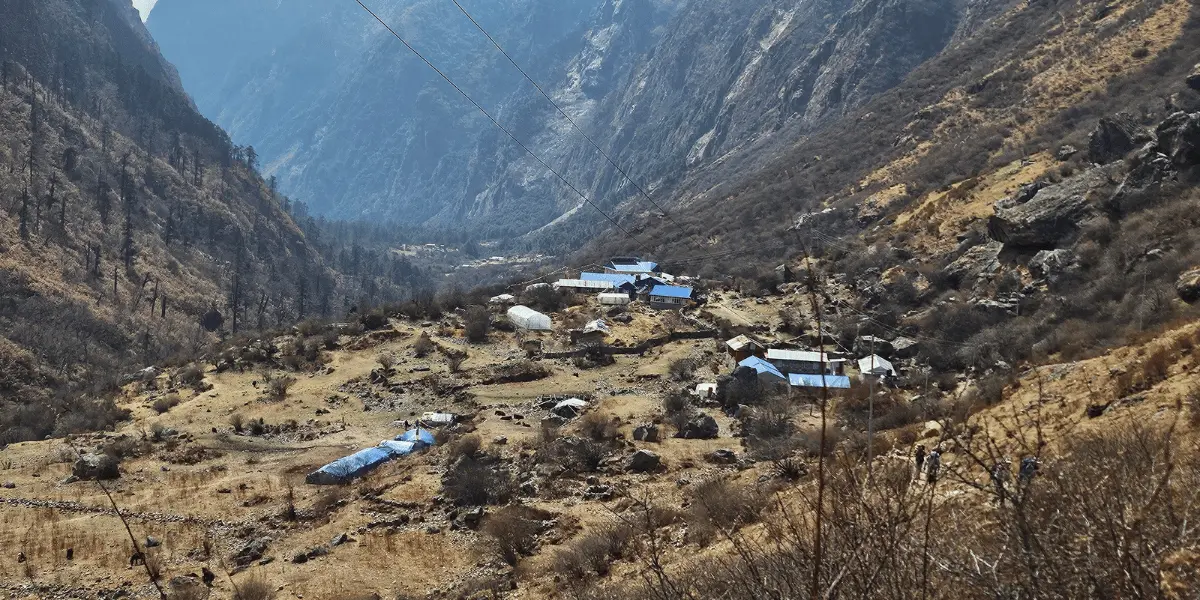
- Thangshyap (3,140 m): This is a smaller settlement above Ghoda Tabela that serves as the overnight stop on Day 2 on this itinerary. Stopping here is what separates our 7-day format from the more demanding 5-day or 6-day versions that many agencies include. Instead of having to push all the way to Langtang Village on the same day, Thangshyap cuts down the extra walk, and the altitude is also just high enough to begin the acclimatization process.
- Kyanjin Gompa (3,890 m): This village is the heart of this trek and also your base for both Kyanjin Ri and Tsergo Ri. On this 7-day itinerary, you will be spending two full nights here (Days 3 and 4), which is what gives you the time to do both hikes properly. Also, during your spare time, you can visit the Organic Yak Cheese Production Centre, the Kyanjin Monastery, and the Lirung Glacial Lake at your own pace.
Other Popular Stops for Lunch and Snacks
Ghoda Tabela (3,008 m) and Langtang Village (3,455 m) are the two most significant of all the in-between stops on this route.
Ghoda Tabela has a permit checkpoint, where you have to show your Langtang National Park Entry Permit, and Langtang Village is where this trek gains its emotional depth.
If you didn’t know, the old settlement was entirely destroyed on April 25, 2015, when the Nepal earthquake triggered a massive avalanche that buried the village in seconds, killing more than 300 people, including locals, guides, and trekkers!
You will indeed pass through this section on Day 3 and even get to stop at a memorial, which honors all those who were lost that day.
Major Attractions of This Trek
The 7-Day Classic Langtang Valley Trek delivers three things that many shorter version can’t: Tsergo Ri's summit, two nights in Kyanjin Gompa to explore its cultural and natural highlights, and a final unhurried evening in Syaphru Bensi.
Below are the main vantage points, natural attractions, and cultural experiences that make up your complete Langtang experience:
Main Vantage Points
This 7-day Langtang itinerary includes the main three of the Langtang region's major attractions, and each one shows you a different side of the same mountain ranges.
The difference between Lower Kyanjin Ri, Upper Kyanjin Ri, and Tsergo Ri is that each viewpoint opens up peaks that are blocked from the ones below it.
In fact, by the time you stand on Tsergo Ri at 4,985 m, you get to see the full Langtang and Jugal ranges from three different heights in two days.
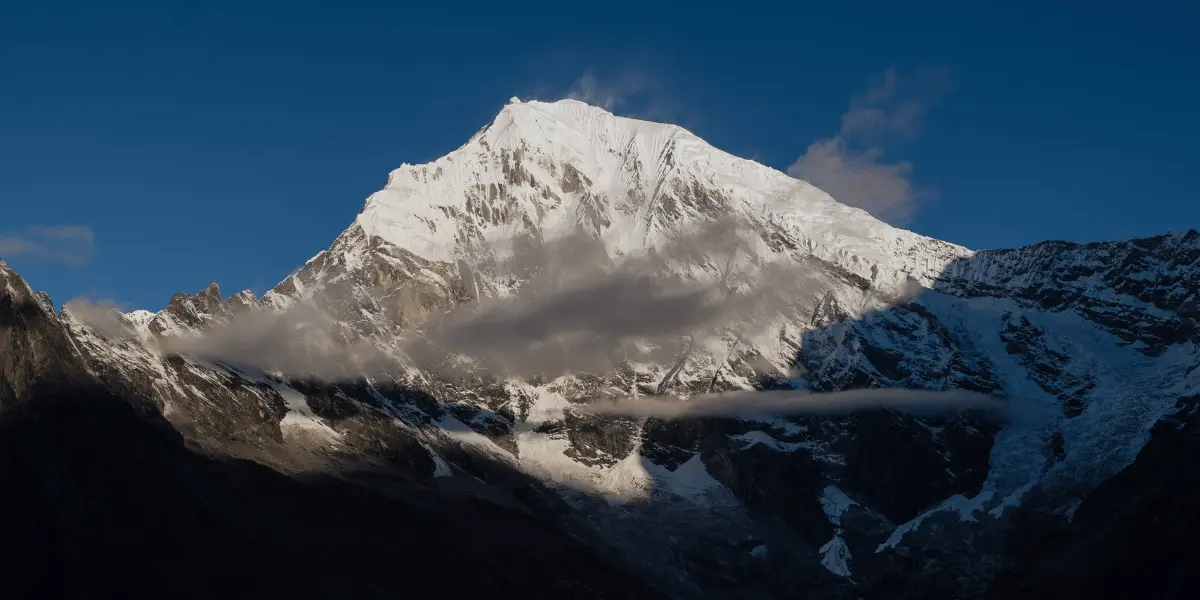
- Lower Kyanjin Ri (4,300 m): The first of the three viewpoints and the most accessible one for sure. From Kyanjin village, it just takes about 1.5 hours of steep climbing to cover the 1.5 km trail to the top. Langtang Lirung (7,234 m) appears directly ahead, and you also get a clear glimpse of the Lirung Glacier right beneath it. For trekkers who are short on time, feeling the altitude, or simply want a good view without the full summit push, this viewpoint indeed becomes a significant achievement.
- Kyanjin Ri (4,700 m): This is the main summit, which is not visible from the village (view blocked by the Lower Kyanjin Ri). To reach here, you have to do an additional 1 km hike, which is roughly one more hour of gradual ascent from the lower viewpoint. What you get from here is the full 360-degree panorama and is indeed a great photographic viewpoint in the Langtang region. On this itinerary, the Kyanjin Ri hike is planned for the evening of Day 3 so that you catch the breathtaking sunset. But in case the weather doesn't cooperate, we will shift the hike to the early morning of Day 5 (only if you’re interested).
- Tsergo Ri (4,985 m): This is without a doubt the ultimate experience of this 7-day itinerary and also the highest point on this Langtang Valley trek. It’s about a 10 km round-trip hike from Kyanjin Gompa, and to reach here, you need to start before dawn (at around 3 to 4 AM) to complete this 7 to 8 hours in total. What you see from the summit goes well beyond every lower viewpoint, including extra mountains as well as everything you already saw from Kyanjin Ri. You see, reaching Tsergo Ri is a milestone that every trekker will go on this trek and clearly remember!
Natural Attractions
The natural variety along the Langtang Valley trail is one of the reasons experienced trekkers return to this Langtang route!
The landscape changes as you gain the elevation, and that too almost every hour of walking! Let us now show you the major natural highlights you will encounter across these seven days of Langtang trek:
- Langtang Khola and Bhote Koshi River: The Langtang Khola remains with you from the moment you enter the valley trail above Syaphru Bensi all the way up to Kyanjin Gompa. This river joins the Bhote Koshi River at Syaphru Bensi and then flows and joins the main Trishuli River at Dhunche. And not to forget that you’ll spend two nights (one in Bamboo and another in Lama Hotel) right by this river that gives you one of the most pleasant sleeps of your life!
- Langtang and Jugal Himal Range: These mountains start appearing before you leave Kathmandu on the Day 1 drive north. But upon reaching Langtang Village and then Kyanjin Gompa, the views get extraordinary.
Particularly speaking, you get these clear views of these mountains in the overall trip (some from the village, others from the vantage points of Kyanjin Ri and Tsergo Ri): Langtang II (6,571 m), Luri Himal (6,924 m), Langtang Lirung (7,234 m), Pangshungtramo (5,262 m), Gochenpo (5,296 m), Boden-Powell South Peak (5,857 m), Lower Kyanjin Ri (4,400 m), Tsergo Ri / Tserko Ri (4,985 m), Ganchenpo (6,378 m), Pongen Dokpu (5,928 m), Dshabu Ri (4,943 m), Kanja La Chuli (5,652 m), Ghanja La Chuli / Naya Khanga (5,863 m), Donagpo (4,992 m), Upper Kyanjin Ri (4,700 m), Kimshung / Tsangbu Ri (6,781 m), Yubra Himal (6,048 m), Yansa Tsenji (6,567 m), Salbachum (6,707 m), Bhemdang Ri (6,150 m), Bhemdang Karpo (6,865 m), Yala Peak (5,732 m), Yala Peak South (5,520 m), Ramthang Karpo Ri (6,865 m), Langhisha Ri (6,412 m), Gurkarpo Ri (6,891 m), Loenpo Gang (6,979 m), Dorje Lhakpa (6,966 m), Kanshurm (6,078 m), and Urkenmang (6,150 m). - Diverse landscape and scenic terrain: The Langtang trail passes through five different ecological zones in a single route! You start from subtropical forest below 2,000 m that is mixed with mixed oak, maple, alder, rhododendron, and bamboo. Then, you move through dense conifer and rhododendron forests between 2,000 m and 3,000 m. After passing Ghoda Tabela, the trees now open up to rocky alpine meadows, and once you reach Kyanjin Gompa, you’ll be walking along a glacial valley floor that’s surrounded entirely by high-altitude peaks.
- Bird watching and wildlife spotting opportunities: Langtang National Park supports a remarkable variety of wildlife, and the trail gives you natural access to several of the park's best habitats. Himalayan Vultures, Red-billed Choughs, Common Ravens, and various warblers are common sightings on the lower trail. Snow leopards and red pandas live within the park boundaries, though spotting either requires significant luck and timing. Himalayan Tahr, Blue Sheep, Grey Langur, and Musk Deer are commonly seen in the open meadow sections above Langtang Village. Moreover, even for bird-watching lovers, this place is heaven as you will find the lower forested sections between Bamboo and Lama Hotel particularly rewarding with possibilities to find Himalayan Monal, Ibisbill, Snow Partridge, etc.
- Optional visit to Lirung Glacial Lake (approx. 3,960 m): This lake is visible from Lower Kyanjin Ri. It’s a proglacial lake and is less than an hour's walk from Kyanjin village. You can reach here on the afternoon of Day 4 after returning from Tsergo Ri or if you didn’t opt for the sunset hike to Kyanjin Ri on Day 3. What’s fascinating is that its waters feed the 100 kW micro-hydropower station, making it Nepal's first hydropower project using a glacial lake.
Cultural Experiences
Beyond the mountains and other natural attractions, this 7-day Langtang Valley Trek offers a deep cultural experience rooted in the traditions of the Tamang community and Tibetan Buddhist heritage. Here are the details:
- Meet the Tamang community and their culture: The Tamang people are the dominant community throughout the Langtang Valley, from Syaphru Bensi all the way to Kyanjin Gompa. Of Tibetan origin, they have built and maintained the entire teahouse system you will stay in and eat in for all seven days. Every lodge you sleep in is family-owned and family-run. Getting to know the people behind each stop is one of the most naturally rewarding parts of this trek!
- Learn about Tibetan Buddhism: The Langtang region's Tibetan Buddhist practice is visible at every step of the trail. Mani walls, prayer wheels, chortens, and stupas appear from Syaphru Bensi all the way to Kyanjin Gompa. Just keep in mind about the standard practice here, which is to pass these structures from the left and keep them on your right. Your guide will let you know about this on Day 1 (along with other cultural tips). Moreover, inside the teahouses, traditional altars with butter lamps, water bowls, and portraits of the Dalai Lama appear in almost every dining room, showing how much this region is influenced by the Tibetan culture.
- Experience the teahouse culture: The teahouse experience in Langtang is something very different from what you find in the luxury hotels. You eat at shared tables with other trekkers, order Dal Bhat that takes time to arrive fresh, warm yourself at a communal fireplace in the evenings, and go to sleep early. This sets the specific rhythm that takes a day to adjust to but becomes deeply comfortable by the third or fourth camp.
- Visit Kyanjin Monastery: The Kyanjin Gompa monastery is the oldest and most significant religious structure in the upper Langtang Valley. But do note that it’s open to visitors in early mornings and late evenings (timing needs to be verified with the locals). Upon reaching inside, you get to appreciate the beautiful interior architecture, painted murals, active prayer flags, and butter lamp offerings. In fact, this is the monastery that gives the village its name, and two nights on this itinerary means you can visit here without hurrying.
- Explore Organic Yak Cheese Production Centre: Established in the 1950s with Swiss support, this is Nepal's first high-altitude cheese production facility and it is still operating today! You can try yak cheese (of different types) and churpi (hardened cheese best for chewing and known to give you instant energy) when you’re here.
- Festival experiencing opportunities: If your trek dates align with the Himalayan festive calendar, your experience is guaranteed to be enhanced! Note that in this part of the Langtang region,
- Tibetan community here celebrate Gyalpo Lhosar (Tibetan New Year): Mid-February
- The main Tamang Community celebrate Sonam Lhosar: Mid-January
- Other than that, Mani Rimdu (Late October/Early November), Dumji (June/July), and Dhukpu Cheju (around July) are the three major festivals here.
- All of the festivals involve mask dances, communal gatherings, and offerings at the main monastery in Kyanjin.
Witnessing these community celebrations adds to your overall trekking experience for sure (and it’s also much different from any viewpoint or peak climbing).
Now that we have covered the basics of the trip, let’s move on with the itinerary section below that covers each of the seven days in detail, with exact distances, elevation profiles, and what to expect at each stop. Go through it carefully so you know precisely what you are signing up for before you book!
 1984 M
 Teahouse