Before you go on a trek, you will find yourself asking countless questions. Among those questions, one is going to be, “How’s the food going to be like?” So if your next trek is within the Langtang National Park, then let me answer that question for you.
Once you enter the trails, your concerns for variety will vanish. In fact, you will start looking for the simplest items on the menu to satisfy your hunger rather than your taste buds.
In most cases, your comfort food is going to be Dal Bhat. But this blog is more than just an introduction to Dal Bhat. So read the details to learn about the menus in different trails, food suggestions and availability, packing snacks, and much more.
Langtang Trek Food and Cost Overview
Before we dive deeper into the different sections of this blog, here is a quick overview of the meals, common options, and cost in some of the major trails of the Langtang Region.
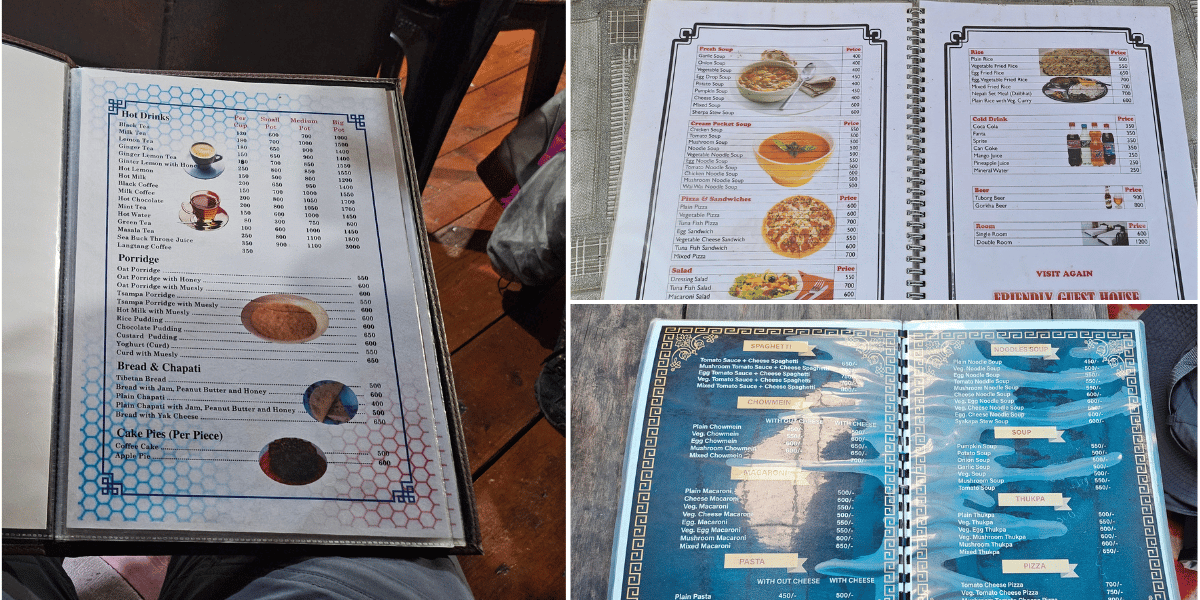
In the price range, the lower range denotes the prices of the food items in lower regions (starting point of the trek), and the higher range denotes the prices relevant in higher-altitude regions.
Langtang Valley Trek
|
Meal Categories
|
Common Choices in the Menu
|
Price Range (in NRS)
|
|
Breakfast
|
- Bread and Chapati
- Porridge
- Eggs and Omelettes
- Pancakes
|
- 150 - 650
- 170 - 700
- 200 - 700
- 400 - 700
|
|
Lunch and Dinner
|
- Dal Bhaat
- Fried Rice
- Pizza and Pasta
- Salads
- Chowmein and Spaghetti
- Soup
|
- 450 - 1000
- 230 - 800
- 350 - 900
- 500 - 950
- 250 - 750
- 400 - 800
|
|
Beverages (Non-alcoholic)
|
- Tea and Coffee
- Sea Buckthorn Juice
- Sodas and Juice
|
- 60 - 400
- 250 - 350
- 80 - 450
|
Table 1.1: Meal categories and popular options of food items along with their price range for Langtang Valley Trek with Dhunche or Syabrubesi as the starting point of the trek.
Gosainkunda Trek
|
Meal Categories
|
Common Choices in the Menu
|
Price Ranges (in NRS)
|
|
Breakfast
|
- Bread and Chapati
- Porridge
- Eggs and Omelettes
- Pancakes
|
- 150 - 500
- 170 - 600
- 200 - 500
- 400 - 500
|
|
Lunch and Dinner
|
- Dal Bhaat
- Fried Rice
- Pizza and Pasta
- Soups
- Noodles (WaiWai)
|
- 450 - 700
- 230 - 600
- 350 - 800
- 400 - 500
- 180 - 500
|
|
Beverages (Non-alcoholic)
|
- Tea and Coffee
- Soda and Juice
|
- 60 - 230
- 80 - 400
|
Table 1.2: Meal categories and popular options of food items along with their price range for Gosainkunda Trek with Dhunche or Syabrubesi as the starting point of the trek.
Tamang Heritage Trail
|
Meal Categories
|
Common Choices in the Menu
|
Price Ranges in NPR
|
|
Breakfast
|
- Bread and Chapati
- Porridge
- Eggs and Omelettes
- Pancakes
|
- 150 - 350
- 170 - 500
- 200 - 400
- 400 - 450
|
|
Lunch and Dinner
|
- Dal Bhaat
- Fried Rice
- Pizza and Pasta
- Chowmein and Spaghetties
- Noodles (WaiWai)
- Thukpa
|
- 450 - 650
- 230 - 750
- 350 - 550
- 250 - 450
- 180 - 330
- 250 - 370
|
|
Beverages (Non-alcoholic)
|
- Tea and Coffee
- Soda and Juice
|
- 60 - 200
- 80 - 270
|
Table 1.3: Meal categories and popular options of food items along with their price range for Tamang Heritage Trail with Dhunche or Syabrubesi as the starting point of the trek.
Helambu Circuit
Before you look into the overview of the Helambu Circuit, please note that unlike other trails, the major stops in the trail are connected to roadways. Because of this reason, the variation in prices of food is not determined by altitude.
|
Meal Categories
|
Common Choices in the Menu
|
Price Ranges in NPR
|
|
Breakfast
|
- Bread and Chapati
- Porridge
- Eggs and Omelettes
- Pancakes
|
- 100 - 400
- 300 - 450
- 200 - 400
- 100 - 350
|
|
Lunch and Dinner
|
- Dal Bhaat
- Fried Rice
- Chowmein
- Thukpa
- Thenduk
- Soup
|
- 400 - 650
- 240 - 400
- 250 - 550
- 250 - 600
- 300 - 500
- 200 - 400
|
|
Beverages (Non-alcoholic)
|
- Tea and Coffee
- Soda and Juice
|
- 40 - 160
- 70 - 150
|
Table 1.4: Meal categories and popular options of food items along with their price range for Helambu Circuit.
The four tables in this section give information regarding meals and options available in the major trekking trails that fall inside the Langtang region. Please note that the prices are subject to change and the food items may sometimes cost you lesser or higher.
In the Panch Pokhari trail, you might not even find half of the items mentioned in the tables above. So to sum it up, your best choice there would be Dal Bhat, and it could cost you anywhere between NRS. 500 to 800.
As for the Jugal Himal Trek, once you cross Panch Pokhari, you will be by yourself (and your trekking team). That is when you can experience the unfiltered experience of camping. This means you will have to prepare meals by yourself (or by your kitchen team).
If you are planning on buying packaged snacks on the trail, please be aware that they are priced way higher than their actual price. For this reason, trekkers are always advised to buy packaged snacks in Kathmandu or other major towns before they start their trek.
Now that you have a general idea about the common food items that you can find on the menu during your trek in the Langtang region, let’s look into how these items can be beneficial. Beneficial in terms of your health and energy levels during the trek.
Additionally, we will also look at some of the items that you might find at some places, although not as common as the ones presented in the tables above.
Breakfast
Your choice of breakfast in the morning plays a major role in determining your energy levels for the day. So, imagine how important your choice of breakfast is while you are trekking.
The items on the menu are mostly what the locals eat, and no one knows better than the locals when it comes to choosing the perfect meal for the morning.
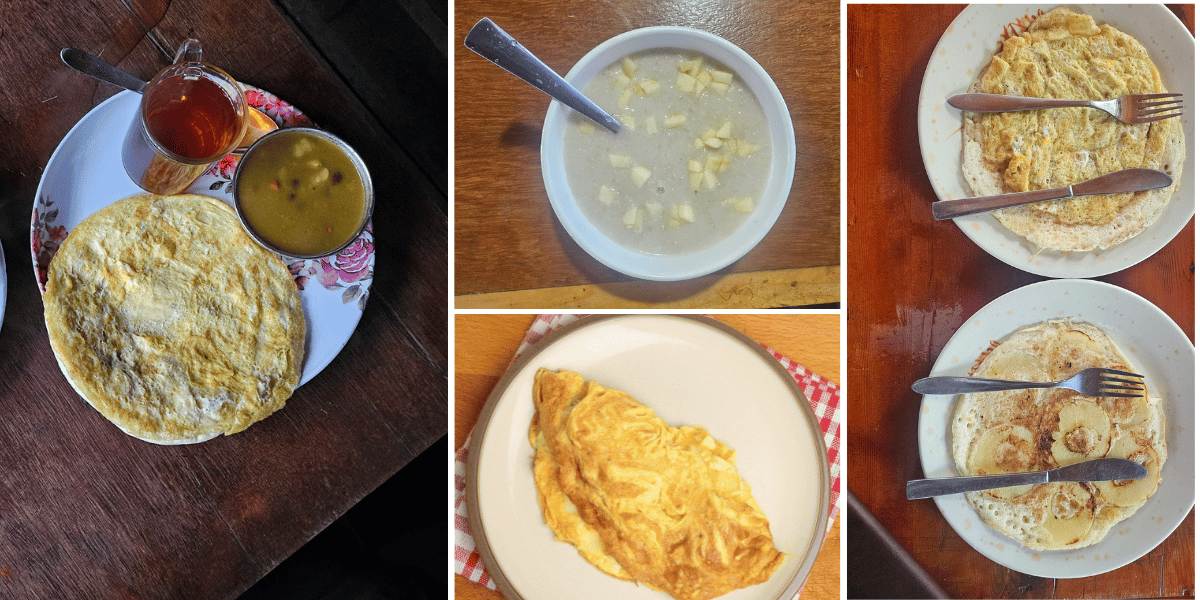
Here are some of the common items you will find in most of the trails along with their benefits:
Bread and Chapati
Starting your day with bread or chapati is one of the best ways in the Himalayas. However, note that the bread in this context is not the loaf of the bread that you get in the cities.
Here, the bread means Tibetan bread. Often paired with vegetables, eggs or jam/peanut butter, these dishes are rich in calories and help you sustain your energy for a longer period of time.
While Tibetan bread is deep fried in oil, if you want a lighter choice, go for chapatis. However, some places make Tibetan bread differently by baking it in a traditional oven.
Porridge and Muesli
Both porridge (oatmeal) and muesli are great sources of complex carbohydrates and dietary fibers. These items are beneficial for the consumer’s heart and gut health.
The seeds, dry fruits, and nuts in muesli make it rich in vitamins and minerals. Since both items are rich in starch, the body takes time to break down the starches and carbohydrates.
So when consumed as a breakfast, your body will be able to maintain the energy levels for a longer period of time.
Eggs
From boiled eggs to scrambled eggs, you will find plenty of options in the menu during your trek. They contain the perfect amount of protein!
Eggs contain leucine, one of the best forms of amino acids. The benefits of leucine revolve mainly around muscles. While trekking, consuming eggs as a form of leucine supplement aids muscle recovery.
Pancakes
If you think that pancakes are not the best choice when it comes to healthy breakfast, let me clear this misconception for you!
In the mountainous regions of Nepal, like Langtang, the pancakes are not made using the packaged batter that you find in supermarkets. Instead, Langtang people here make it the traditional way, using locally sourced ingredients to prepare the batter.
This means their batter does not contain preservatives and added sugars. As a result, pancakes can be one of the best choices for breakfast while trekking, with the flour being a major source of carbs for energy.
Other Options
While the above are the common options that you will find in the teahouse menus, here are other dishes that you might find at some places:
- Toast: Since the teahouses are far from towns, they do not have a stable supply of bread loaves. You might only find them in places where a local bakery is located nearby.
- Tsampa: Although it is a staple among tribes of Tibetan origin, many people do not add it to their teahouse menu because of its acquired taste. Tsampa is basically roasted flour or barley flour that is soaked in butter tea. Once soaked in butter tea, you can make the mixture into small doughs in your hand and eat them. Many people call it bland, but if you pay attention to the taste, you can get that nutty and earthy flavour.
- Parathas and Puri: Parathas and Puri Tarkari are more common in the cities and the Terai region. Your chances of finding them are more likely in the lower-altitude trails.
Lunch
If you start your trek around 7 AM post breakfast, then it’s fair to feel famished by the afternoon. And in order to keep going, you must choose a nourishing dish.
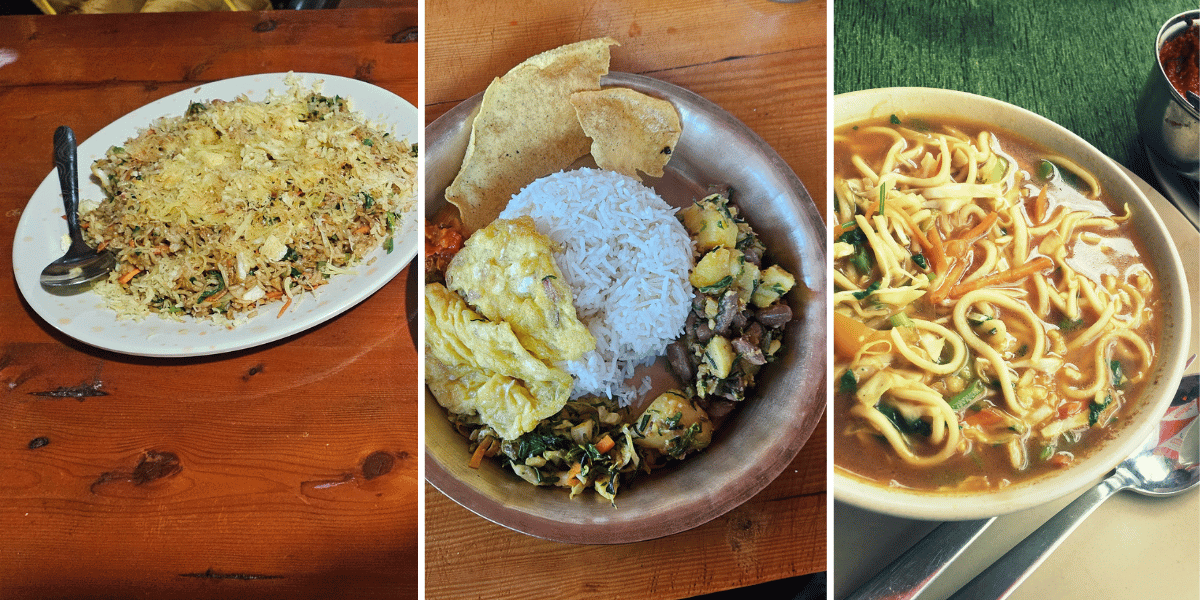
Here are some of the common options that you can opt for while picking your lunch:
Dal Bhaat
Anyone who has trekked in Nepal will guarantee you that Dal Bhaat is the best choice for lunch and dinner on the trails. They might never eat it after the trek, but they know that it contains all the essential nutrients needed during the trek.
It is a platter made up of rice, lentil, vegetable curry, achaar (pickle), and paapad (lentil cracker). Please note that non-vegetarian curries are not included in the platter where Tibetan Buddhism is strictly practiced. Instead, it is replaced with egg omelette on request.
With all the elements that make up Dal Bhaat, you can tell that it is a well-balanced nutritious meal. There is no better feeling than eating a freshly prepared plate of Dal Bhat when you are cold and tired.
From carbohydrates to minerals and fibers, this dish will refuel your energy to continue the trek.
And what could be better than having a plate of Dal Bhat whilst enjoying the surreal views of Langtang and the Jugal Himal range?
Fried Rice
If you like rice, but Dal Bhaat is not for you, then you can go with fried rice. This rice-based meal is widely served in the teahouses of Langtang region.
While it might not contain all the nutritional benefits of Dal Bhaat, it has plenty of carbohydrates. Furthermore, when prepared with vegetables and egg, it can be equally healthy and nourishing as Dal Bhaat.
Thukpa
Thukpa can be one of your best choices of comfort food in the mountains. It is basically hand pulled noodles made of wheat flour, cooked in broth (non-vegetarian or vegetarian).
The broth also has vegetables like carrots, tofu, and chickpeas. The flavour of the soup comes from ingredients like garlic, ginger, and coriander. All these ingredients make thukpa an ideal source of carbohydrates, fiber and protein.
Furthermore, a warm bowl of thukpa can be the best medicine for cold and digestive issues.
Other Options
Some rare finds for lunch are:
- Sandwiches: While you can find sandwiches on the menu, please note that they are not made with the typical sandwich breads that you find in the cities. Instead, the fillings are put in the traditional breads like Tibetan breads and chapatis. Nonetheless, they are delicious and filling, made with local Himalayan spices.
- Desserts: Unless you are in larger settlements like Langtang Village and Kyanjin Gompa, do not expect to find dessert items like cakes and pies.
Dinner
Most of the lunch items on the menu are also applicable for dinner. For instance, Nepalese trekkers and trekkers who have previously trekked in other regions of Nepal will opt for Dal Bhaat for both lunch and dinner.
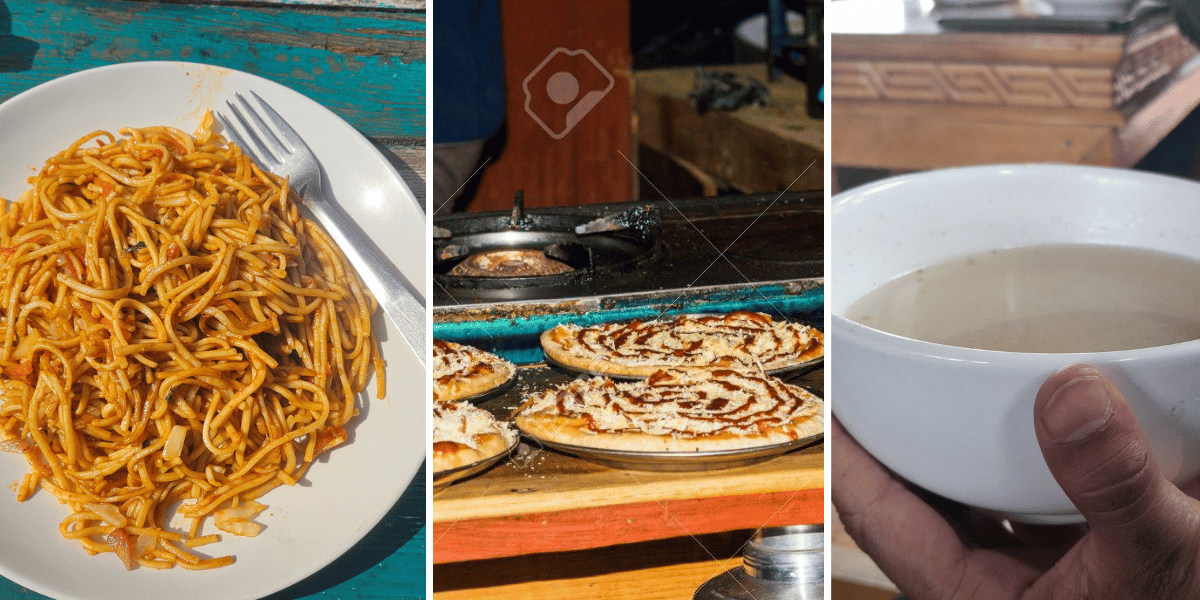
However, if you want a change, here are some common items from the teahouse menus that you can choose for dinner:
- Pizza and Pasta: Even though you can have dishes like pizza and pasta for lunch, they are better when you have them for dinner, as they take longer to digest. As they contain greater levels of fat and carbohydrates, they can be beneficial for muscle recovery at night.
- Chowmein: If you are tired of eating Dal Bhaat and fried rice, then chowmein is a great alternative that gives you similar levels of nourishment. The savory sauce used while cooking can be a great ingredient that restores that sodium that you lose while sweating during the trek.
- Salads: If you are looking for a lighter choice of dinner, then salads are not a bad choice at all. However, as they are the lightest options, you might want to pair them with other dishes like soups or eggs. You can also ask the hosts to add yak cheese in your salad if you are not lactose intolerant.
- Garlic Soup: While scanning the menu for soup, always go for the fresh soup section instead of the packaged soup section. And if you don’t know which soup to choose from that section, then you can never go wrong with fresh garlic soup. Containing allicin, garlic is known for its antioxidant properties and for improving blood circulation.
Drinks and Beverages
A hot cup of tea can never go wrong no matter the time of the day. Even better when it is butter tea. But the Langtang region has more options than just tea and coffee.

Here are some of the common and loved options of drinks and beverages that you can expect to find on the trails:
- Tea: Known as ‘Chiya’ in Nepal, milk tea is basically tea brewed with milk. Various spices like ginger, cinnamon, and cardamom are added into the mix, which makes the tea delicious while boosting one’s immunity. If you are not a fan of milk, then you can opt for black tea. Here’s another tip: ask them to mix pepper in your black tea in case you have a cough and cold.
- Coffee: The coffee you find in the trails is mostly made with instant coffee powder. Similar to tea, you can choose whether you want a milk coffee or black coffee. You can ask them to give you sugar separately and add it to your taste.
- Sea Buckthorn Juice: Rich in antioxidants, sea buckthorn plants are native to the Himalayan regions of Nepal like Langtang, and you will find them on the trails of Langtang Valley, Gosainkunda and Tamang Heritage Trail. The juice is also a great source of Vitamin C, boosting your immunity during the trek. Many people also drink it to relieve the symptoms of altitude sickness.
- Hot Lemon with Honey and Ginger: By the name of it, you can tell that there are 4 main ingredients in this drink: hot water, lime juice, honey, and ginger. And if you are looking for a caffeine free hot beverage, then this is the one for you. It can be a refreshing drink in the morning hours and can also be used to soothe your throat against the freezing cold in the mountains.
- Butter Tea: In almost every region of Langtang, you find Tibetan roots in the daily activities of people. Drinking butter tea is one of them, and it is a must-try for your trek in the region. Unlike normal milk tea, where sugar is added, in this drink, you mix yak butter and salt while brewing tea in milk. The fat from the butter helps keep your body warm, and it is also known for being beneficial to the skin in the dry cold climate of Langtang.
- Alcoholic Drinks: You can also get alcoholic drinks throughout the trail. Teahouses sell beer, local Nepali whiskeys, and homemade alcohol (rice and millet based). However, try not to drink alcohol during the trek, as it hinders acclimatization.
Local Delights Not to Be Missed in Langtang
In the last section we have already mentioned some local delights from Langtang such as Tsampa, Thukpa, Garlic Soup, Sea Buckthorn juice, and Butter Tea.
In this section, we will look into more dishes that are authentic to the Langtang Region that you can try on your next trek.
Yak Cheese
We all know what cheese is. In the Langtang Region, you will come across yak cheese that is made from yak milk. Based on my personal experience, yak cheese had a soft texture, the taste was milky and the sourness was not too overpowering.
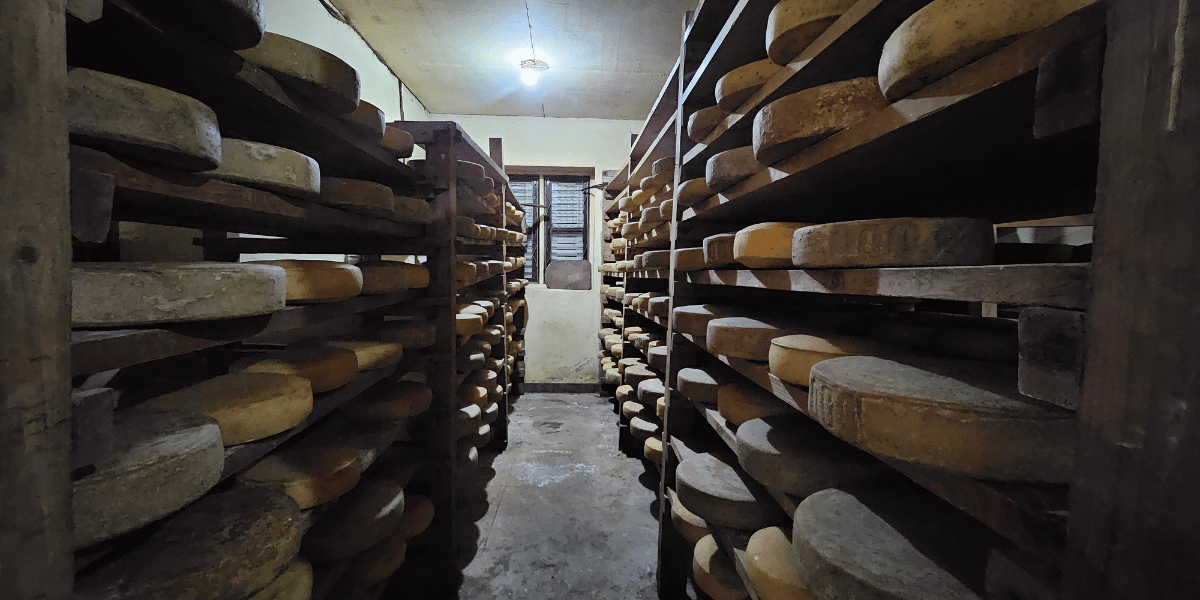
While the locals also make it at home, if you want a proper factory visit, you can visit the Organic Yak Cheese Production Center at Kyanjin Gompa (Langtang Valley Trek) and Chandanbari (Gosainkunda Trek).
At teahouses, you can check the menu because many teahouses actually sell platters of yak cheese or add them in salads, pastas, and pizzas.
Yak Chhurpi
Chhurpi is the hardest form of cheese and you can buy it in blocks from teahouses of the production centers. Once again, as the name suggests, they are basically yak milk-based.
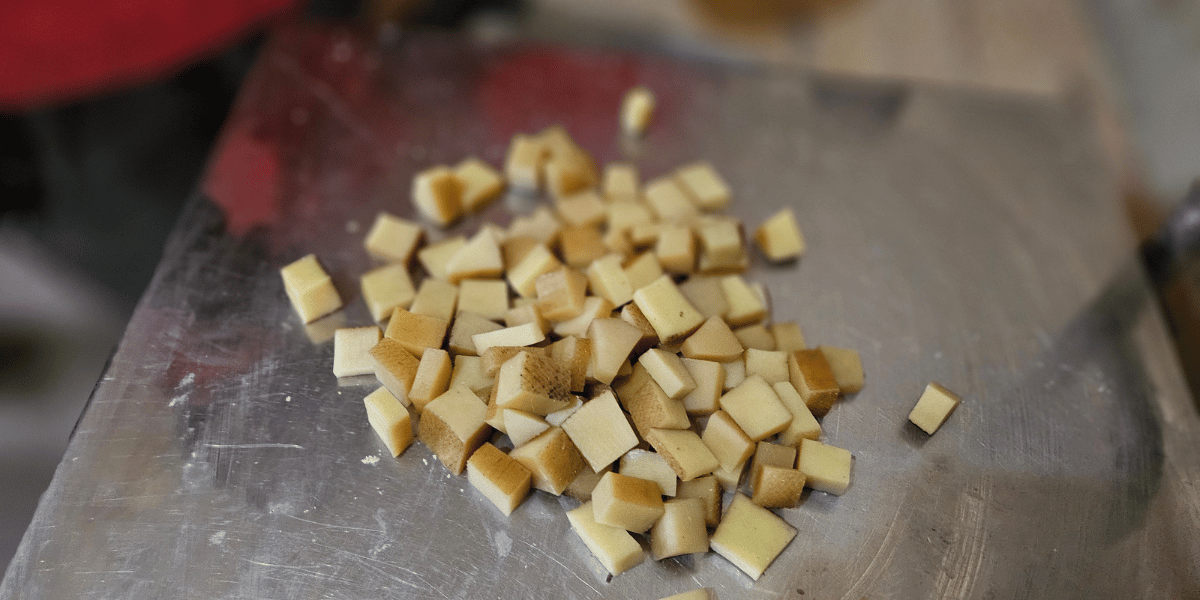
Both yak cheese and chhurpi are rich in protein and calcium. If you are confused as to how to consume the chhurpi, you just take a piece in your mouth and wait for it to soften gradually.
Rildok
Commonly known as the Sherpa Potato Dumpling Soup, Rildok is also widely consumed in the Hyolmo communities throughout Helambu. The dumplings are made by mashing potatoes and mixing the salt.
It is then added to a spicy broth made of tomatoes and flavored with garlic, red chillies and other spices like sichuan pepper and turmeric. This comfort food is loved by almost everyone who has tried it and is one of the best companies in the cold.
Apple Pies
While apple pies are not indigenous at all to the Langtang Region, or even Nepal. In fact, it has only been a few years since the people have started testing apple farming in the region.
However, it is quite famous in some of the most notable bakeries within Langtang National Park. Using simple recipes, they make the pies from scratch and bake them.
Local Alcoholic Drinks
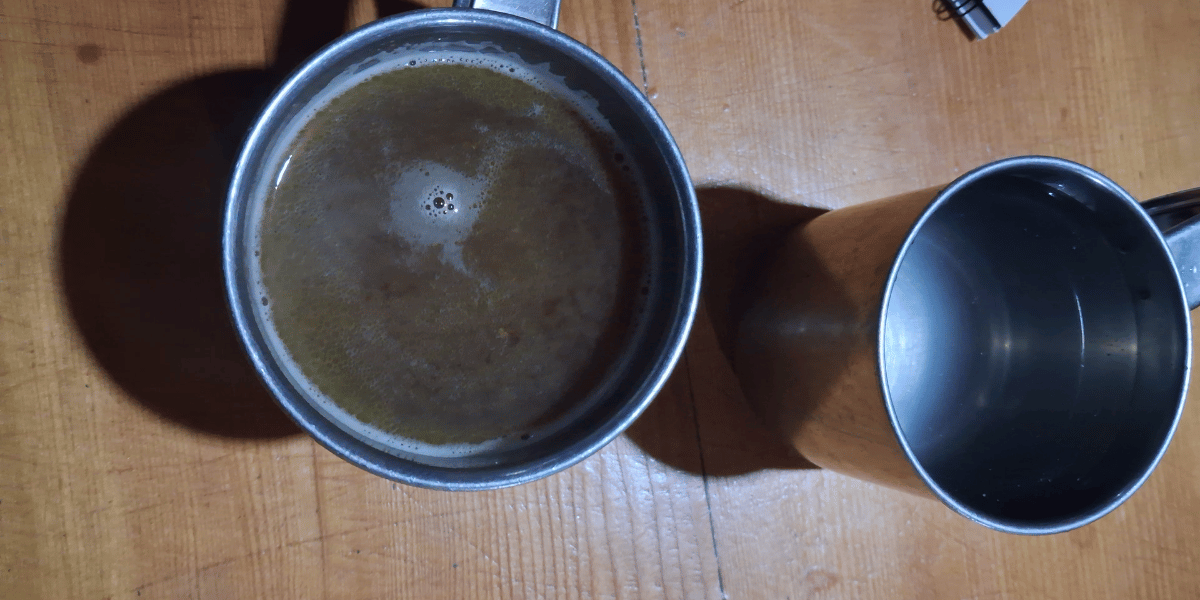
As mentioned before, drinking alcoholic beverages is not really suggested in high-altitude regions. But if you have acclimatized at a certain stop for more than two days and your trekking guide gives you a green light to drink, here are some local alcoholic drinks that you can try:
- Local Raksi: In Langtang, the people have their own alcohol, which they make at home. By fermenting the millet or rice, they distill it in their own traditional way.
Drinking it can give a sensation of warmth all over your body and foreigners are advised to be careful and not drink a lot, as it contains a high volume of alcohol (40% - 50%). You can also ask for Taato Raksi, which basically means the same alcohol but is served heated.
- Jhaikhatte: Jhaikhatte is like a local Himalayan cocktail with the local raksi as the base. The locals temper rice with yak butter and add it to the base before serving.
- Langtang Coffee: While some teahouses sell Arabica coffee beans cultivated in Langtang as Langtang Coffee, the meaning completely changes when alcohol is added to the mix. In the alcoholic Langtang Coffee, they mix local raksi with yak butter into black coffee that serves as the base.
If you plan on drinking, then the only advice I can give you is to drink moderately and not drink on an empty stomach.
Drinking Water: Importance of Staying Hydrated
Drinking 3 to 4 litres of water is the standard rule, whether you are trekking or not. While the effects of drinking less water might not be as visible when you’re working or chilling in the city, the lack of hydration can be seen loud and clear when you are trekking.
Trekking means constant movement, often for more than 6 hours within a single day on treks that last for multiple days. And the more you move, the more your body loses the fluid.
When you pair that movement with high altitude, the consequences result in disturbed food absorption. On top of that, your body’s Basal Metabolic Rate increases when there are low oxygen levels in your surroundings. This means, even when you are resting in the mountains, your body is losing calories.
Furthermore, breathing cold and dry air accelerates loss of fluid in your body. All these reasons should be more than enough to convince you to stay hydrated while trekking. It also means that you do not wait until you feel thirsty; you must drink water even when you don’t feel like it.
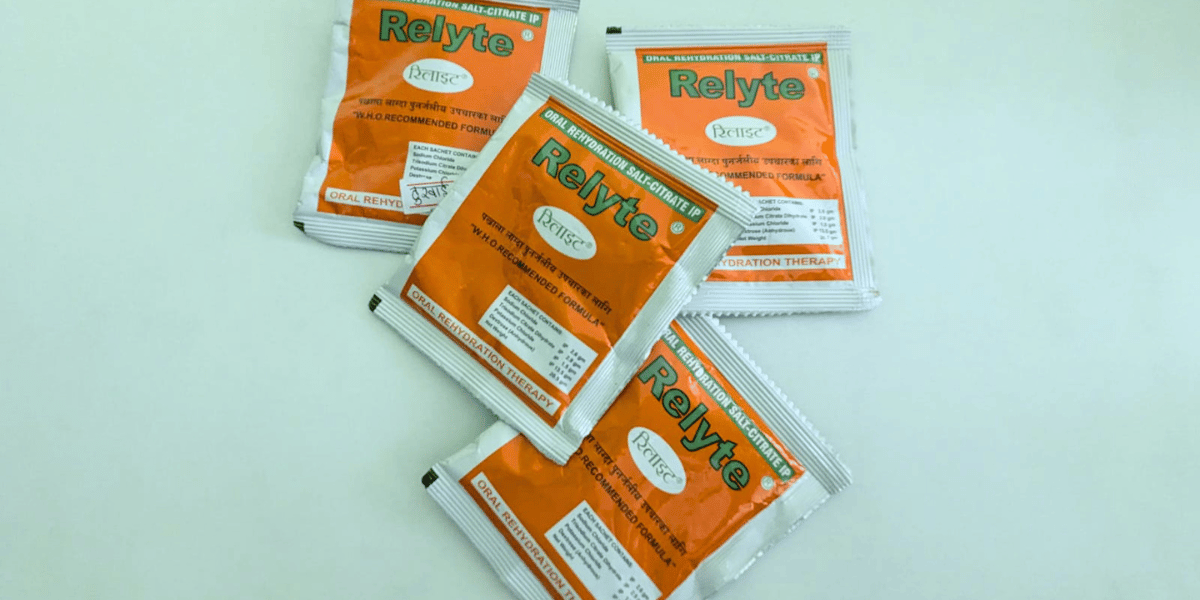
But drinking water is not enough. When you are walking for hours continuously, your body is losing minerals while sweating. This is where electrolytes come to save the day. It is the best cure for dehydration and fatigue and can help relieve and prevent muscle cramps, headaches, and dizziness.
Here are some tips regarding hydration for you:
- Avoid consumption of diuretics (alcohol, carbonated drinks, anything with artificial sweeteners, and high concentrations of caffeine).
- Take small sips of water every 20 to 30 minutes while trekking.
- Drink plenty of water the night before and in the morning.
- Carry purifying water bottles or water purification tablets.
- Check the color of your urine. If it is dark yellow, that means you are dehydrated, unless you are taking medications that change your urine color.
Sports drinks are also a great source of hydration. Try getting drinks that have low concentrations of caffeine and sugar, but a higher concentration of carbohydrates (4% - 8% would be ideal). Lastly, ensure that the drink contains electrolytes, minerals, and vitamins.
Although mineral water bottles are available for sale in teahouses, they are sold at a higher price. I would also suggest you carry your own bottles instead of buying packaged bottles.
This is because a lot of trekkers pollute protected areas with plastic wrappers and bottles. Be a responsible trekker and take sustainable steps through small actions.
Vegetarian, Vegan, and Dietary Options
When it comes to meals, you can be sure that the people there will feed you well. They will ensure that you are full and energized. The portions are quite big and filling for a single person.
But when it comes to dietary options like vegetarianism and veganism, you might be asking the hosts to go out of their way. Availability of such preferences differs according to the trail. Here are some things that you should know:
Vegetarian Options
Vegetarians will have no shortage of food options while trekking in the Langtang Region. In fact, they don’t have to worry much even in high-altitude regions. Because it is a region where Tibetan Buddhism is practiced at large.
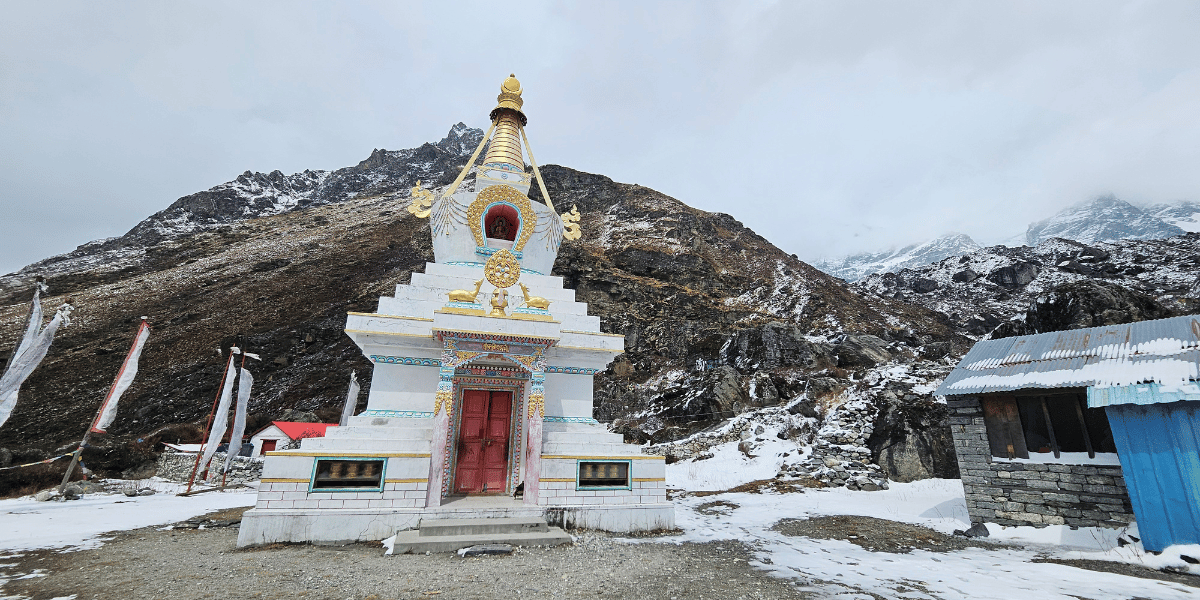
This means that those following the Mahayana scriptures prioritize compassion, and animal killings are strictly forbidden. Although they serve non-vegetarian items, the meat comes from canned packages or is delivered from villages below.
Otherwise, they do not participate in the killings nor do they consume them. So if you look at the menu, you will see that they mostly serve a vegetarian Dal Bhaat platter. This is the case in the majority of the teahouses in the Langtang Valley Trek, Tamang Heritage Trail, and Gosainkunda Trek.
While you might find non-vegetarian options in the Helambu Circuit and Tamang Heritage Trail, there will still be plenty of options for vegetarian meals.
Vegan Options
While the choices for vegetarian dishes are ample, it might not be the same for vegan options. It’s not like the teahouses do not respect your choice; it’s just that the main priority of the teahouses is to cook a meal that is suitable for every trekker so that they can stay warm and keep moving.
While they will not be serving meat products at large, dairy products like butter and ghee are staple ingredients and somehow find a way to sneak into the dishes.
Your safest option in this case is Dal Bhaat, and although that might feel repetitive, there’s not much that can be done. Even in Dal Bhaat, they might add ghee to the lentils.
Gluten-Free Options
Once again, your safest option for a gluten-free meal is Dal Bhaat. While it might not be 100% gluten free, the main components of the dish, like rice and lentil, do not contain gluten.
Additionally, the hosts rarely use wheat flour to thicken the curries. However, the chances of cross-contamination through cooking utensils are quite high.
Other choices of gluten free meals are eggs and potatoes that are served in almost every teahouse. If you want more choices for breakfast, you can buy a packet of gluten-free oats in Kathmandu before the trek and ask the hosts to prepare that for you.
While they do not have a specific section for gluten-free and vegan options, if you are travelling with a guide, you can always ask them to convey your choices on your behalf.
Meal System on Treks
With most of the information regarding food choices that you can find in Langtang National Park’s trails covered, let’s see how the meal system works in the trails.
In this section, we will be looking at various components that make up the meal system in Nepal’s trekking trails.
Teahouse Meals and Timings
In teahouses, meals are provided at certain timings, which means that breakfast, lunch, and dinner have fixed timings. Unless you are staying there for more than a single day, you are expected to have your meals at the timings provided by the hosts.
And in case you want to have your meals at different hours, you must let your hosts know beforehand:
- Breakfast: The kitchens of teahouses open early in the morning, as early as 5:00 AM. This is because many trekkers start their day early and finish their breakfast by 8:00 AM. You are therefore advised to pre-order your breakfast the night before. Ordering your breakfast gives the hosts enough time to calculate the timings for the morning and check on the ingredients.
- Lunch: If you want to have Dal Bhaat for lunch, make sure to reach the teahouse between 1:00 PM and 2:00 PM. Teahouses generally cook meals like Dal Bhaat in huge quantities so that it can be enough for all the guests who walk in for lunch.
If you reach the teahouse late, they might run out of Dal Bhaat. While some teahouses prepare the meal all over again, others might simply refuse to serve Dal Bhaat as it takes time to cook the meal. Even if they prepare the meal all over again, note that you will be late for your next destination.
Lastly, if you have a certain place in mind for your lunch, you can ask your host to call them up before you resume your trek after breakfast. Most of the teahouses are connected to each other, and that makes things more efficient for everyone.
- Dinner: The saying, “Early to bed, early to rise,” is practiced strictly in the teahouses. Dinner is generally served before 10:00 PM so that everyone can get rest early.
For those having Dal Bhaat for dinner, their dinner hours are the same, even if they don’t belong in the same trekking group. If you are choosing something else from the menu, your timing might differ by half an hour to an hour at most.
Lastly, please note that eating in a different place while staying in a different teahouse is considered impolite.
The Reason Why Food Becomes Expensive as You Go Higher
If you have trekked in Nepal before, you might have noticed that the prices of dishes get higher every time you reach a destination that is at a higher altitude compared to the previous one.
This phenomenon is common in regions where logistical infrastructures are lacking considerably. This explains why food prices are low in the major stops of the Helambu Circuit, although they are located at a higher altitude, because those places have roadway connectivity.
But in remote trails like that of Langtang Valley, Gosainkunda, and Panch Pokhari, going higher also means paying more. Because in these regions, the ingredients of the food you eat and the supplies they are cooked in are carried by porters or mules, increasing the cost of transportation.
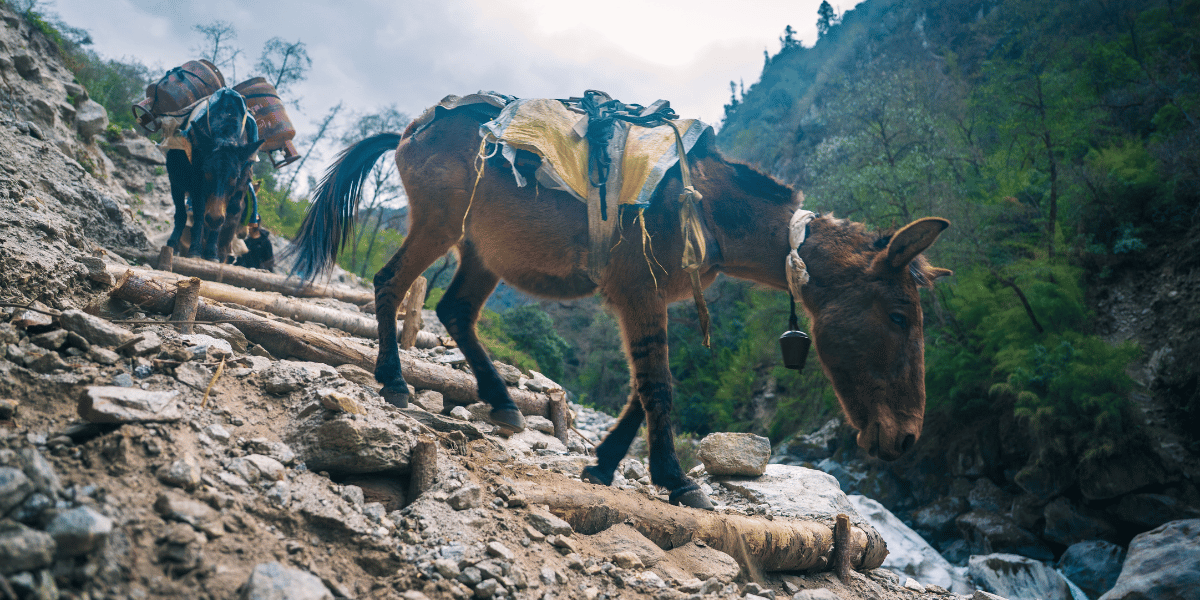
Because of the geography and weather conditions, cultivating crops is a challenge in the high-altitude regions of Langtang National Park. The variety of crops that can be cultivated is very limited, such as potato, barley, buckwheat, and seasonal greens like spinach and radishes.
Apart from the weather conditions and infrastructural limitations, food items are also priced higher because the main teahouse hosts do not really charge much for accommodations.
If you look at the rates of the package, it generally ranges from NRS 1500 to NRS 3500. This price includes a stay as well as breakfast and dinner. And with the combined cost of both meals ranging between NRS 1200 and NRS 2000, you can tell that accommodation is quite cheap.
Lastly, given the high altitude, the atmospheric pressure lowers as the air is thinner. So food takes longer to cook in the mountainous regions, like that of Langtang. As a result, more gas and fuel are spent on cooking.
All these reasons explain why food gets more expensive as you go higher. And this is why the locals frown when people bargain or try to negotiate with food prices. So just remember that the price you pay during the Langtang treks is a mere reflection of the manual labor that the locals put in building the trekking industry.
Package Stay VS an A La Carte Stay - How is it Different?
You might not be aware of this, but the system of Package Stay and A La Carte Stay exists even in Langtang, no matter how remote the region is.
For those unaware, a package stay’s price is inclusive of accommodation and food, whereas an à la carte stay is when you pay for the meals and accommodations separately. Always check with the teahouse about the accommodation systems they offer.
As for the differences, the package stay is more budget friendly. Within a fixed amount, your meals and rooms are sorted. But if you are going for an à la carte stay, you will be paying more!
Here are examples of how calculations differ in these systems.
- Example 1: If a teahouse package costs about NRS 1500, you will be paying less for rooms. Let’s take a reasonable meal price as an example. If the breakfast costs NRS. 450, and the dinner costs Rs. 700, then the total cost of food is NRS. 1,150. This means that you will be paying only NRS. 350 for accommodation. However, please note that you will have to stick to the menu that has been mentioned in the package. If you want anything extra for the menu, you must pay for that separately.
- Example 2: But in an à la carte stay, let’s say that you order the same items for breakfast and dinner, leading to the total amount of NRS. 1,150. The price for the rooms will be about NRS. 1,200 if you are booking a double-sharing room. The total cost will be NRS. 2,350. In some teahouses, the package includes the charging and wifi cost. This ultimately makes the package stay much cheaper. The only drawback, like I said, is that you do not get to choose the dishes for your meals.
Most of the teahouse packages give chapati and veg curry for breakfast and Dal Bhaat for dinner. And honestly, it’s not that bad, as they are some of the healthiest choices from the menu.
So if you are a budget traveller, then go for a packaged stay. But if you want to be more flexible with meal options, then you may opt for an à la carte stay.
Note: In most of the teahouses, additional services like hot showers and hot drinking water are not included in the package.
Difference When Trekking with an Agency
Trekking through an agency is entirely different compared to the systems mentioned above. It is somewhat similar to a package system, except the agency’s package includes more services and facilities.
Beyond telling the best attractions you’d like to visit in Langtang, you can tell your food preferences to the agency, and they will ensure that every meal is catered as per your requirements. Within a fixed price provided by the agency, you only have to pay once, and after that, they handle everything from permits to logistics. And all you have to do is trek.
However, this level of relief only comes with a licensed and reputed trekking agency. Here is a list of the services and facilities that a trekking agency generally provides:
- All meals during the trek. (one item from the menu per meal)
- Transportation from Kathmandu to the starting point (both ways).
- Licensed trekking guide.
- Accommodation for all nights while trekking (agencies like Altitude Himalaya also cover the cost of accommodation in Kathmandu and other stops along the way to the starting point of the trek).
- All permits required for the trek.
- Trekking maps provided on request.
- Porters hired ethically.
- Food and accommodation for guides and porters.
- Helicopter for evacuation services, charges will be covered by your travel insurance.
- Nepalese SIM Card.
All these services denote one big benefit: not having to carry a huge amount of cash. Every payment along the way will be handled by the guide.
Your guide will also be well-trained regarding injuries and altitude sickness. So in case of any medical emergencies, you can be confident that your guide will look after you and ensure your safe return.
Food and Hospitality as a Reflection of Culture
When you eat food in Langtang, the experience is not limited to getting energy and moving forward. Every dish you eat, no matter how simple, is interwoven into a part of your cultural experience.
Especially when you are eating a dish indigenous to the land, every grain is a representation of their harvest and their geography.
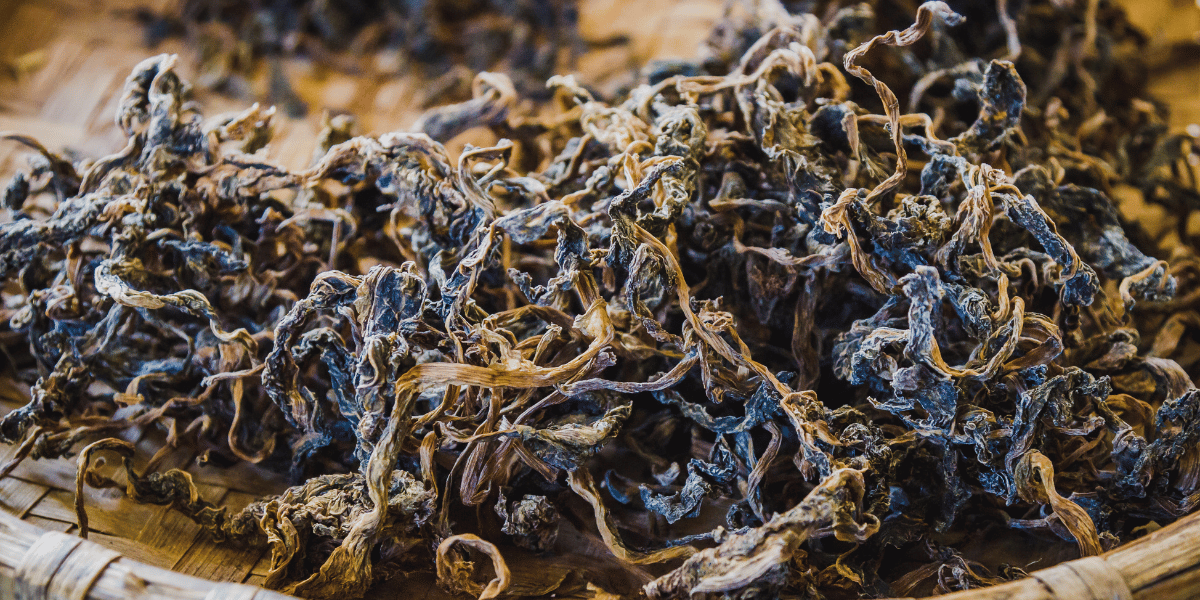
For instance, leafy greens are cultivated seasonally, yet the people ferment some into a dish called ‘gundruk’. The dish is then mixed with spices and made into a sour, dry pickle now called ‘Gundurk ko Aachar’, which is served on your plate of Dal Bhaat.
Similarly, their methods of cooking, from the use of traditional stoves to the mix of spices used in a specific dish, are something that have been passed down from generations. This also gives you a reason to trust the meals they serve.
Even the restrictions in their diet (like non-vegetarian items) are a part of their religious beliefs. Their religion’s emphasis on compassion also stems from the scarcity they faced in the past due to weather conditions and topographical conditions.
With warm food comes warm hospitality. While the hosts might not have much luxury to offer you apart from a cozy room and freshly cooked meals, you can be certain that they will treat you like family.
The Sanskrit saying “अतिथि देवो भव” (Atithi Devo Vawa), is practiced widely across Nepal, and it literally means that Guests are Gods. Remember this saying when you are in the mountainous regions of Nepal, and the host will find a way to include you in their conversations, asking you about your stories while listening intently.
In brief, the food served by hosts is one of the greatest ways for you to connect with their traditions and their history. By sharing meals and conversations with the indigenous people, you are not only building connections but you are also building trust.
Dining Culture
The etiquette is simple in the mountains. The hosts do not expect you to eat with forks and knives, and neither do they expect you to maintain complete silence while dining.
Their only expectation is that you maintain the decorum and harmony in the dining area, which is shared by all the trekkers staying in the teahouse.
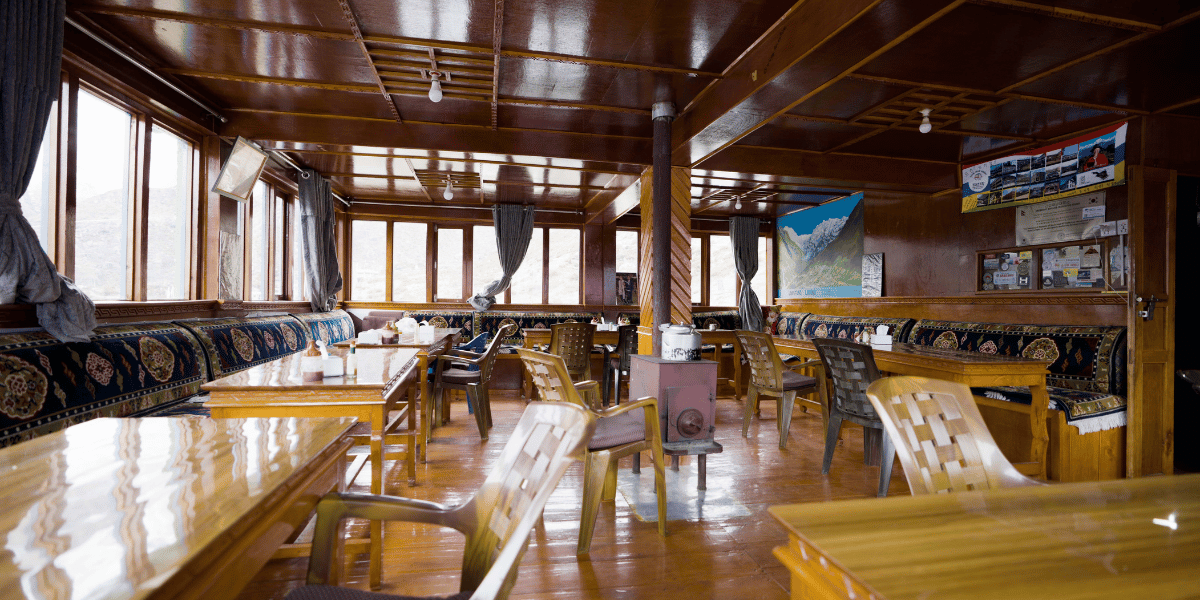
Here are some tips that can help you have a better time:
- While everyone is welcome to enjoy the dining area, make sure that you and your group’s noise does not disturb other trekkers’ peace. By evening everyone reaches the teahouses tired, so make sure that you contribute to everyone's good time.
- Be mindful of the timings. The kitchens close by 10:00 PM at most places, and the dining area is where most of the porters and guides are accommodated. So do not linger behind for too long, as they need to rest too.
- The term "Jutho" in Nepal is taken quite seriously. It basically means something that has already been contaminated with someone’s saliva. So make sure that you place your used cutlery separately. Also, if you are offered something from a shared plate, do not eat and place it back on the same platter.
- Do not take up more space than what’s needed for you as an individual. In teahouses where dining areas are small, it can be difficult to accommodate all the guests.
- Food supplies are often limited and it takes time for the porters and mules to transport everything in remote areas. So do not waste food that has been served on your plate.
- Be willing to adjust when certain items in the menu are not available. These situations are normal and often caused by seasonal availability and transport disruptions.
Lastly, if you have the time before you resume your trek, ask the hosts if you can visit the kitchen to thank the people who prepared the meals for you. It is a small act of gratitude that they will remember for a long time.
Food Hygiene and Safety
The meals set on your table are always prepared fresh in the teahouse kitchen. Additionally, you do not have to worry about the sanitation, because the hosts share the same meals that are cooked for the guests.
However, despite the food quality and preparation, there are other factors that can affect digestion and appetite. Read this section to learn how different variables can play a major role in your digestive health.
Effects of Altitude on Appetite
When traveling in high-altitude regions, blood oxygen levels drop, which alters appetite-regulating hormones over the first few days. This exposure shifts levels of leptin (a hormone that signals energy storage and fullness to the brain) while suppressing the hunger hormone ghrelin, tricking your mind into thinking you are full.
However, believing in this false alarm can be life-threatening to trekkers. In high-altitude regions, your body demands complex carbohydrates. Especially while trekking, the body’s energy expenditure is high, and you must be mindful to refuel the energy.
Beginners often overlook this fact and carry on without a proper diet for hours. When you fail to interpret your body’s needs, you make yourself more prone to altitude sickness and this directly impacts the overall difficulty of the trek, too.
Therefore, keep in mind that your body is burdened with the responsibility of making your vital organs function. And this task requires energy, which only comes from high-calorie intake!
Additionally, in high-altitude regions with cold temperatures, you might find yourself shivering. Shivering is your body’s defence mechanism in staying warm, although many are unaware of this phenomenon.
While shivering, your body burns fat as well as energy. So if you are trekking in the cold and do not feel hungry, force yourself to eat. It’s okay if you do not finish an entire meal, but make sure that you take small bites every now and then.
Eating is one of the few things that you can control to keep your energy supply stable in the mountains.
Stomach Issues in High Altitude
While the lack of appetite itself can be troublesome in high-altitude regions, you might face several other stomach issues that might or might not be directly linked to it. On top of that, when your body is busy regulating its vital organs, your stomach digests the food slower than usual.

Here are some stomach issues common among trekkers that you should be aware of:
- Food Poisoning: In Langtang, drinking water comes straight from the tap. The water that flows from the tap does not go through any purification system, which means it contains bacteria that do not settle well with most people.
- Constipation: When your body digests food slowly, it means that the food moves through your intestines slowly. The sluggish movement of the digestive tracts delays your bowel movement and results in constipation.
- Bloating and Nausea: The combination of constipation and hypobaric hypoxia causes gases inside the gastrointestinal tract to expand, leading to intense abdominal bloating throughout the trek. However, the effects of hypoxia extend beyond the gut. In response to low oxygen, blood vessels in the brain aggressively dilate, triggering nerve irritation and swelling in the layers protecting the brain. This central nervous system distress acts as a dual trigger, causing a pounding high-altitude headache while simultaneously activating the brain's vomiting center to produce severe nausea.
Apart from these issues, you might also want to look out for reflux, heartburn, and blood sugar instability. So if you want to make sure you completely avoid these issues or relieve them in case you experience them, then the next part is where you learn how.
Eating the Right Nutrients and Avoiding the Wrong Food
Problems like constipation, bloating, and nausea are the last things that you want to experience in the isolated areas of Langtang, where health posts are miles apart. And even if you do find a health post, they might not have all the necessary medications for immediate treatment.
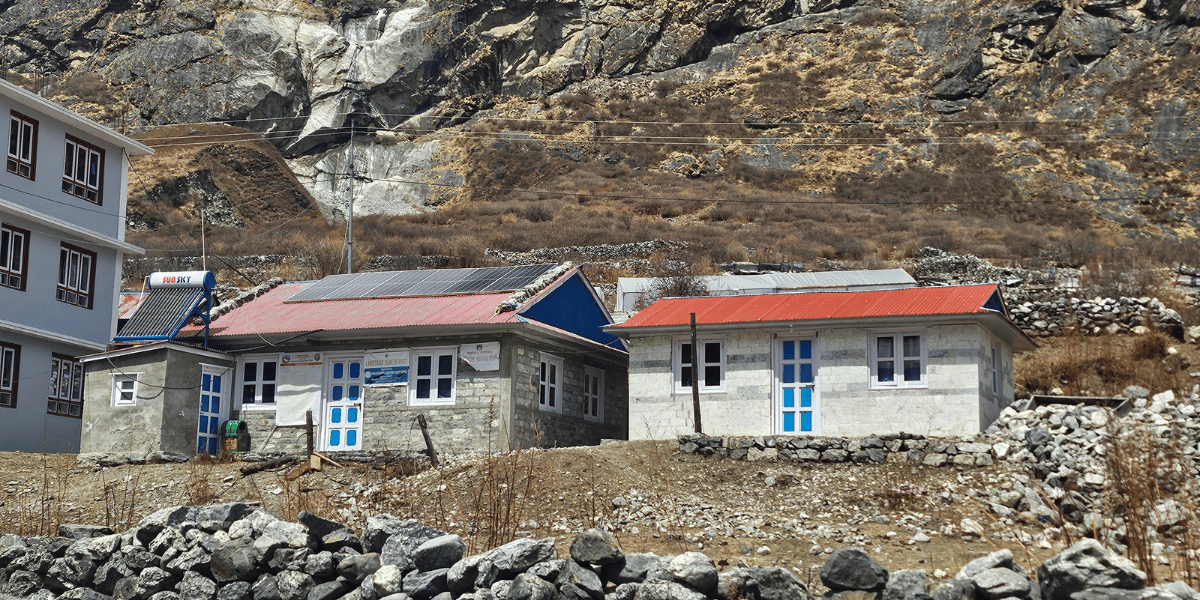
And as the saying goes, “Prevention is better than cure,” here are some nutrients that you need to include your meals while trekking:
- Carbohydrates: These are going to be the primary source of your energy. Since carbohydrates are highly efficient fuel, the body digests them easily, providing a steady release of energy for a longer time. The steady digestion also means lower chances of sugar spikes. As a result, you won’t experience a sugar crash while trekking.
- Protein: While protein is often hard to digest, you must not completely avoid it during the trek. Instead, you can pair them with easily digestible carbs in your meals, as they are essential for muscle recovery and a boosted immune system.
- Iron: Iron is one of the most important minerals that your body needs to aid the production of hemoglobin. Its role in oxygen transport is another reason why trekkers must eat food rich in iron.
When the blood receives iron, it not only stores it, but it also transports it throughout the cells and working muscles. By consuming iron-rich foods, you can avoid fatigue and shortness of breath while trekking. It also prevents poor thermoregulation, allowing you to avoid hypothermia in the cold.
- Vitamin B Complex: This is a group of 8 essential forms of Vitamin B (B1, B2, B3, B5, B6, B7, B9 and B12). By consuming Vitamin B, you can see a positive effect in your energy levels and appetite.
Additionally, it also results in proper nerve function and better cardiovascular health.
- Antioxidants and Minerals: While antioxidants benefit your cells by preventing damage and promoting recovery, minerals help in your body’s development and overall functioning. By combining these nutrients, you can build resiliency in high-altitude regions of Langtang.
Some of the most important minerals you will need are zinc (aids recovery from injuries), magnesium (regulates blood pressure and promotes muscle health), and calcium (improves bone health).
|
Essential Nutrients
|
Natural Sources
|
|
Carbohydrates
|
Rice, oats, beans, fruits, and potatoes.
|
|
Protein
|
Lentils, soybean products, nuts, seeds, cheese, and eggs.
|
|
Iron
|
Lentils, spinach, chickpeas, kidney beans, and soybeans.
|
|
Vitamin B Complex
|
Milk, cheese, eggs, potatoes, spinach, and beans.
|
|
Antioxidants
|
Berries, ginger, turmeric, cinnamon, tomatoes, and carrots.
|
|
Minerals
|
Cheese, nuts, bananas, cucumbers, milk, lentils, and chickpeas.
|
Table 2: Essential nutrients and their natural sources.
Foods and Drinks to Avoid During Trek
Now that we have covered the right food that you should consume for your trek, let’s look into food that you should avoid during your trek.
- Meat Products in Remote Areas: If you are doing the Helambu Circuit or Tamang Heritage Trail, then it’s fine to consume non-vegetarian dishes. But in remote areas like Gosainkunda and Langtang Village, please refrain from eating non-vegetarian items unless they are made with canned products. This is because most of the meat products are transported by porters and mules, often taking a long time. This means that the meat is unrefrigerated. As a result, they are more likely to contain pathogenic bacteria. Worst-case scenario, you could get food poisoning and nausea.
- Refined Sweeteners: Avoid consuming large amounts of packaged junk foods that are heavily loaded with refined sweeteners, as they lack essential natural nutrients. Relying solely on these sugars while resting can cause a rapid spike followed by a severe sugar crash, failing to provide the sustained energy required for long mountain days.
Additionally, because high altitude slows down your digestion, your body has a hard time processing heavily processed chemical ingredients, which can quickly trigger gastrointestinal discomfort. If you need a quick energy boost while actively climbing uphill, stick to clean, simple sugars like honey, dried fruit, or specialized endurance gels instead of greasy packaged junk food.
- Alcohol: While drinking is not uncommon in high-altitude regions, trekkers, especially beginners, are often recommended not to drink in high-altitude regions. This is because alcohol can affect the process of acclimatization. Alcohol is a strong form of diuretic, and the dehydration it causes can also result in stomach issues. Individuals who drink without completing their trek for the day also experience imbalance and fatigue.
The thing is, when your body is already struggling to make its vital organs work, you should not burden it with unhealthy food that disrupts the regulation. Instead, try consuming food that effortlessly regulates the vital organs as well as your non-vital organs.
Regional Differences in Food Across Langtang Region
If you have been on more than one route within the Langtang Region, you will witness that there are differences in food’s cost, options, and quality. There are many factors that can be attributed to such differences.
Change in Food Taste with Growing Altitude
There are many reasons that can make you feel as though there has been a change in the quality of food as you reach higher altitudes. This feeling is more evident in the trails located in the isolated regions.
One of the biggest objective environmental factors behind this is the appetite loss that prevails as one approaches high altitude. Loss in appetite can result in altered food preferences as well as one’s perception of taste. This could make one feel as though the food is bland even when it is mildly flavoured.
Similarly, the cold air in the mountains also leads to the drying of the nasal passage. Dry nasal passage can affect olfactory receptors. It has been reported that those with olfactory issues often find food less appealing compared to others, implying that a desensitized olfactory system severely diminishes one's overall perception of flavor.
While those are environmental factors, food taste could also differ as a result of situational factors. For porters and mules, it is easier to transport goods to the lower altitude regions, and that takes place within a shorter time period.
Due to this reason, teahouses in that region have better access to fresh varieties of ingredients. With growing altitude, the choices get more limited. As a result, many of the spices that are used in dishes in the lower regions are replaced with herbs/dried herbs in the higher regions, ultimately changing the taste of the same dish.
Furthermore, in regions with poor electricity supply, refrigeration is not always an ideal choice. So many teahouses struggle to keep ingredients and vegetables fresh. So for vegetables that they cannot access fast and easily, they replace them with canned goods to stay on the safe side, as they have a longer shelf life.
As a result, while trekking in Nepal, you might find that food tastes blander as you climb higher. These are some of the various reasons to explain this, reasons that are both internal as well as external.
Note: Medical reports have also shown that acetazolamide can affect taste reception among consumers.
Change in Food Options as You Go Higher
One of the biggest determinants of the food options in high-altitude regions is the supply chain. When ingredients and cooking supplies don’t reach the places, it is reasonable for options to be limited.
Additionally, cooking supplies like gas cylinders and firewood are also scarce in remote places like Kyanjin Gompa and Gosainkunda. So many teahouse owners find it convenient to cook the same meal for everyone.
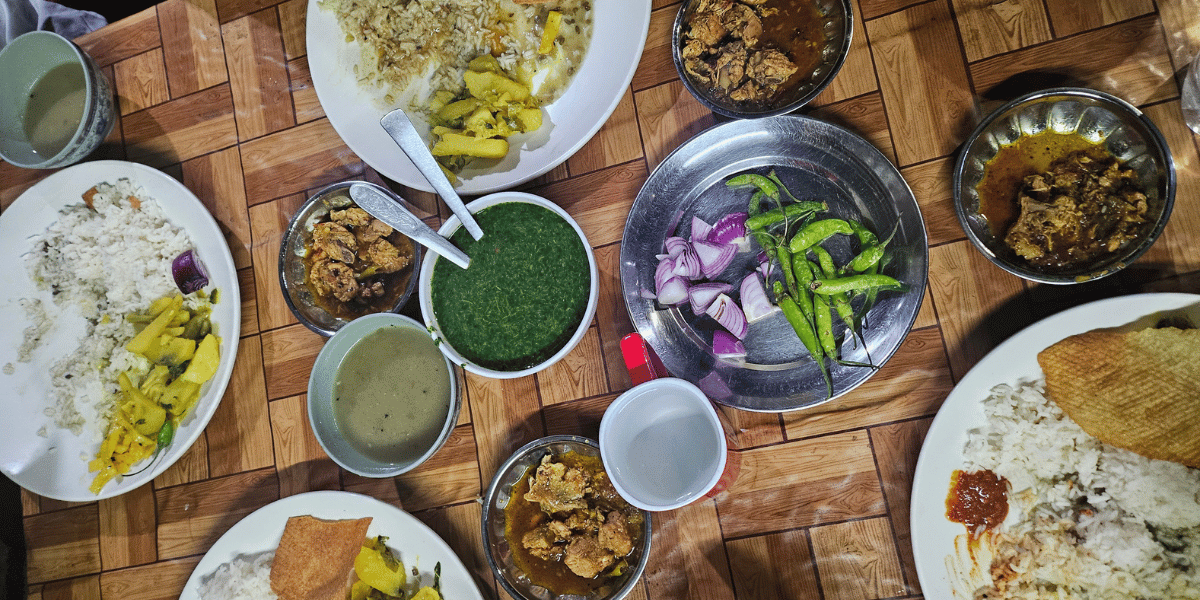
This explains why Dal Bhaat is readily available during meal hours in most of the teahouses. The availability of Dal Bhaat should also be attributed to its health benefits. It is also the intuition of the chef who prepares the food for everyone. They set menus based on the existing demand.
Apart from these factors, the reasons mentioned in the subtopic above also apply for the explanation here. Instead of letting vegetables and other cooking materials go to waste, it would be easier for the hosts to simply not include such food items in the menu.
Lastly, for the Jugal Himal Trek and peak climbing activities in the Langtang Region, you have to camp. This means that there will be no menus to choose from. You have to cook the meals by yourself. So choose your ingredients carefully before you start the trek!
Do You Need to Carry Snacks?
Yes. Undoubtedly. But snacks in the mountains do not mean the regular chips and crackers. Both in terms of weight and calories.
While packing for your trek to Langtang, here are some things to keep in mind:
- Do not carry snacks that come in large packets. You do not want to carry extra weight, which is what you can afford to.
- Go for small but filling snacks like yoga bars and granola bars. Or ready-to-eat noodles that you can find in Nepal that come in small packages.
- Do not carry more than what’s needed. For easier days, a snack per day is enough. For longer days, carry about 2 or 3 small bars for each day.
While these points are related to making packing easier for you, let’s move to the main sub-sections of this topic.
Choosing the Right Snacks
While choosing your snacks for a trek, it is very important that you review the nutrition facts of the snacks. This might mean that you will be staring down the packaging at the grocery store for a while, but it’s going to be worth it once you start the trek.
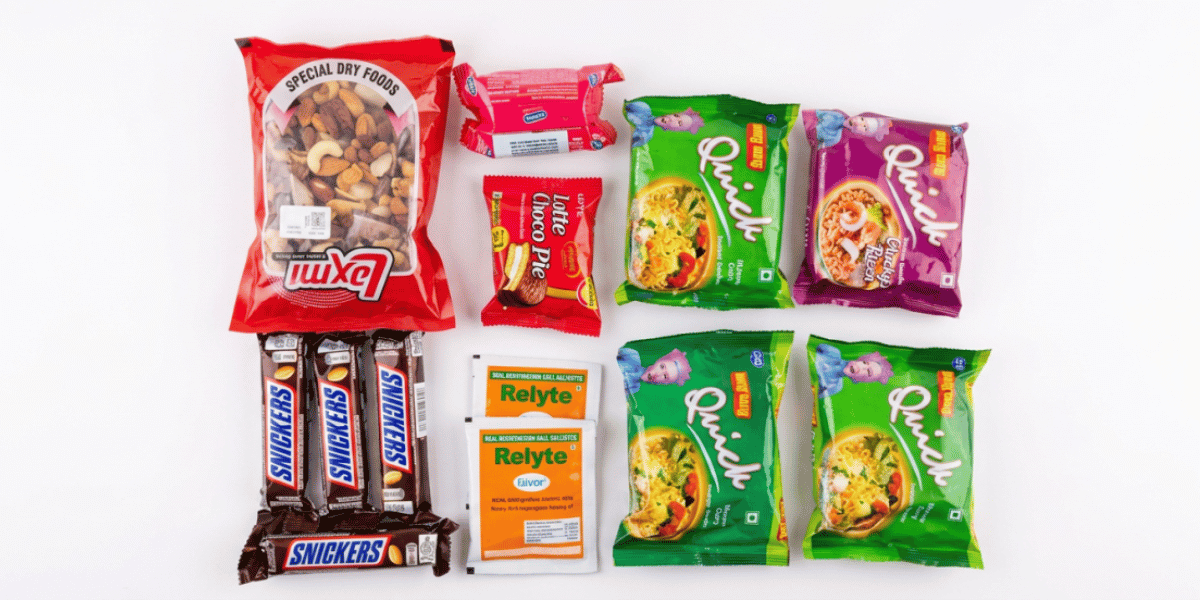
So what kind of snacks should you pick? Basically, the one that includes the nutrients that have been mentioned above. But you need to make sure that the nutrients have been mixed properly without imbalance.
Here are some of the most common snacks that are recommended for you:
- Trail Mix: An ideal trail mix typically contains nuts, dried fruits, and seeds with a small amount of treats (about 10% to 20%). You can mix a variety of ingredients such as almonds, cashews, apricots, figs, raisins, chia seeds, pumpkin seeds, sunflower seeds, and flax seeds. As for treats, you can add dark chocolates, the best choice, or peanut butter chips that do not have refined sweeteners.
- Granola and Yoga Bars: They are perfect when it comes to choosing a healthy snack for your trek, and what’s even better is that you can bake granola bars at home by yourself. They also come in the right size, making it easier to pack. The key ingredients that you can look for in your bars are oats, peanut butter, brown sugar or honey, dried fruits and nuts, berries, and dark chocolate.
- Roasted Legumes: If you are not a big fan of sweet treats, then you can also buy roasted legumes. The most famous legumes for trekking treats are chickpeas and green grams. Their flavour is salty and savoury, also rich in dietary fibres.
- Ready-to-eat Noodles: In Nepal, you can find different brands of ready-to-eat noodles that are found in almost every store. They come with a separate sachet of spices and vegetable oil, mixing them is entirely up to you. They are crunchy and easy to prepare without having to cook. However, they have a high amount of sodium, so make sure to carry only a few of them. Instead of relying entirely on noodles, you can carry more packets of trail mix or granola bars.
While buying snacks, make sure you do not buy bars that have high concentration of protein, as they are not easily digestible in high-altitude regions.
Why Should I Buy Snacks in Kathmandu?
Buying snacks in Kathmandu is one of the most economical decisions that you can make before you start your trek. And if you do miss some snacks while shopping, make sure to ask your driver to make a quick stop at the stores in the towns along the way, or at Syabrubesi or Dhunche, wherever you start your trek from.
But buying snacks in Kathmandu has other perks as well. Kathmandu has numerous department stores and even outlets of health-oriented food brands. This means that you have plenty of choices to choose from.
Coming back to the topic of Kathmandu being economical, similar to food, even snacks are sold at a higher price in high-altitude regions. In fact, the prices are set about NRS 100 to NRS 300 higher than their actual selling price.
So if a single bar of Snickers costs about NRS 150 in Kathmandu, you might have to pay anywhere between NRS 300 to 450 once you enter the isolated high-altitude regions in the trail.
Smart Eating Tips for Langtang Trekking
You have almost made it to the end of the blog, and if you have been our longtime reader, you know that most of our blogs always end with practical tips. So here are some smart eating tips that you can follow while trekking in Langtang:
- Dal Bhaat always comes with free refills. So if you don’t feel full after finishing what has been served, don’t feel shy to ask for more.
- If you’re not sure about what you want to order, go for Dal Bhaat. The dish is always cooked fresh and served warm.
- When it comes to garlic soup, you don’t have to wait until altitude sickness kicks in. Drink it every now and then, because it’s healthy for you either way.
- Always eat breakfast. There might be mornings when you don’t feel like eating, but don’t make the mistake of skipping out on your breakfast.
- While packing your bag, keep your snacks and electrolytes inside pockets that are easily accessible.
- Always pick cooked food for your meals. If you’re not sure about the quality of water, then don’t choose salads made with raw vegetables and unpeeled fruits.
- Eat your meals where you stay.
- It’s better not to try new dishes while trekking. Stick to food that you are familiar with. The last thing you want is an upset stomach in the mountains.
- If you have a big ascent the next day, do not eat heavy and greasy meals the night before.
- Since food takes a longer time to cook in high-altitude, please be patient with your hosts.
- Don’t hesitate to ask your host what’s fresh on the menu. They will also happily suggest to you what's good in terms of health and taste.
- Treat tea like a hydration supplement. They are also rich in antioxidants, and local delicacies like butter tea can do wonders in keeping you warm. And don’t miss out on Sea Buckthorn Juice when in Langtang!
- If you are vegan or lactose intolerant, ask the hosts if they have mixed ghee in Dal and butter in vegetable curries.
- Force yourself to eat even when you don’t feel like eating. The altitude suppresses your appetite but your body still needs the energy.
Follow these simple yet practical tips, and you should be good to go!
Conclusion
Food plays a vital role in determining how your trek goes, so it is important that you know what to choose for your meals. All you have to do is understand the intention behind the limited menus.
Once you do your part, the teahouse will do theirs. So let the hosts know what you want and how you want it cooked. Even when choices are limited, the hosts go out of the way to make sure that you are well fed.
We have provided you with the prominent menu items along with the price ranges in each trail. So make sure you budget well for your meals, as food can get expensive as you go higher.
With all the important details revolving around food in Langtang provided in this blog, all you have to do is choose the right time, book your accommodations, and get your permit. See you on the trails!


 Suraksha Subba